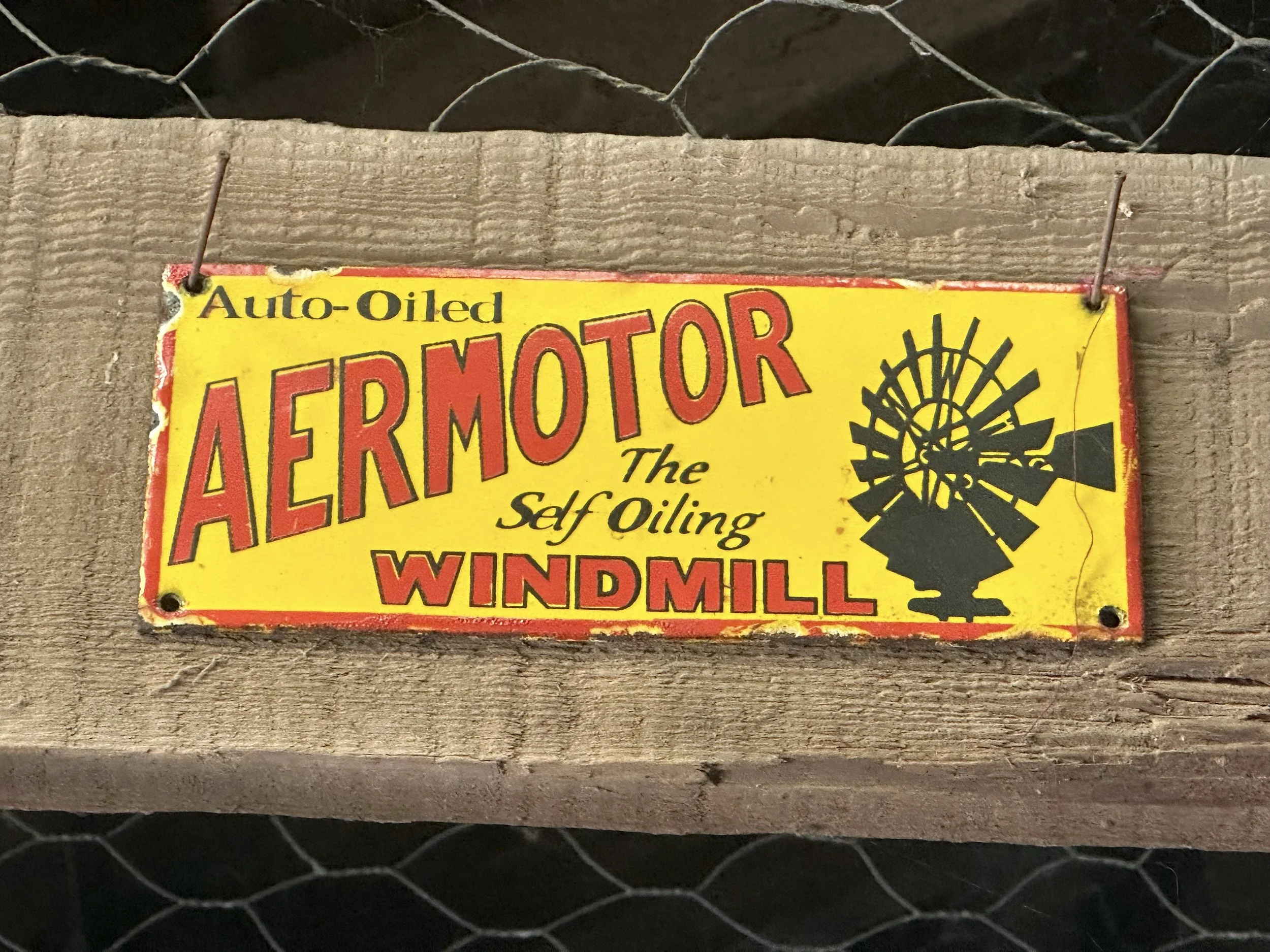
Small Enamel “Aeromotor” Windmill Company Plaque.
These windmills were useful everywhere in the 19th to the mid-20th century. Most every farm, ranch, and vineyard required them. The plaque measures 8” W X 4” H. Aeromotor started business in 1888 in Chicago. A slogan said, “The windmill that watered the West.”
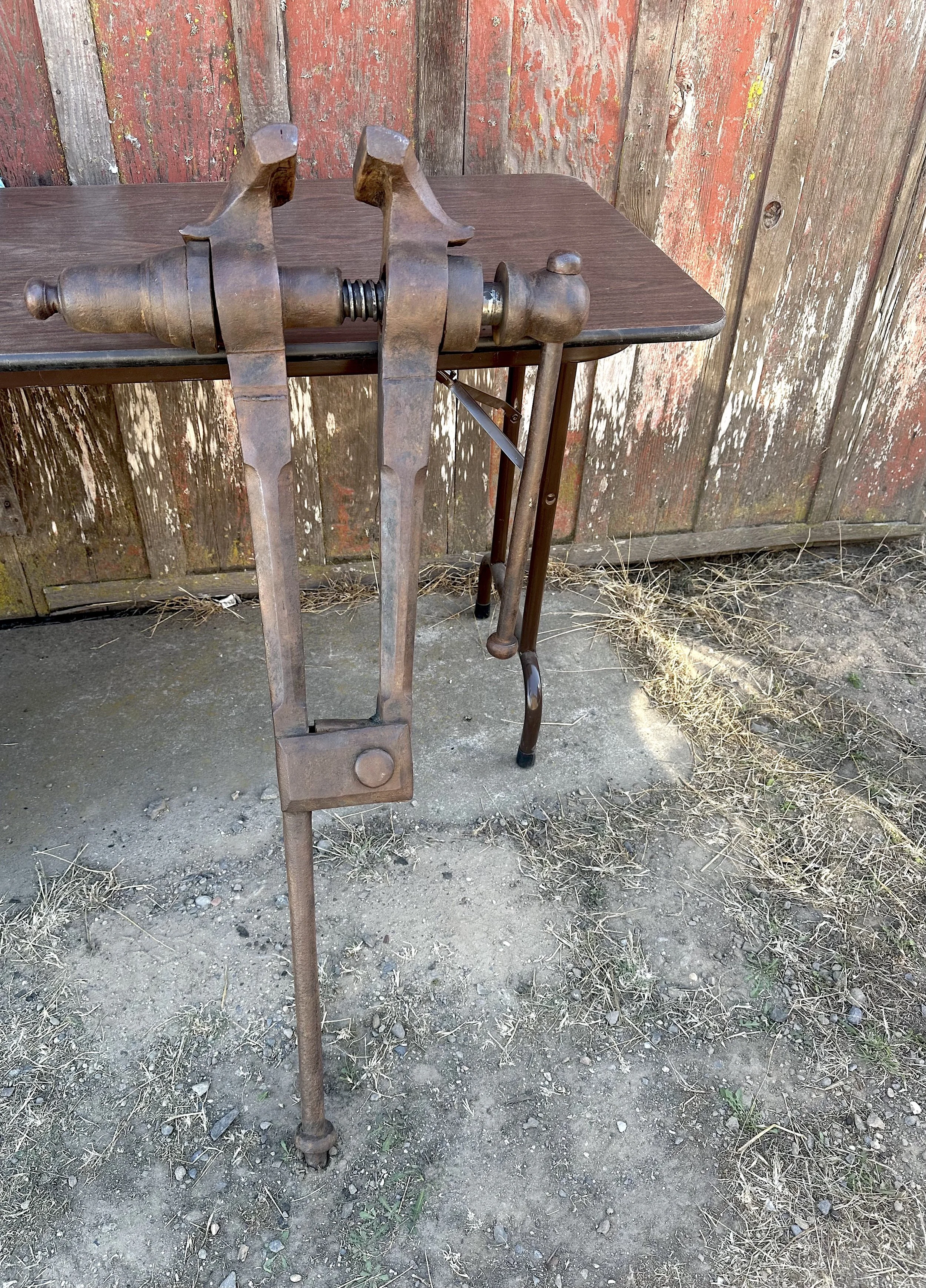
Early Anglo/American “Post leg vise”
Early Anglo/American “post leg vise”; also called a blacksmith's vise. Circa 1850s to 1880s. Santa Rosa, CA. found. Nice sculptural design. 40” H with a 5 1/2” jaw. Uncommon.
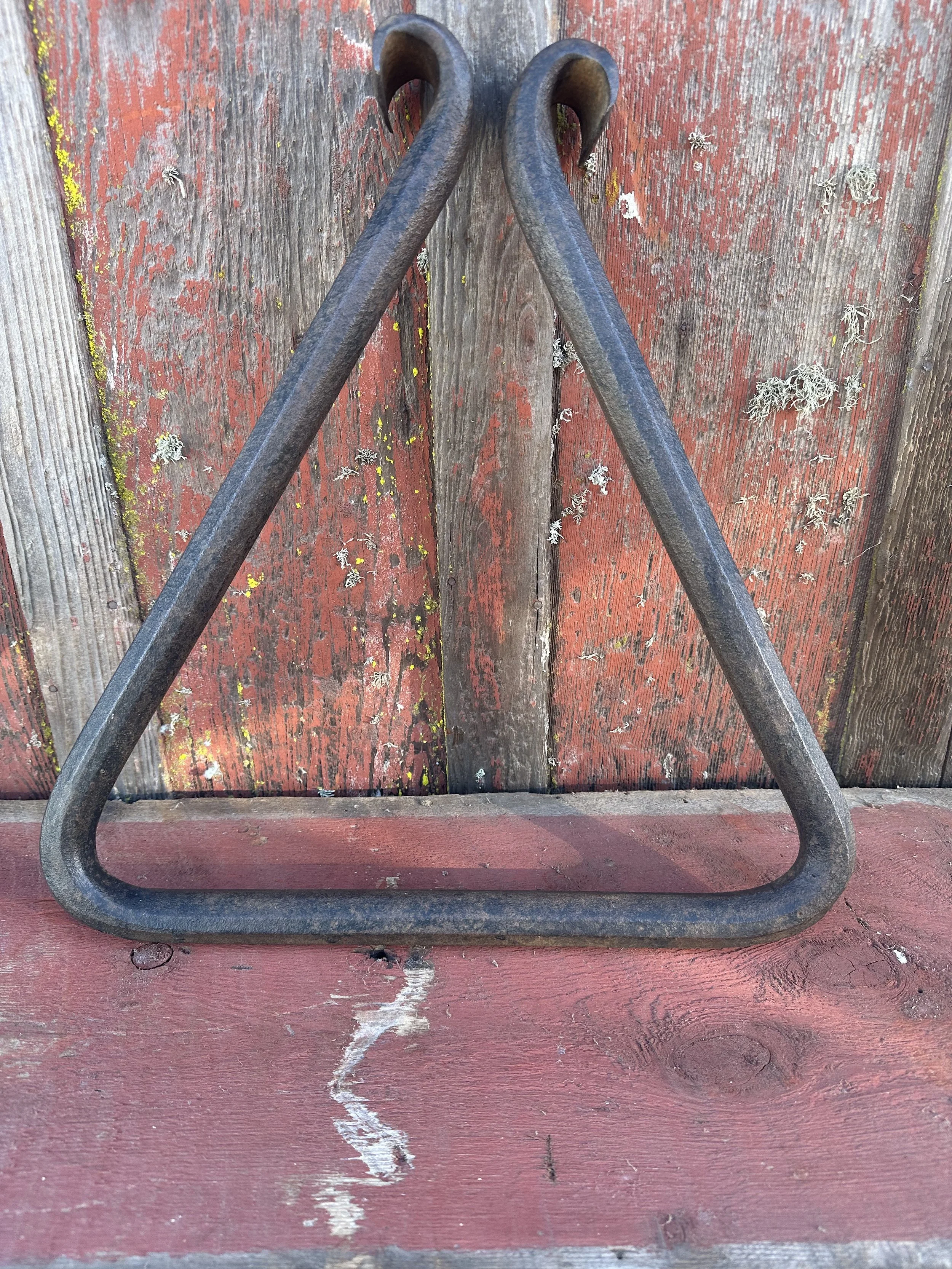
19th C. Chuck Wagon Triangle
19th C. blacksmith-made “chuck wagon triangle” found on an early Petaluma, CA. ranch. This one is exceptionally well forged, with elaborate “ears” to fit the rope or chain it would have been hung on. The metal gauge is 1”+, and it is six-sided. It measures 17” H X 16” W.
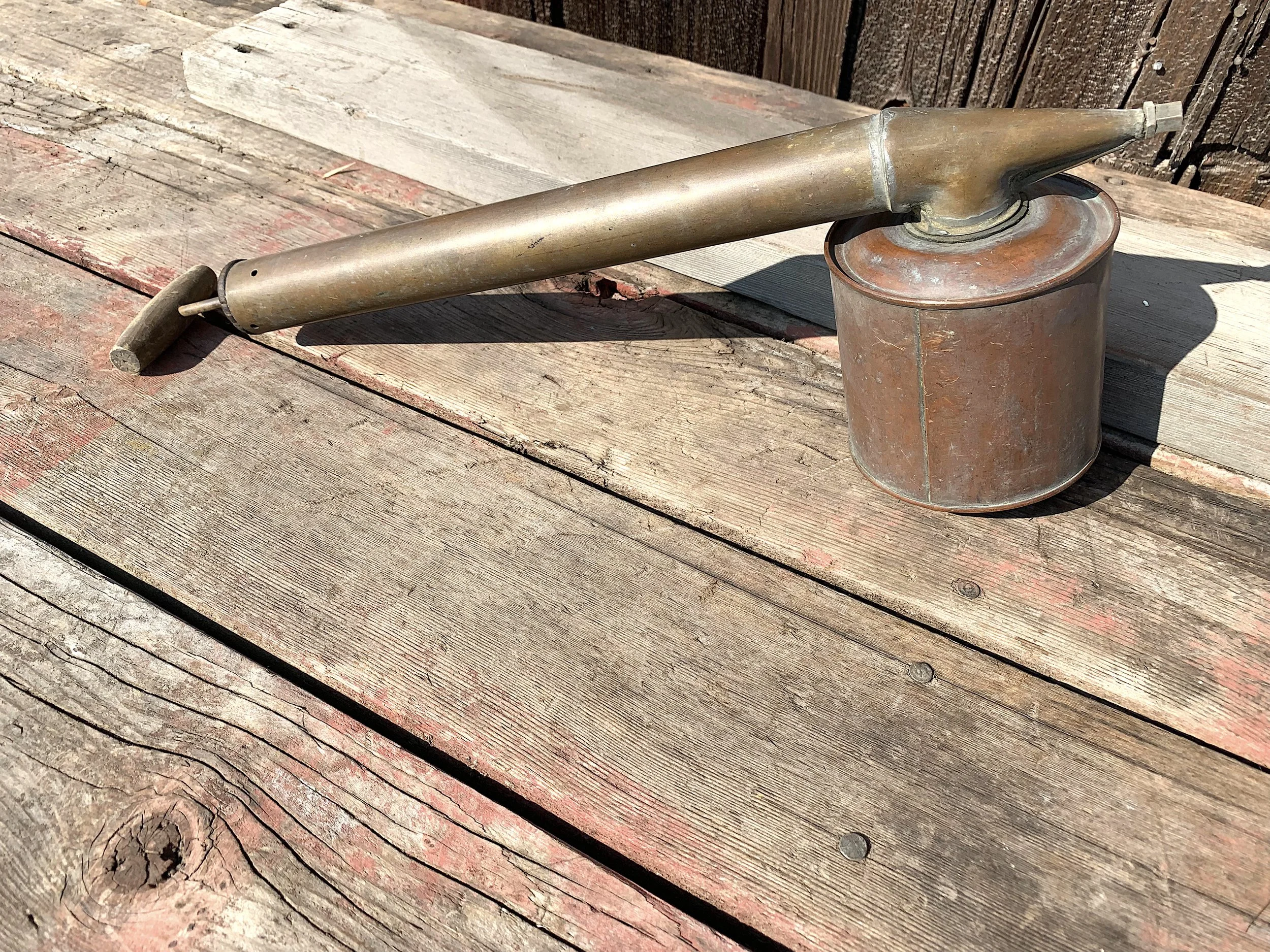
Copper Vineyard Sprayer
Copper vineyard sprayer, circa 1910 - 1930s. 24” L working.
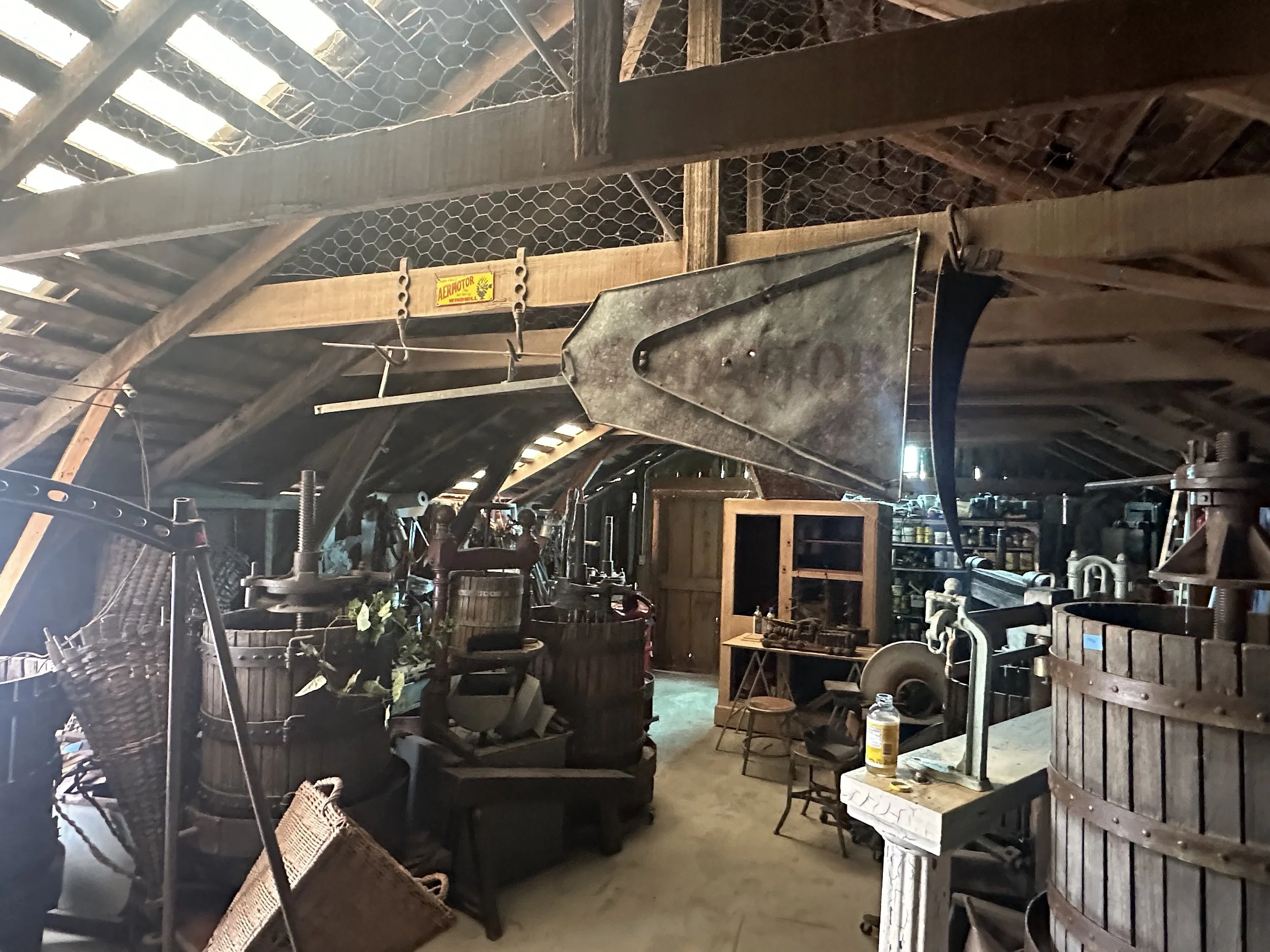
Vintage Aeromotor Windmill Co.
Vintage Aeromotor Windmill Co., Chicago “Swallowtail” wind rudder. C. 1916. Lakeville, Calif., found. 6 ’ L x 27” H.
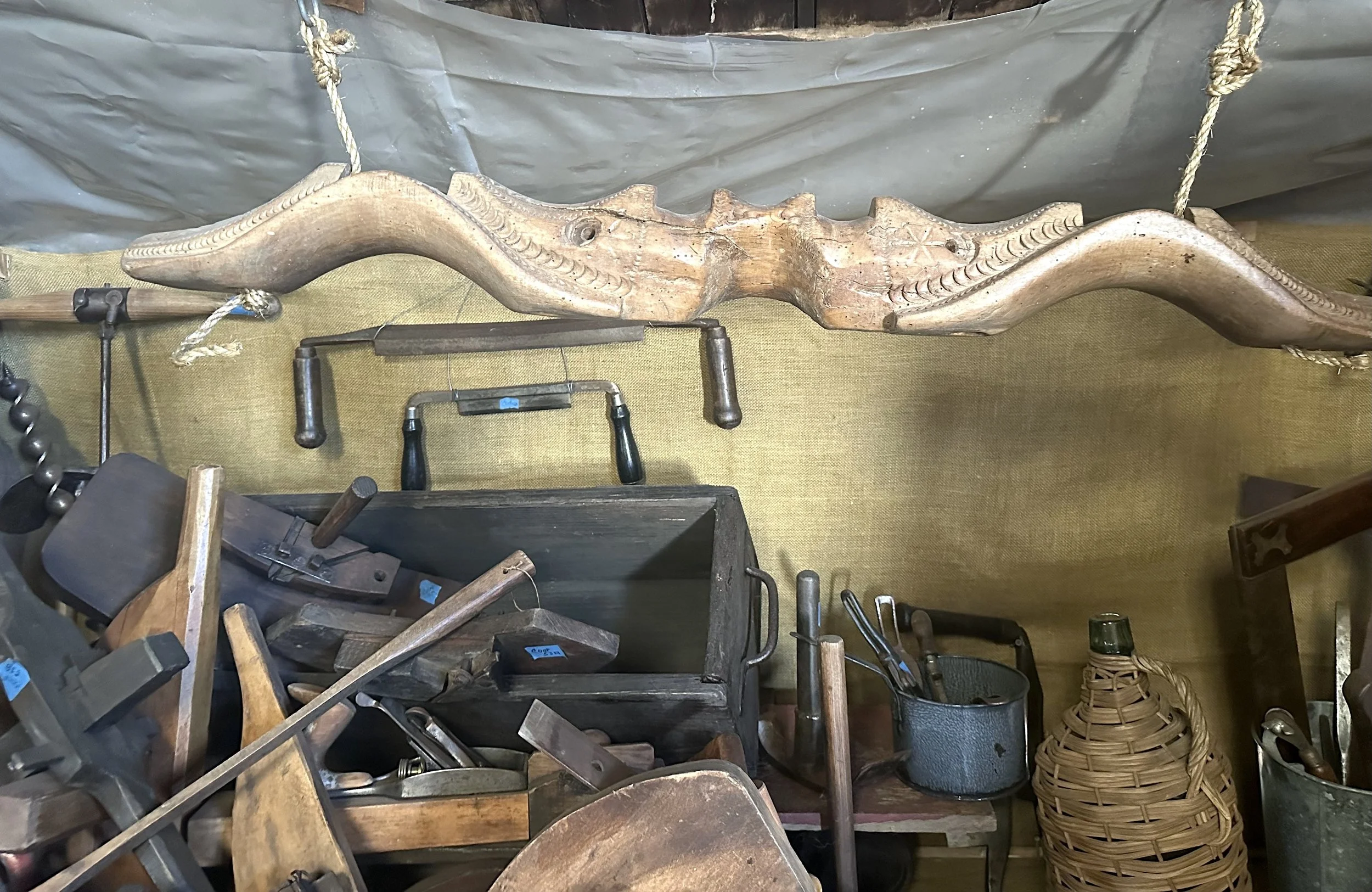
Double Goat Yoke
Mid-19th-century double goat yoke. Used to train cows, goats & sheep to pull wagons and carts in the field. 42” L. Vintage chip carving with serpent motifs. Folkart.
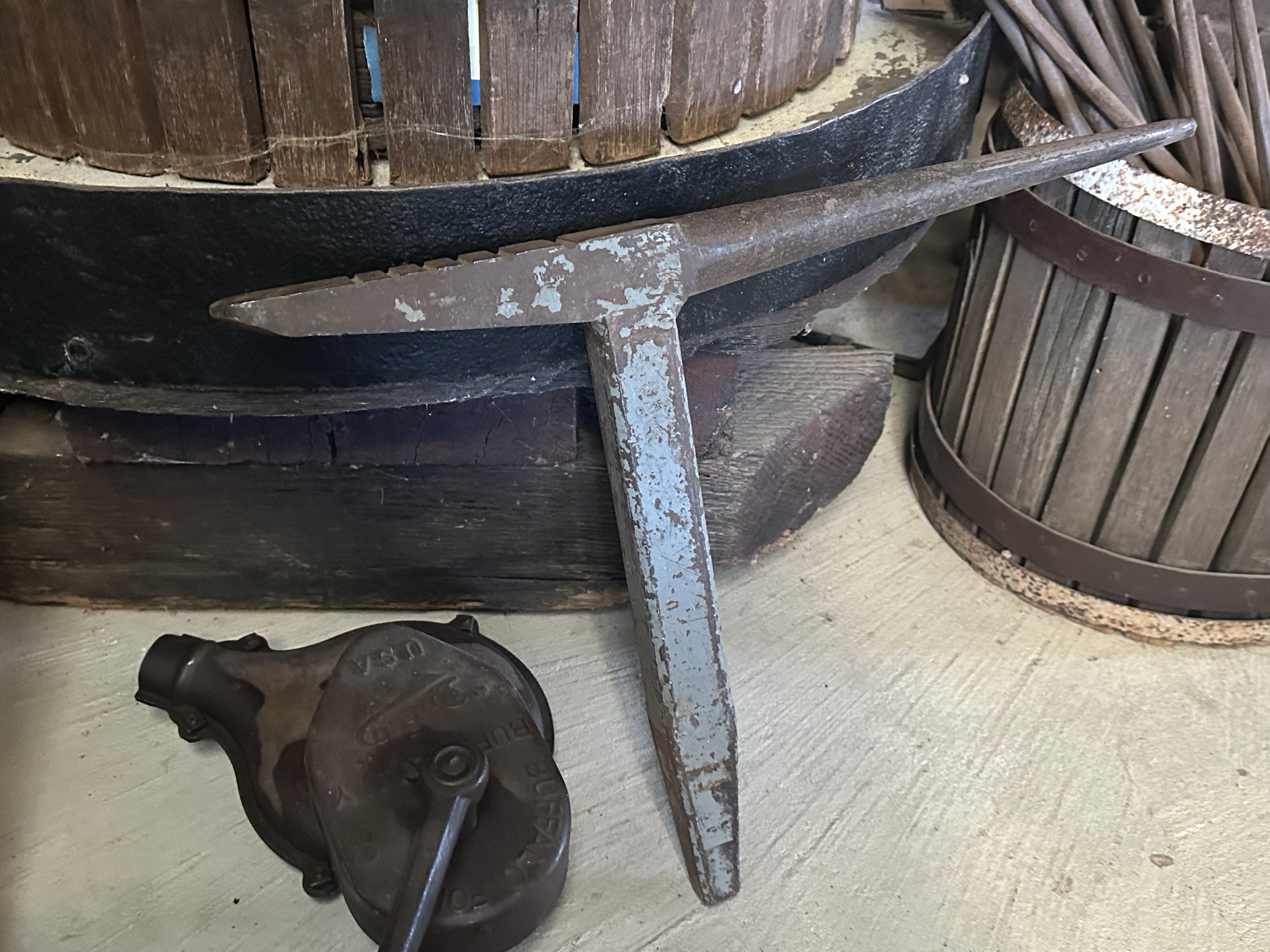
Blacksmith’s Hardie
Blacksmiths “hardie” a tool used for specialized shaping in metalworking on an anvil. 1940s. 21”L X 14”H.
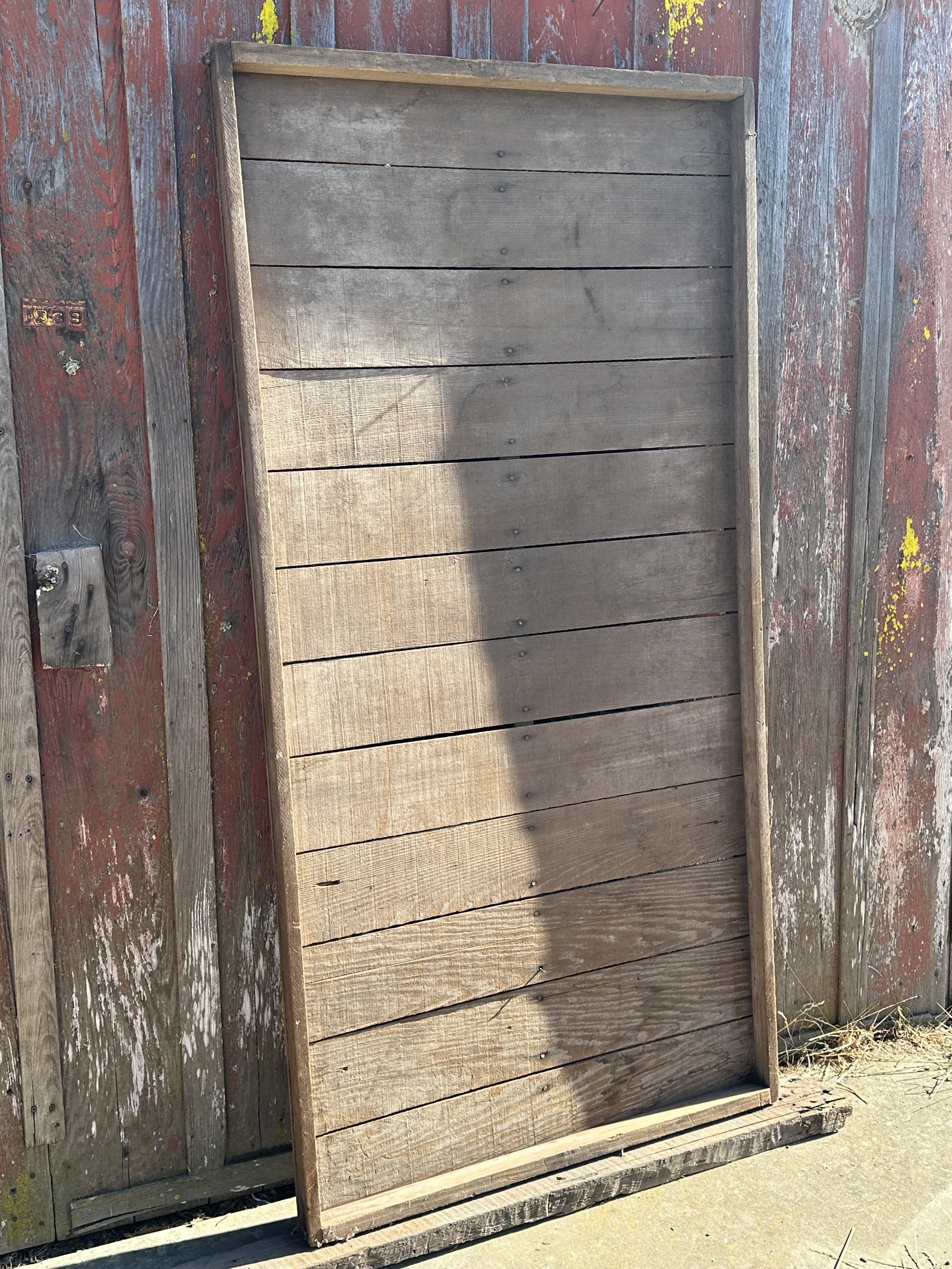
Fruit Drying Rack
This is a clear heart, California redwood, fruit drying rack used mainly for raisin grapes, prunes, and apricots. These were also used as fruit "sorting" trays for fruit, including table and wine grapes. This one is from Sebastopol, California, and is in amazing condition; the straight saw cuts indicate made before 1900. 36” X 72”