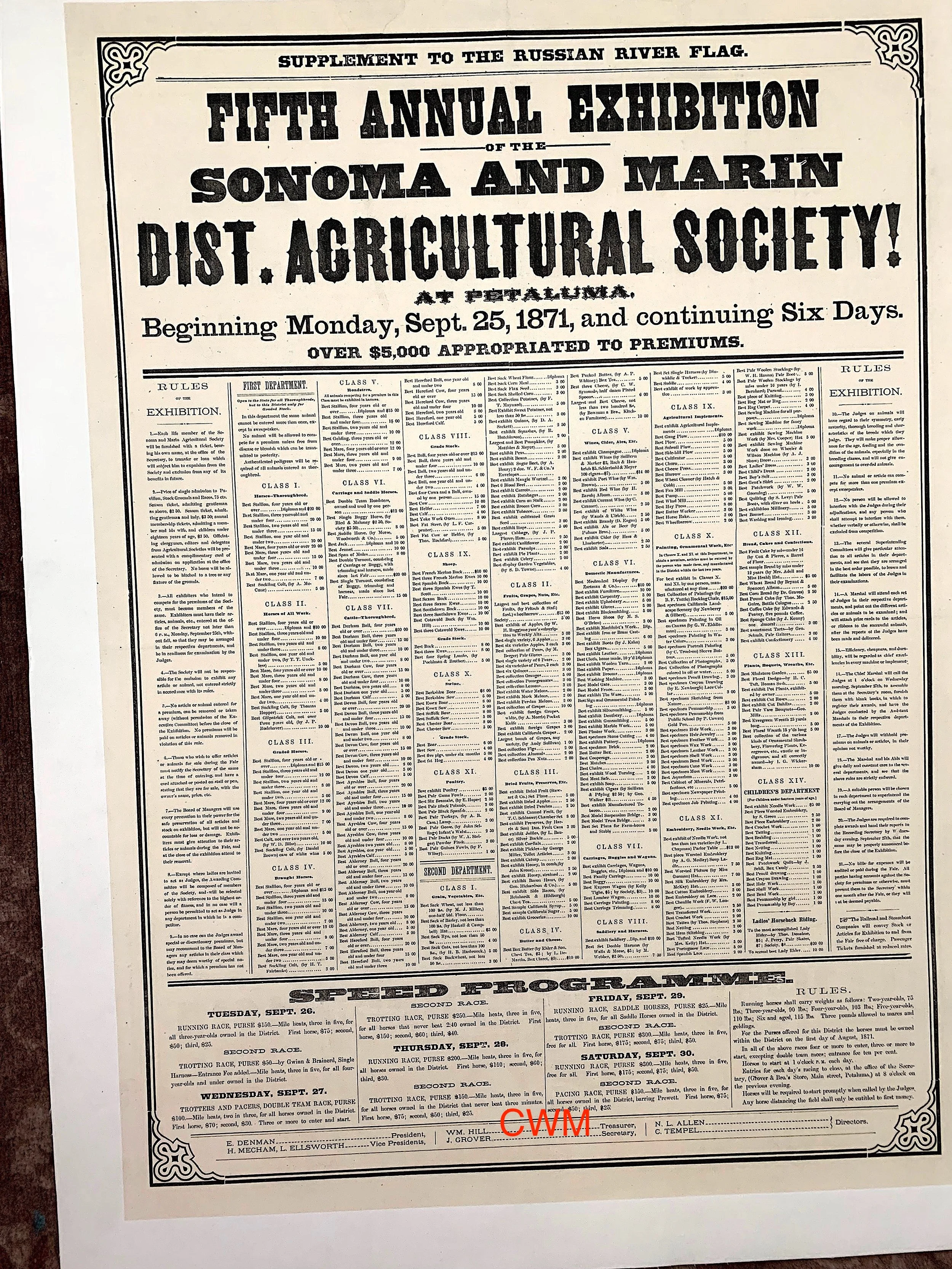
This is the 5th Annual Exhibition poster for the Marin and Sonoma District Agricultural Society. This broadside was published by the Russian River Flag Sept, 25,1871. It clearly illustrates how important agriculture and husbandry were in the day.
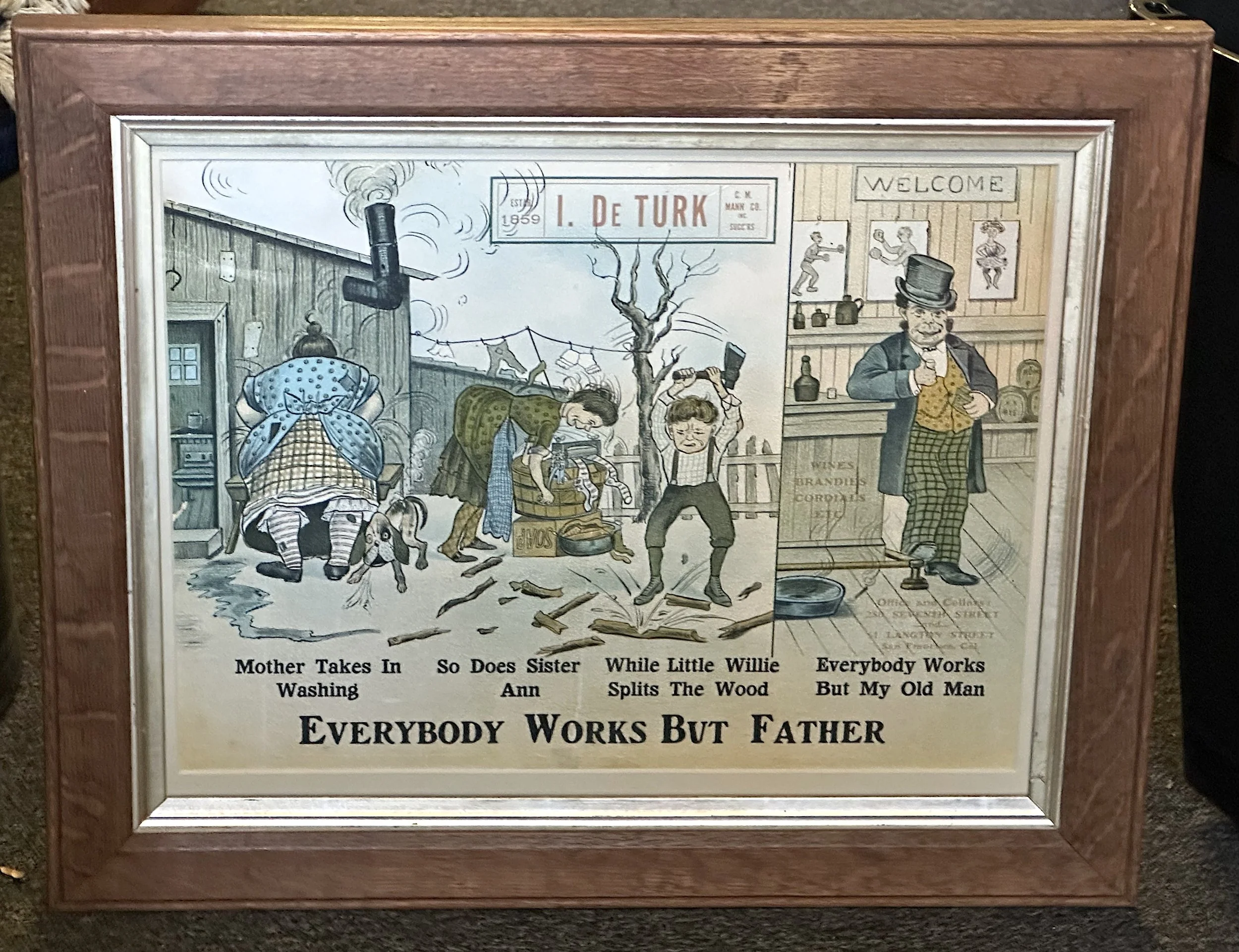
Previously unknown I de Turk litho. C.1905. Whimsical ode to the day with the women and the kids doing all the work and the old man gets to drink! 16” X 10” framed
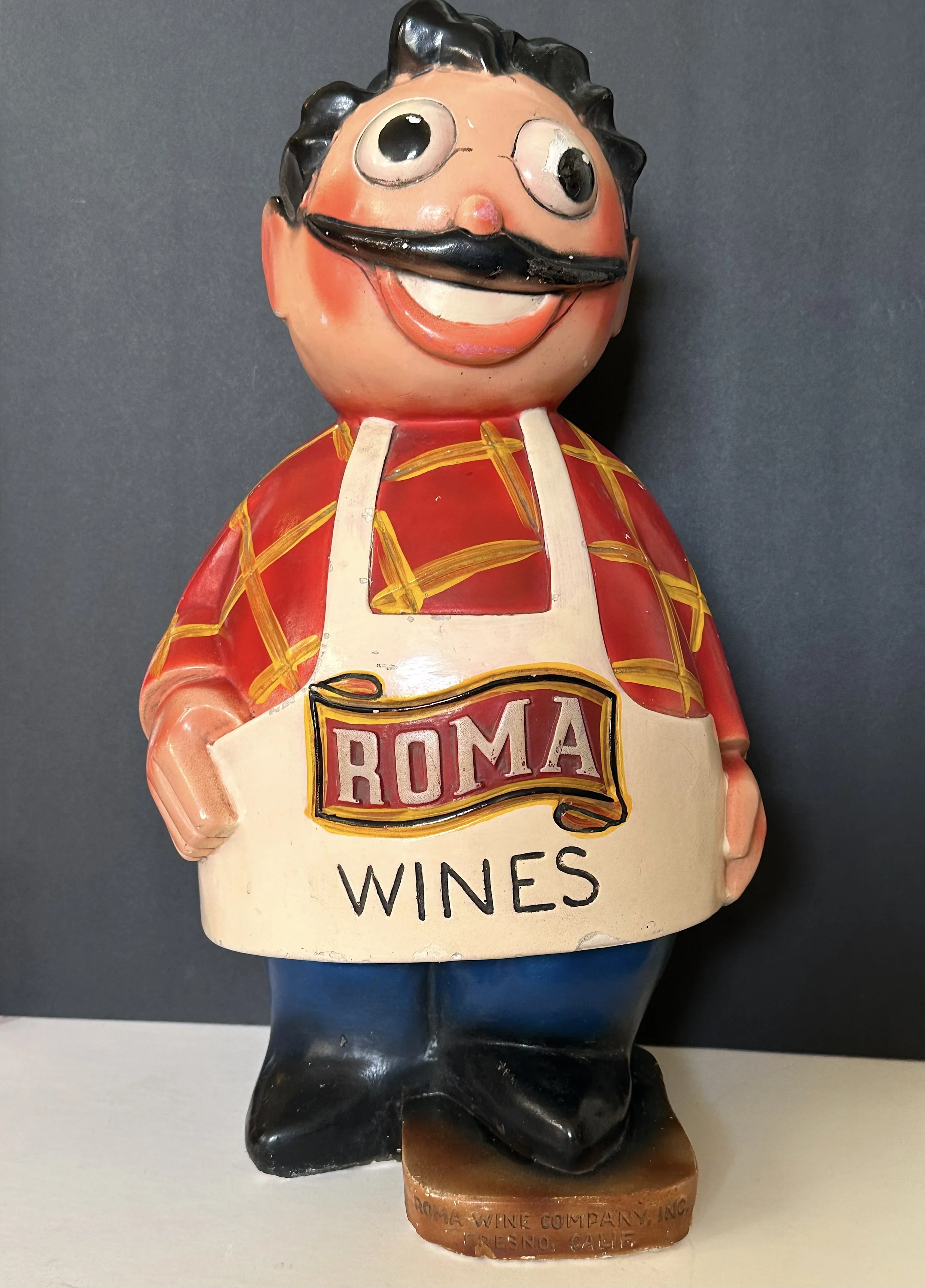
Chalkware merchandising piece for Roma Wine Co. They had a presence in Healdsburg, Calif., c. 1940s- 50s. 19 1/2” H × 11″” W.
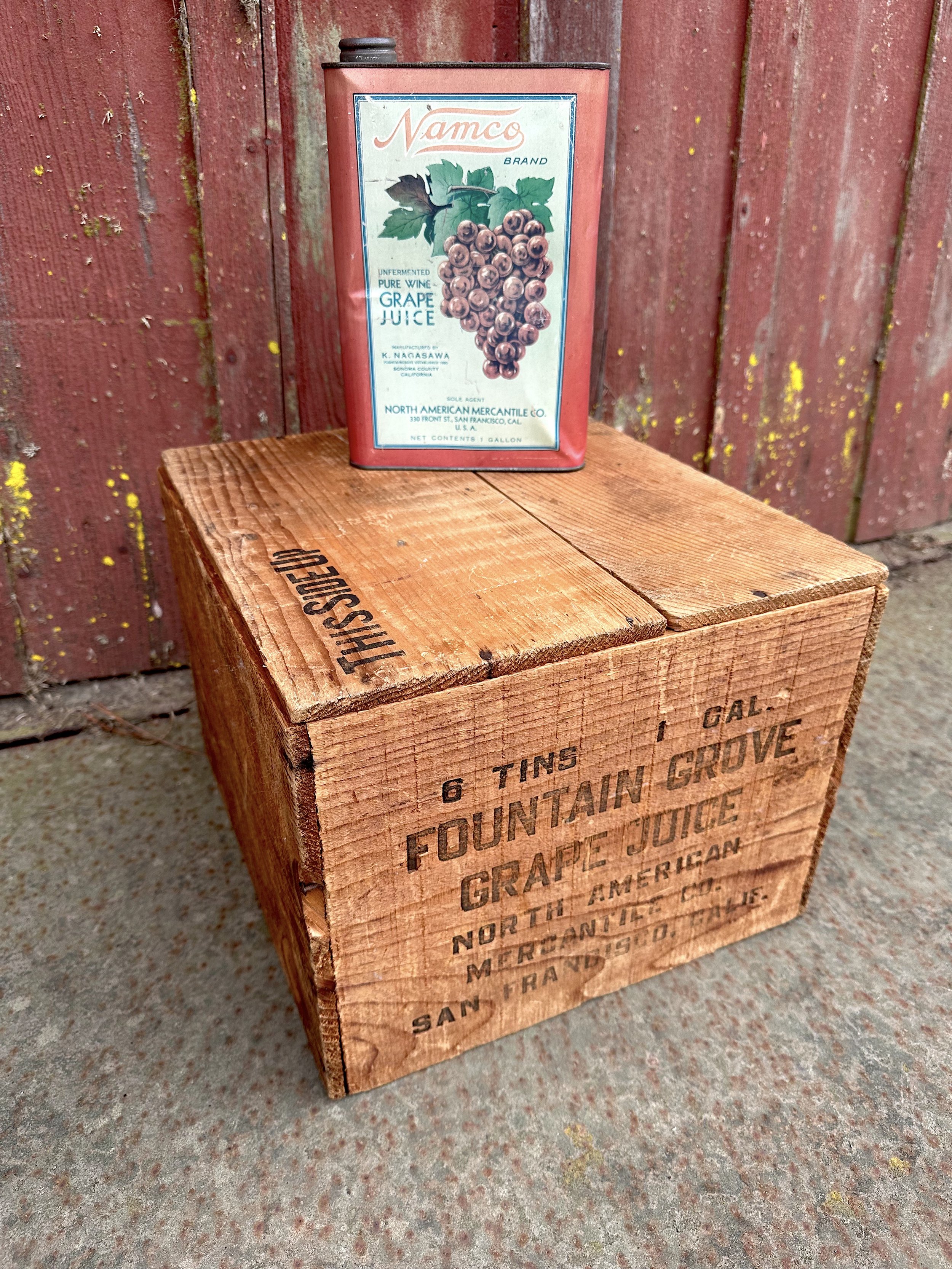
Vintage Fountain Grove Winery “Namco” tin with its original wood crate. You could actually make wine from it during Prohibition! C. 1920s-30s, 9.5” X 6.5” X 3.5”.
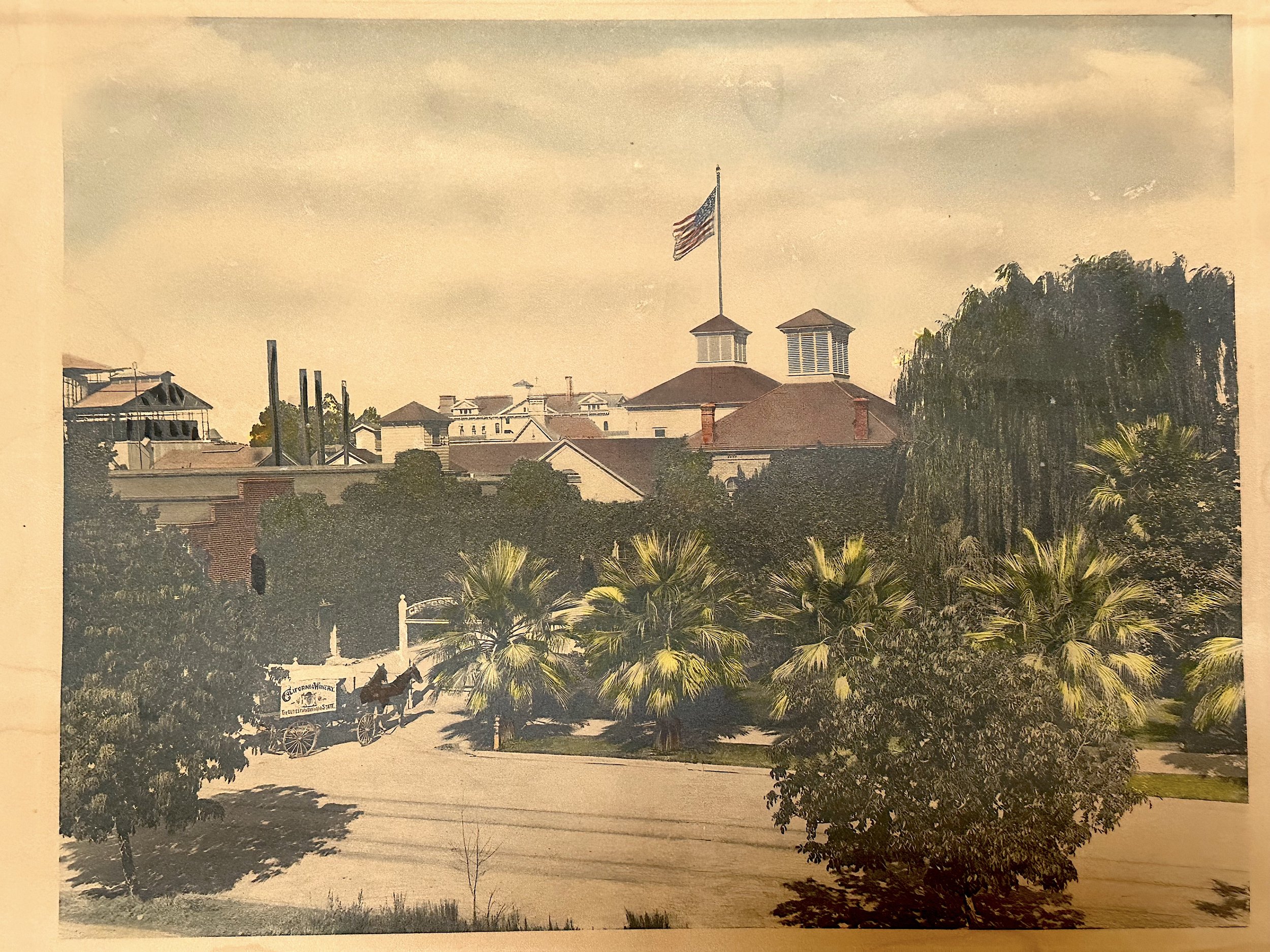
California Winery, Sacramento, Calif. Litho of the winery. Circa 1900
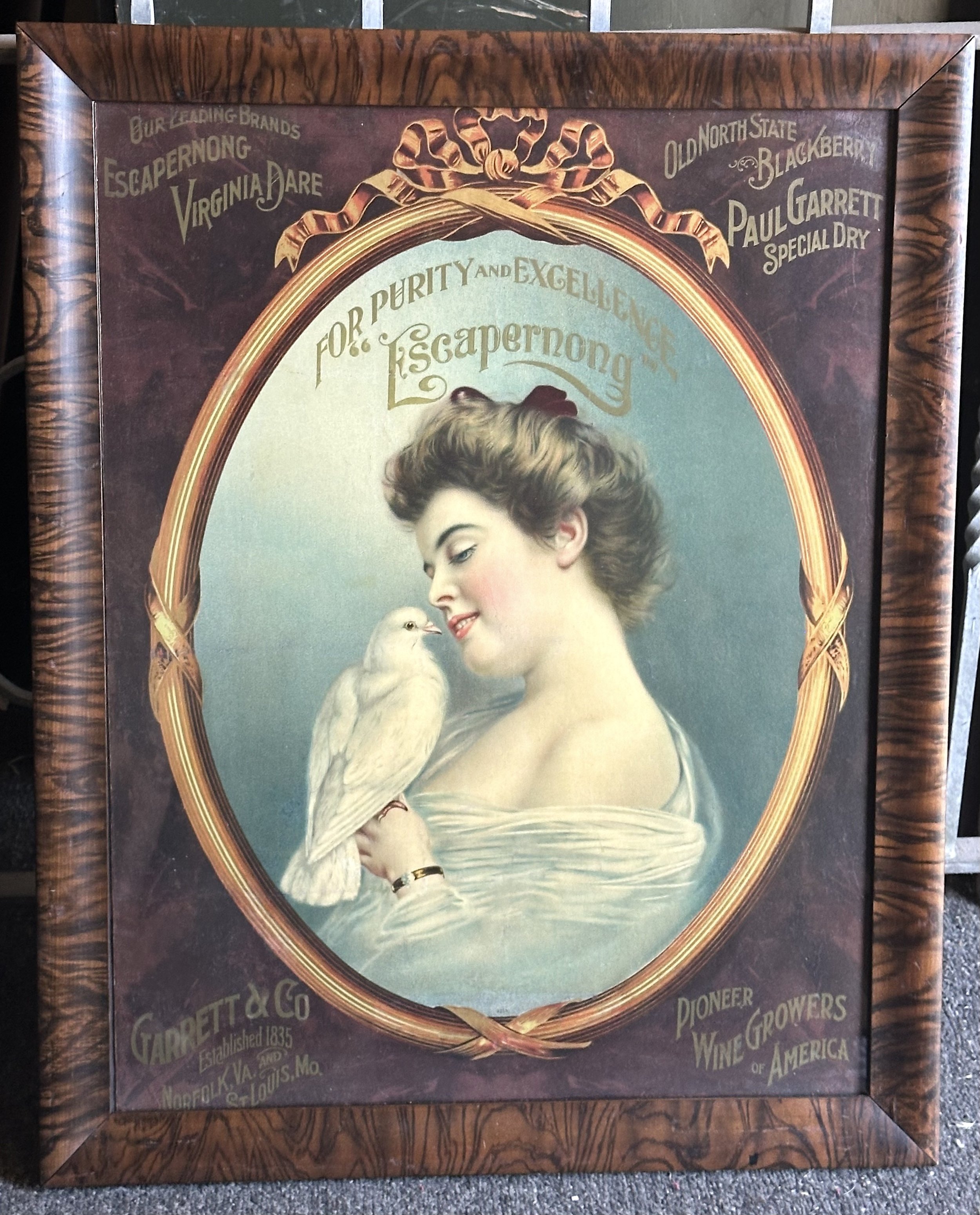
Garrett & Co, established in 1835 in North Carolina. They pioneered American winemaking using the native Scuppernong grapes of the region.
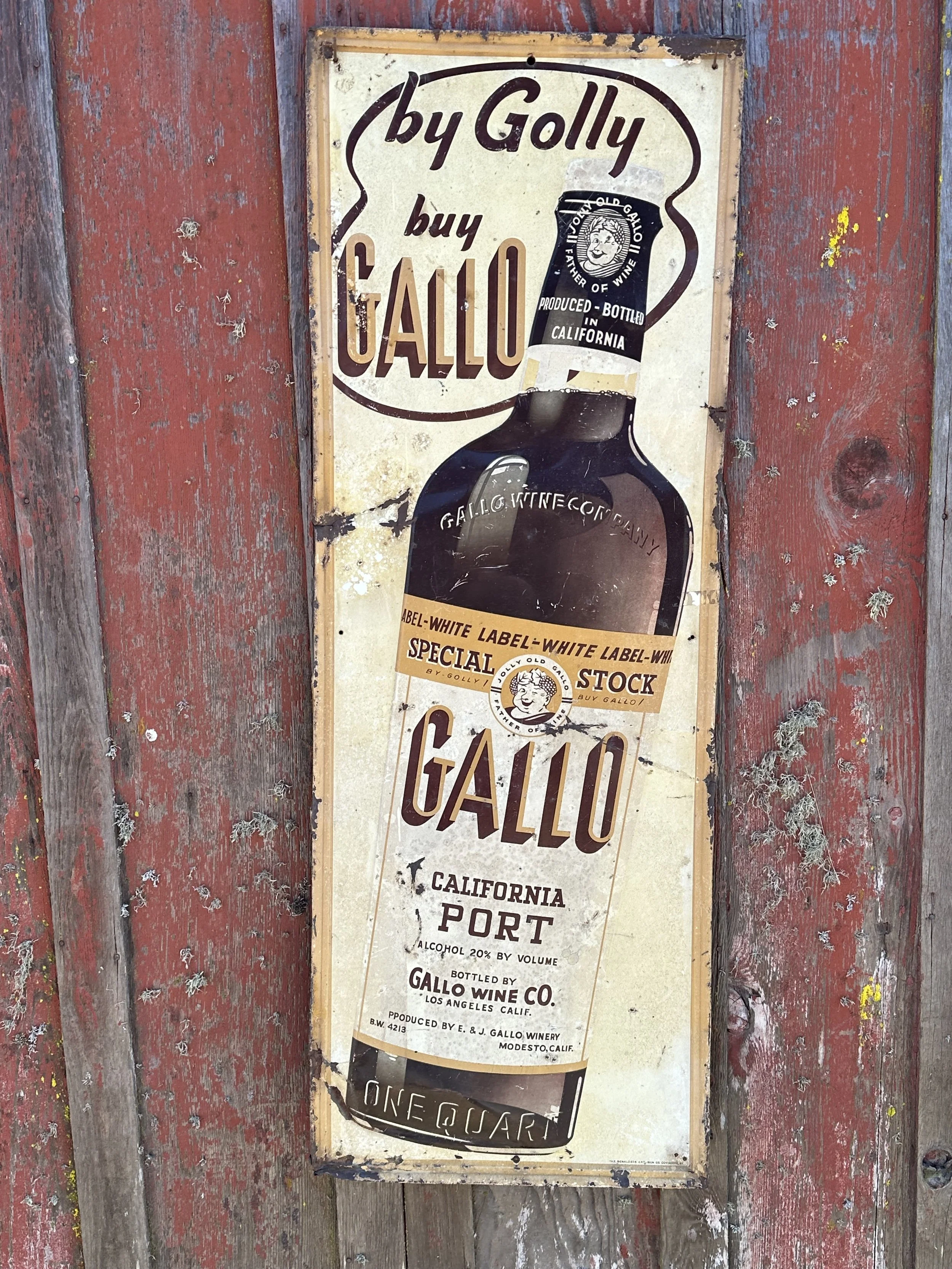
Advertising
Bottles
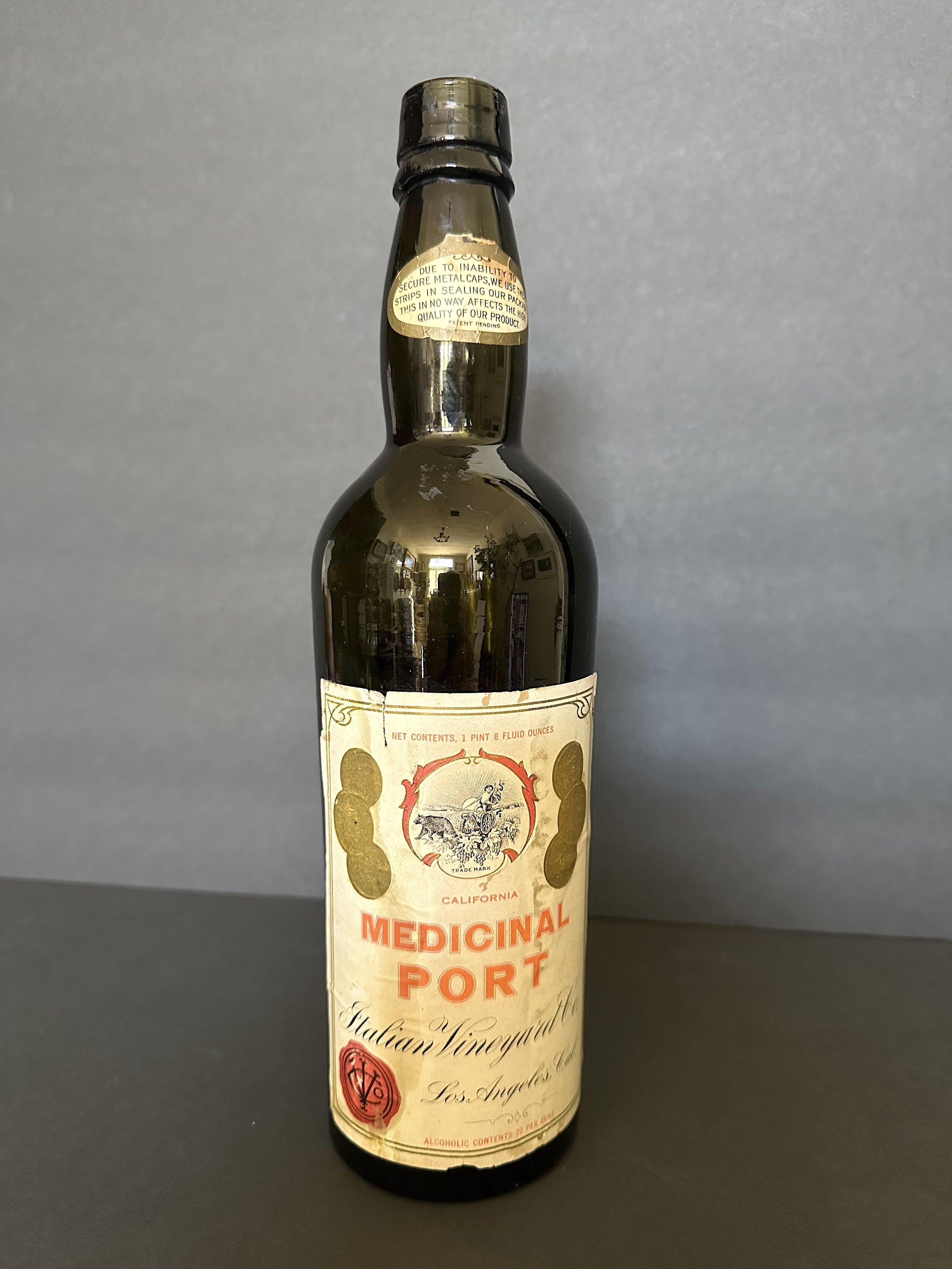
Uncommon Italian Vineyards Co, Los Angeles. Medicinal Port bottle C. 1924. Prohibition time.
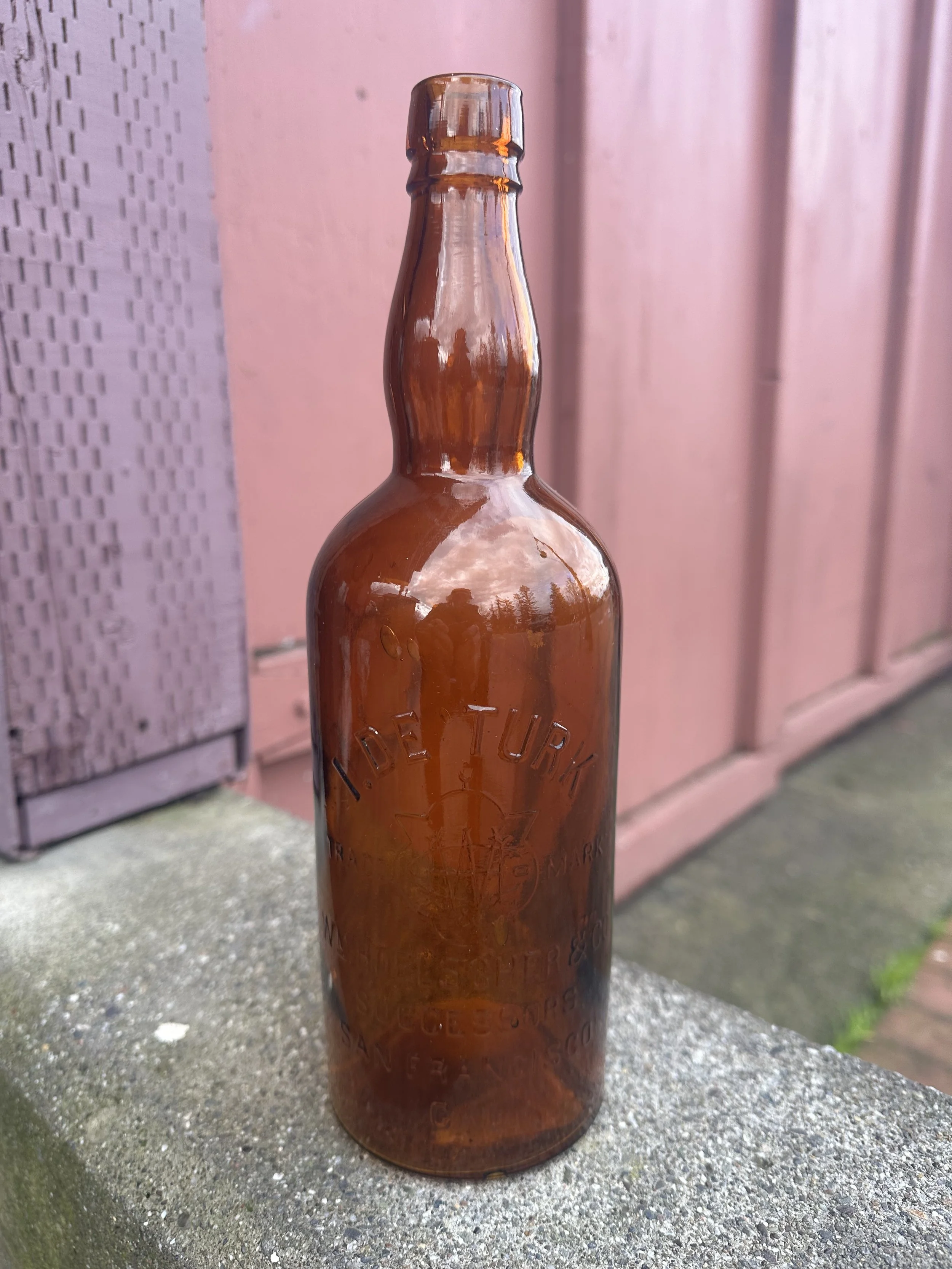
I De Turk, Wm. Hoelscher successor bottle with lady-leg design. C 1905.
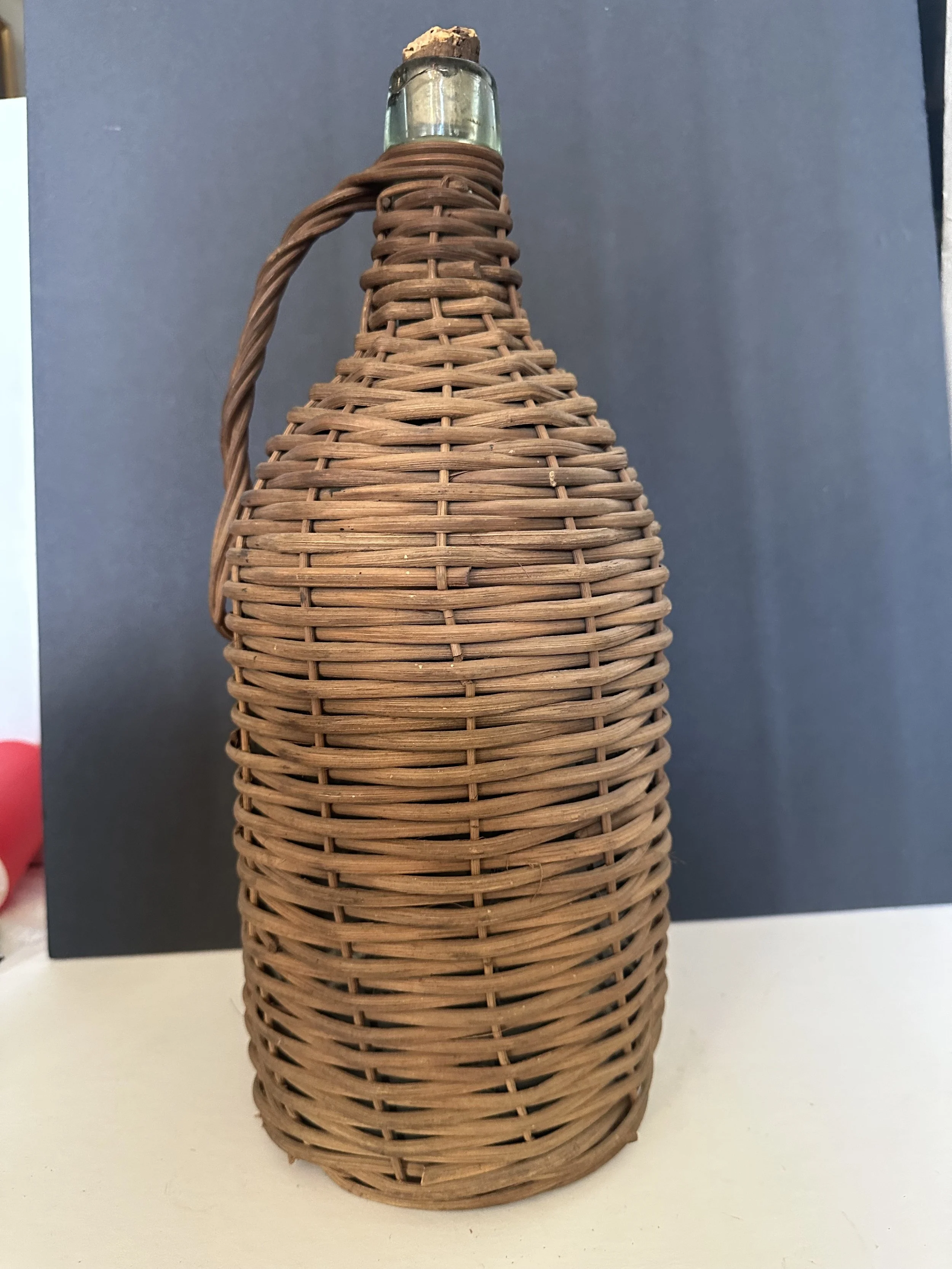
Sonoma County demijohn, c. 1920. Wrapped in wicker to protect the bottle from breakage and sunlight.
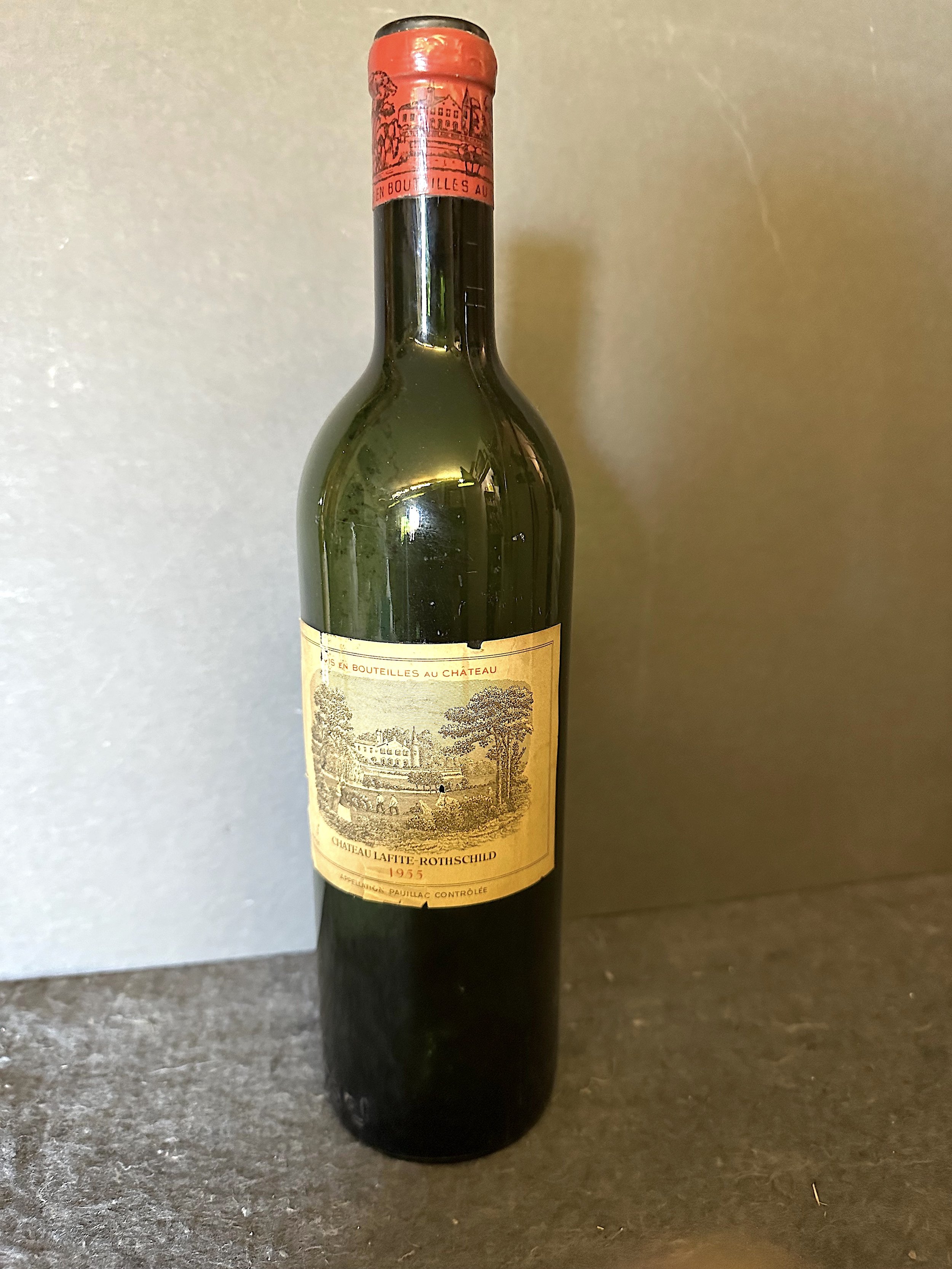
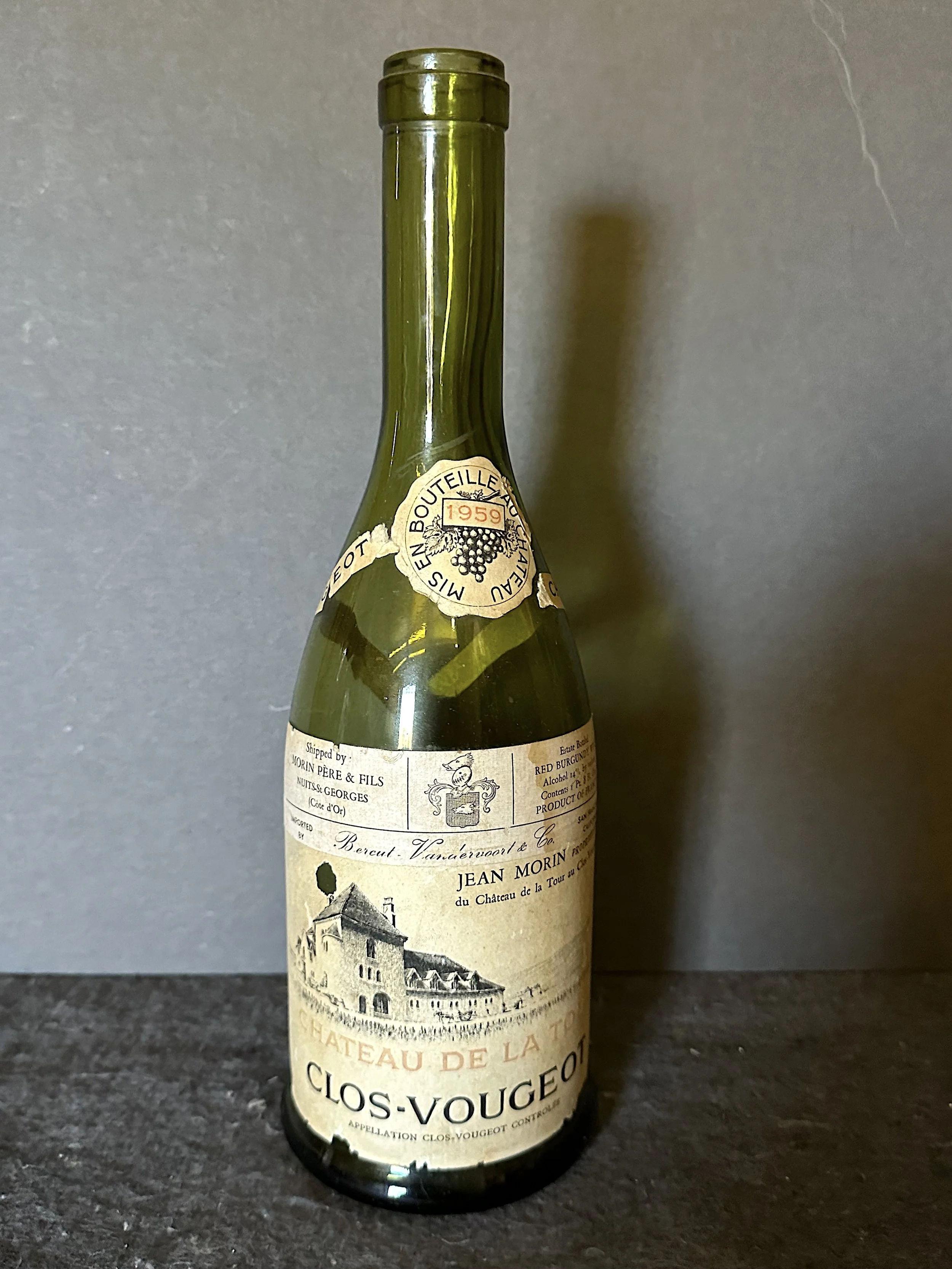
Clos-Vougeot, Chateau De La Tour 1955. All labels
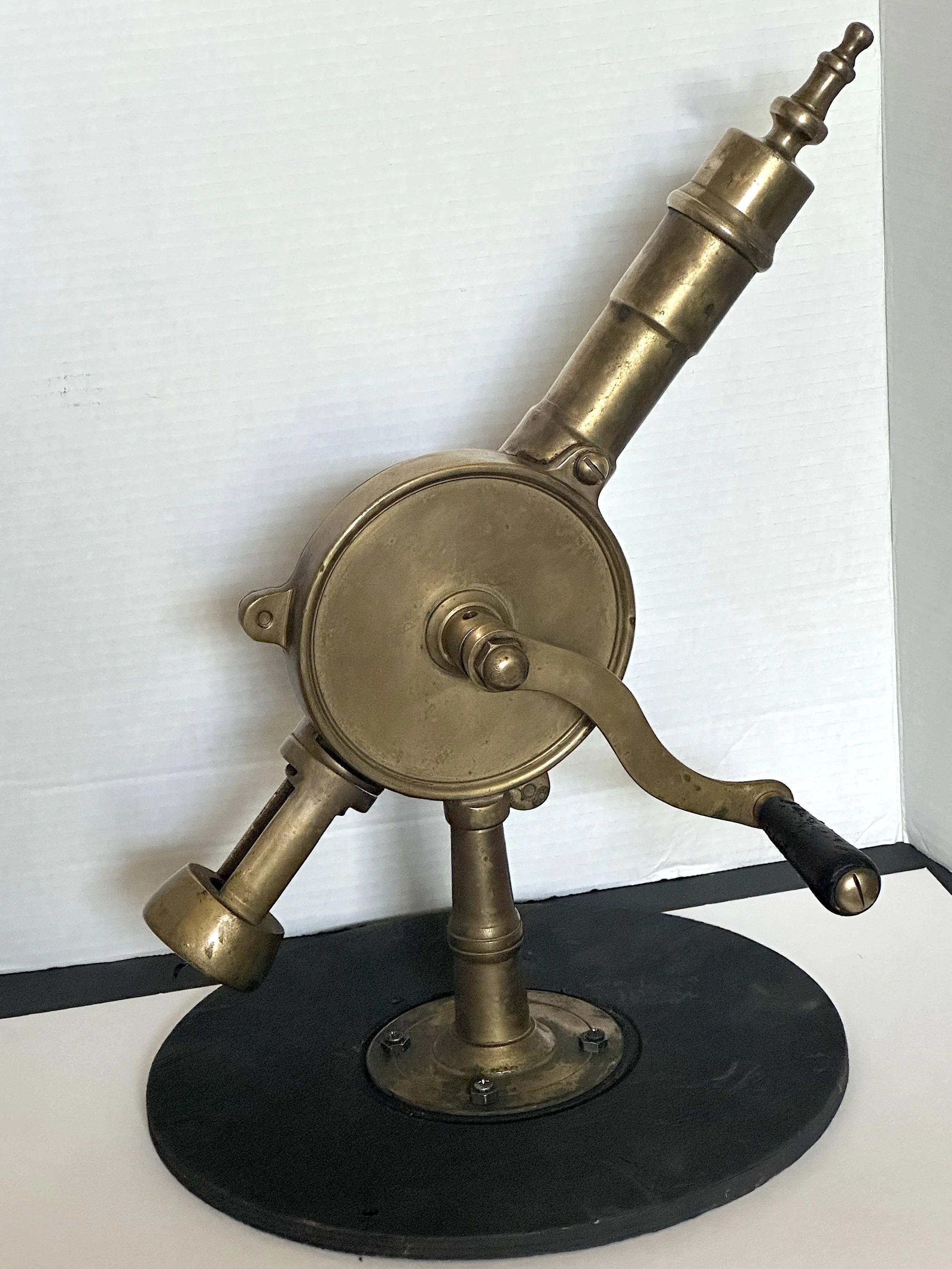
The “Rotary Eclipse” barscrew, 1887. One of the most elegant of all barscrews. And one of the most difficult to find. Excellent condition. 11” H.
The Rotary Eclipse 'Barscrew”, 1887. Revered by collectors as the “King of Corkscrews.”Polished brass, sculptural mechanism with a hand crank that efficiently drives the screw into the cork and pulls it out in one continuous motion. A complex, gear-driven rack & pinion mechanism. Uncommon.
Barscrews
Cellar Lamps & Cellar Tools
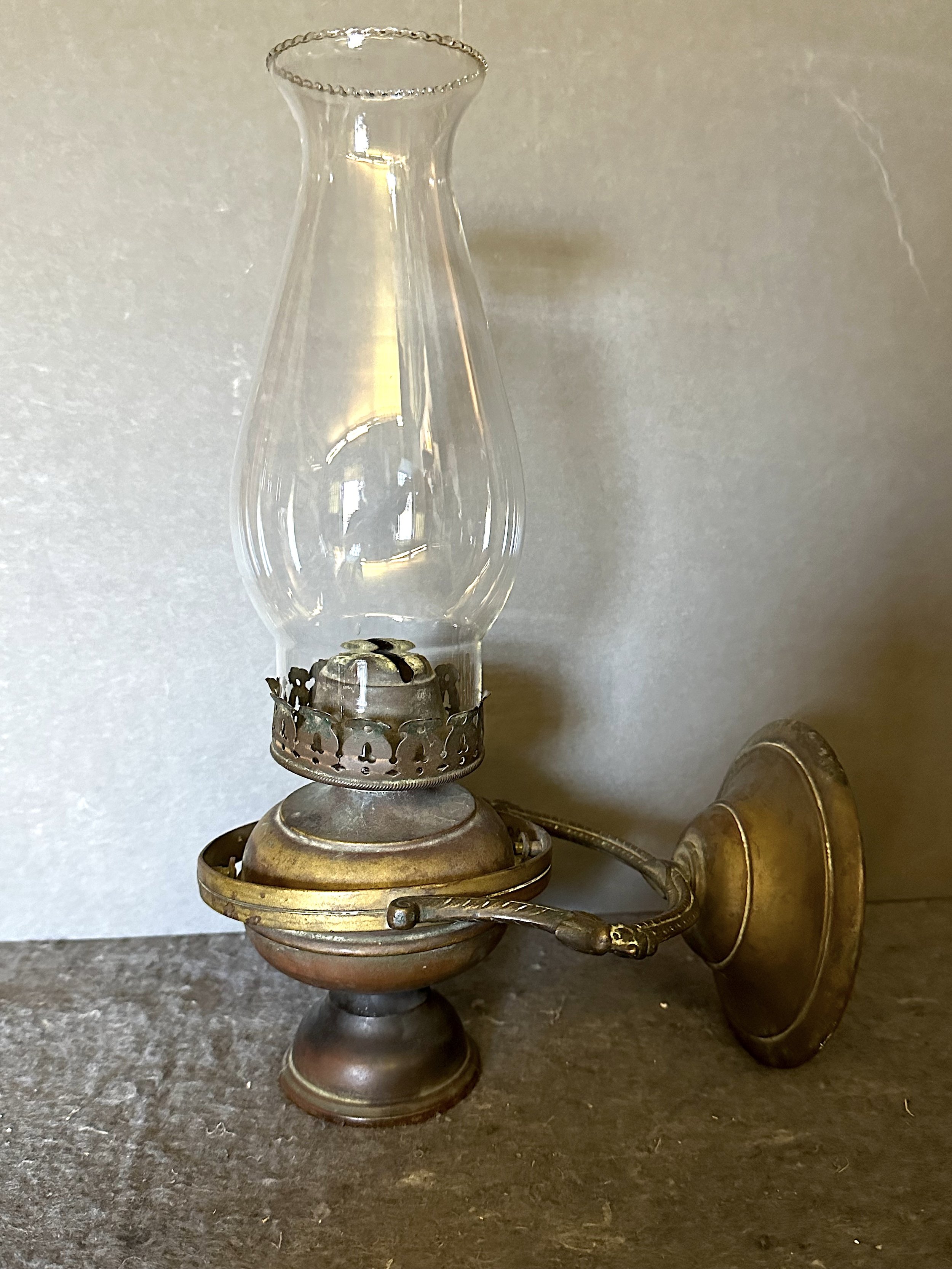
Gimbaled wine cellar lamp. Also used on sailing vessels. Brass, circa 1870s -1900. Weighted base. Can stand or be wall-hung. Working, with a period chimney.
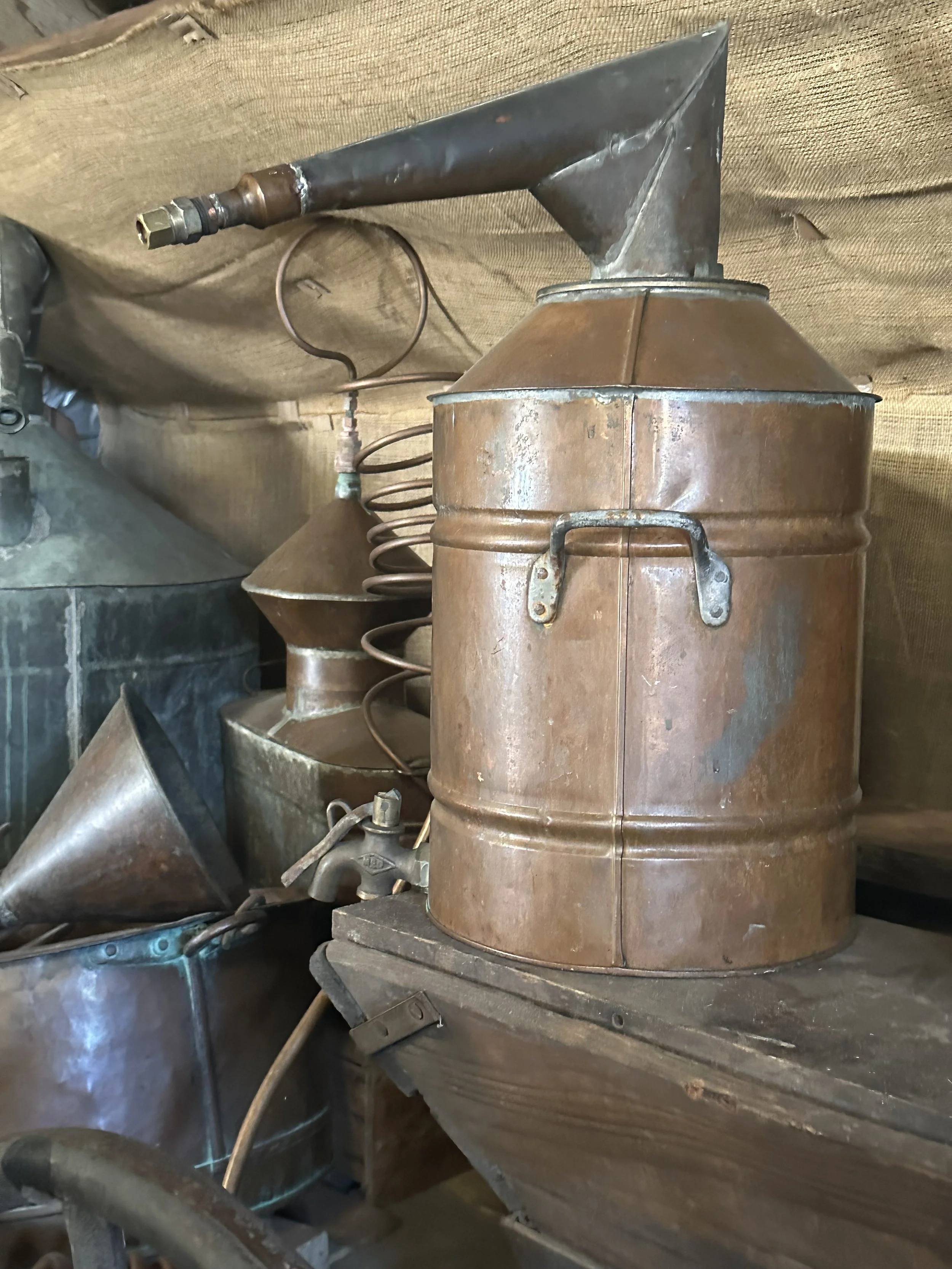
Small Alembic “pot still.” Found on an old ranch in Bloomfield, Sonoma County, California. It is in very good condition with nice patina and has its “gooseneck” top. It has a 12” diameter at the base and is 22” high. Circa 1920s.
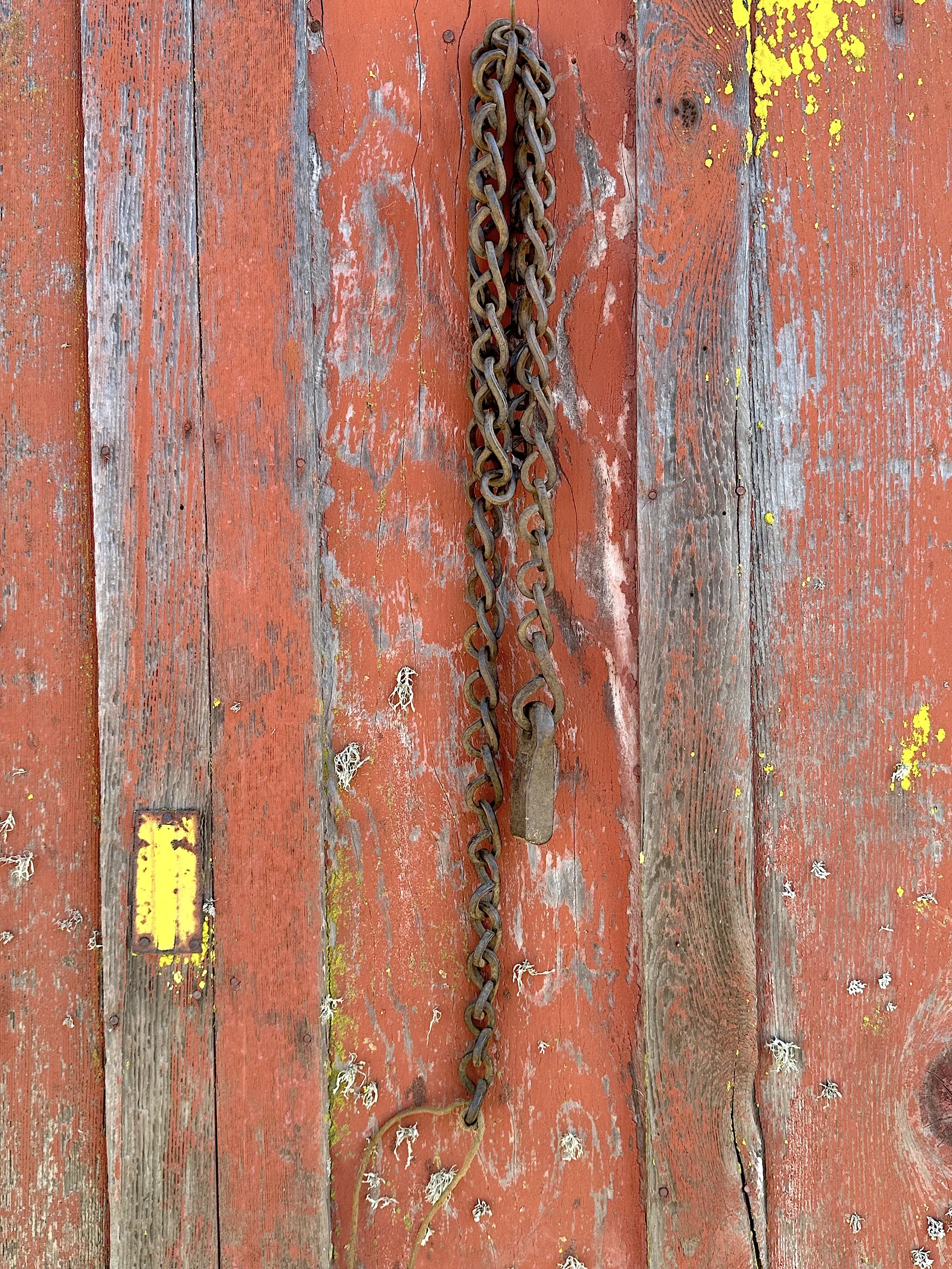
Vat chain. Used to clean must and sediment from fermenting tanks & wine vats. 62” L C. 1900.
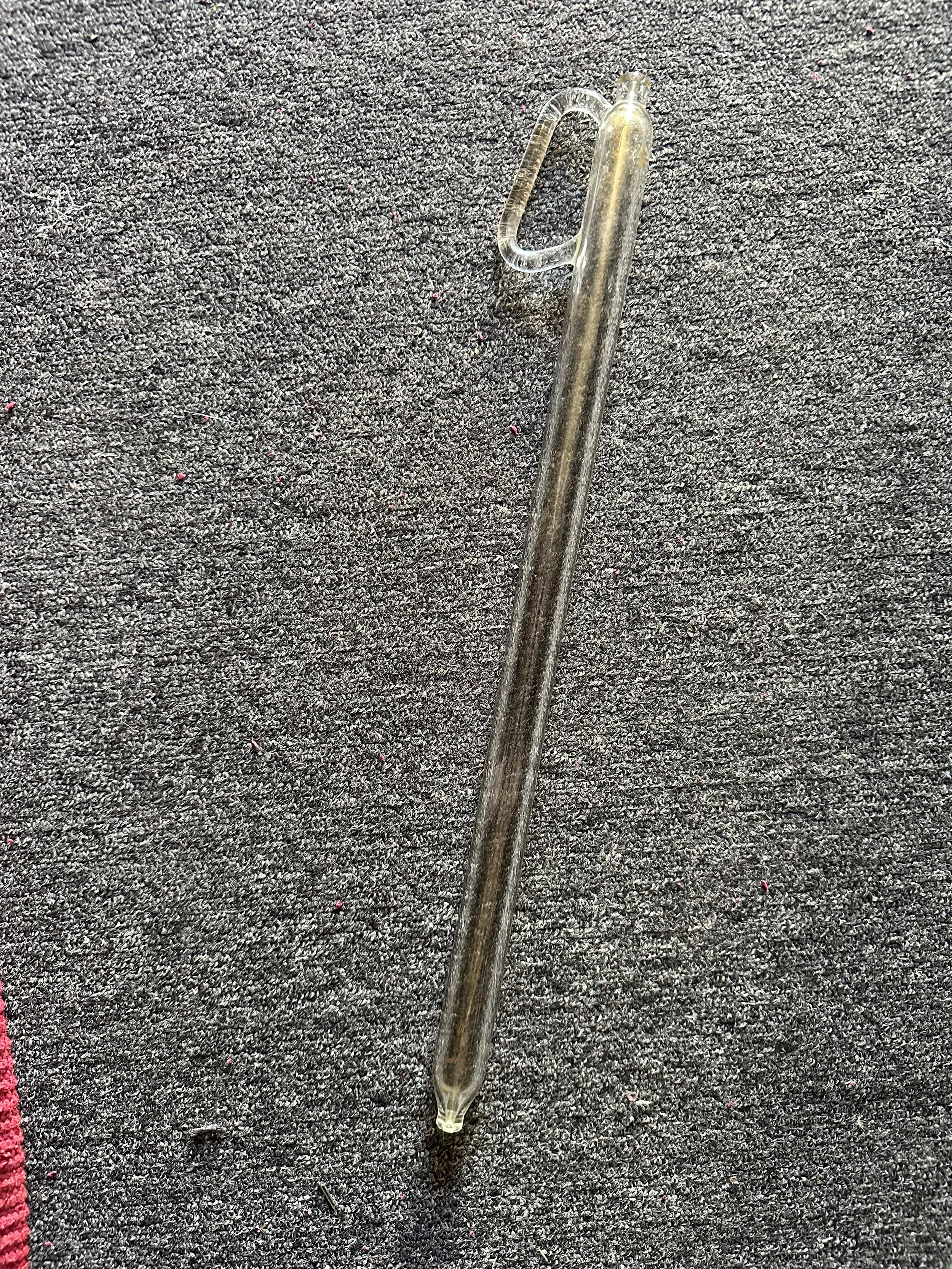
Hand-blown glass pipette, nicely stylized with a handle. 19” L. Circa 1910 - 1930. Used in wine barrel sampling.
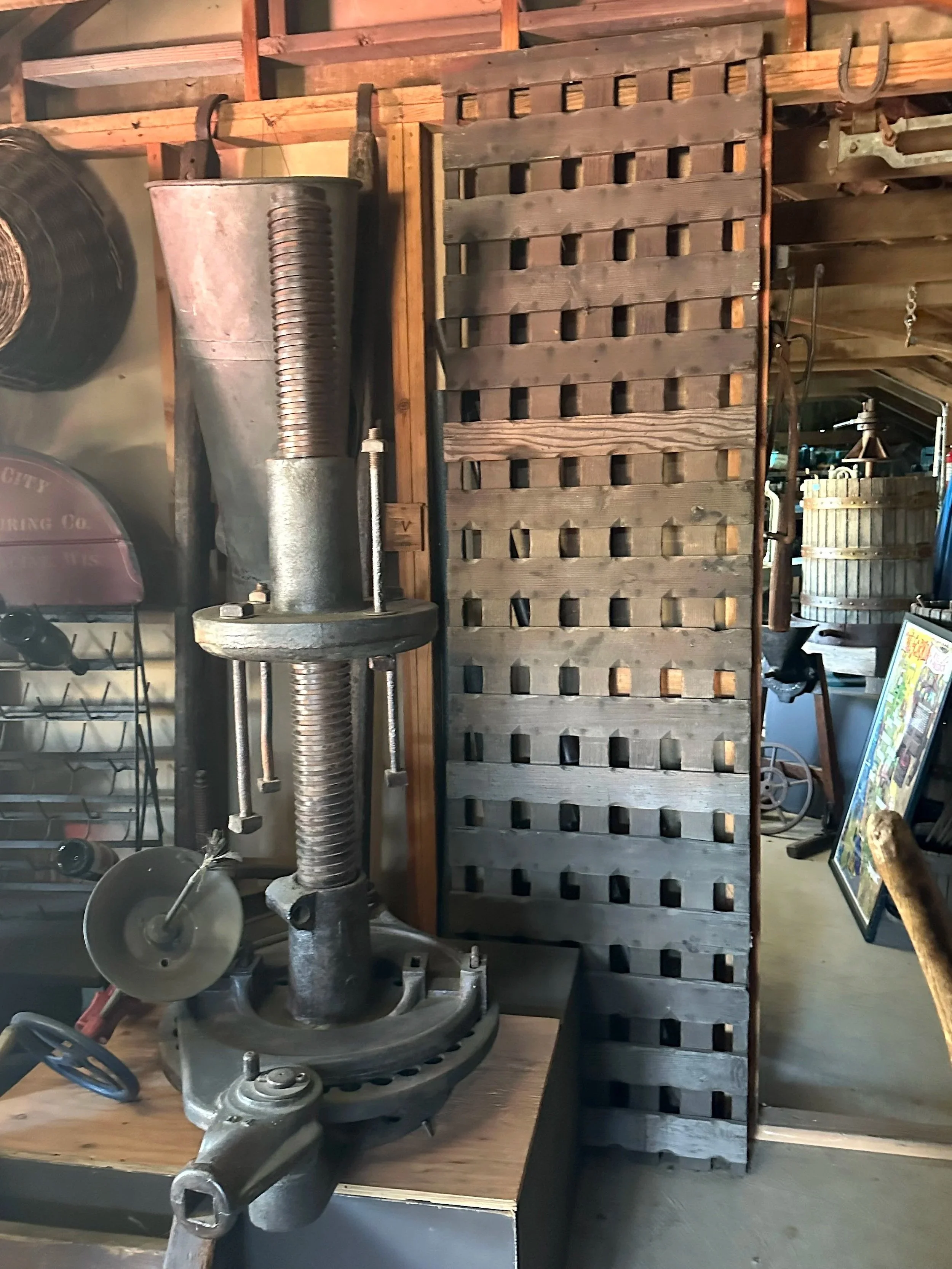
This clear-heart redwood tool is used in the process of making champagne. “Riddling” was invented in 1822 in France. After a first fermentation of champagne to be, the temporarily capped bottles are placed into a wooden board system with holes to allow for a 45-degree bottle resting angle during the second fermentation.
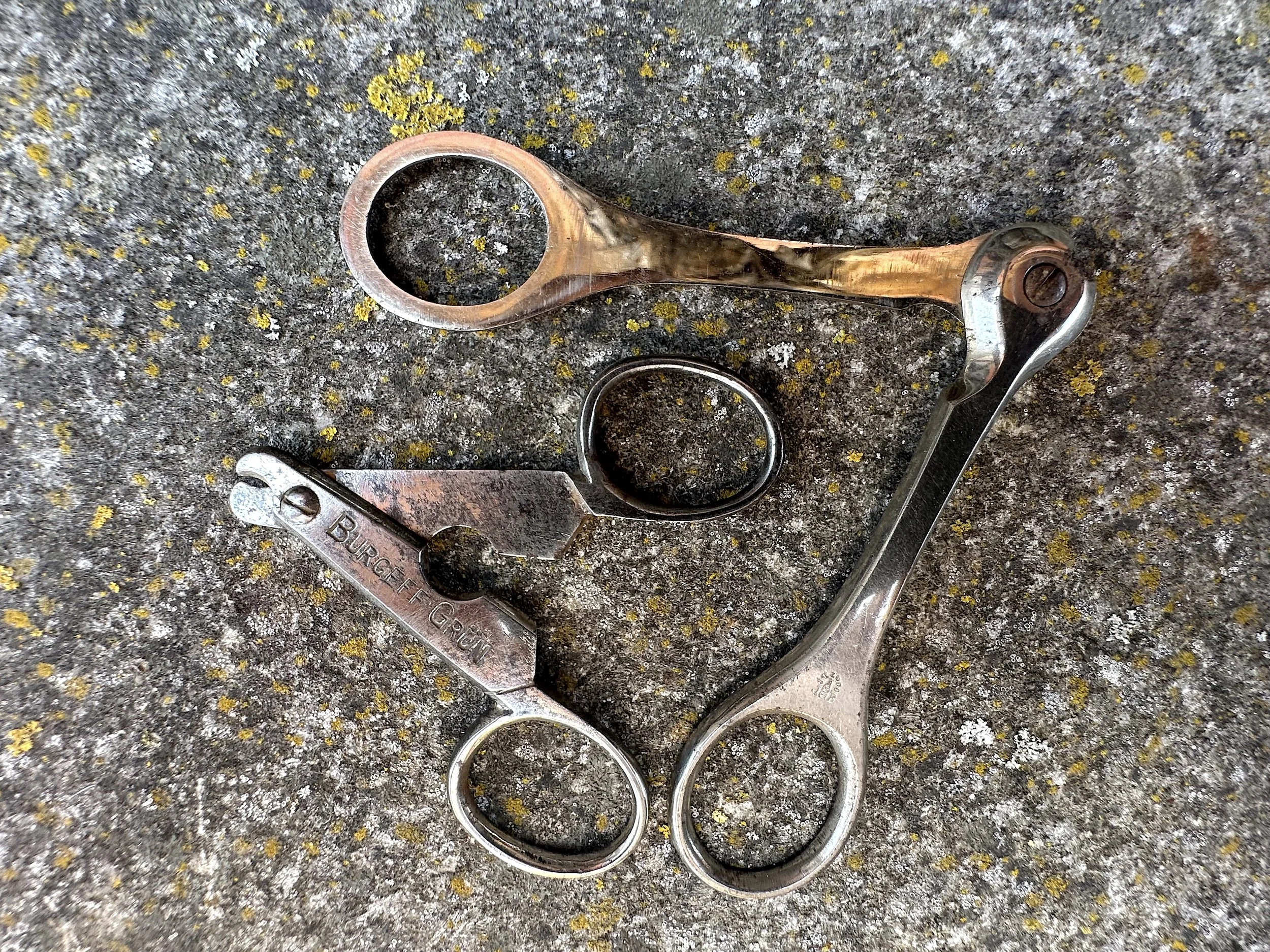
Two pairs of champagne foil cutters with cigar cutter. Circa 1900- 1920. Both are marked.
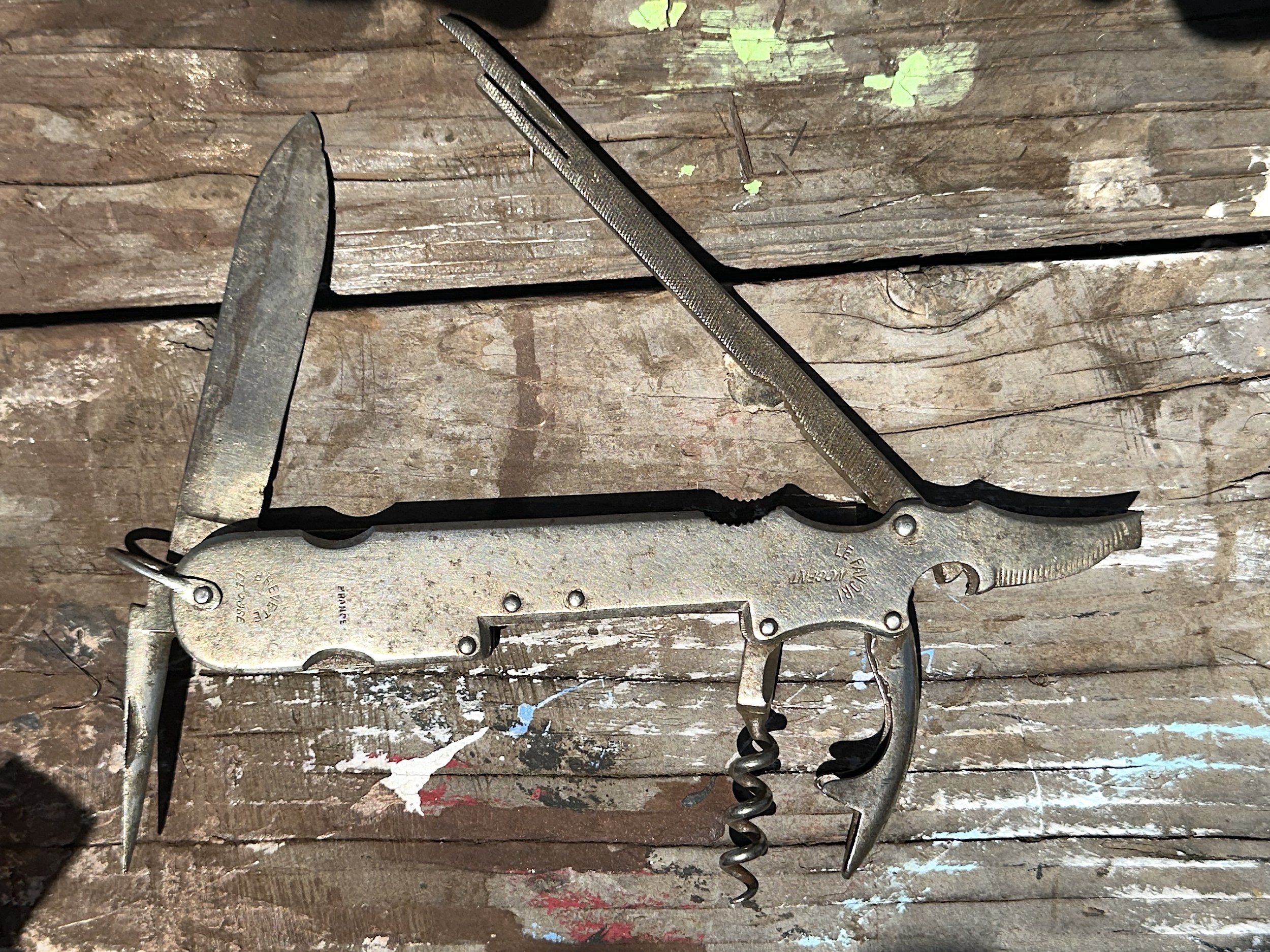
French multi-blade utility knife with corkscrew & bar tools.
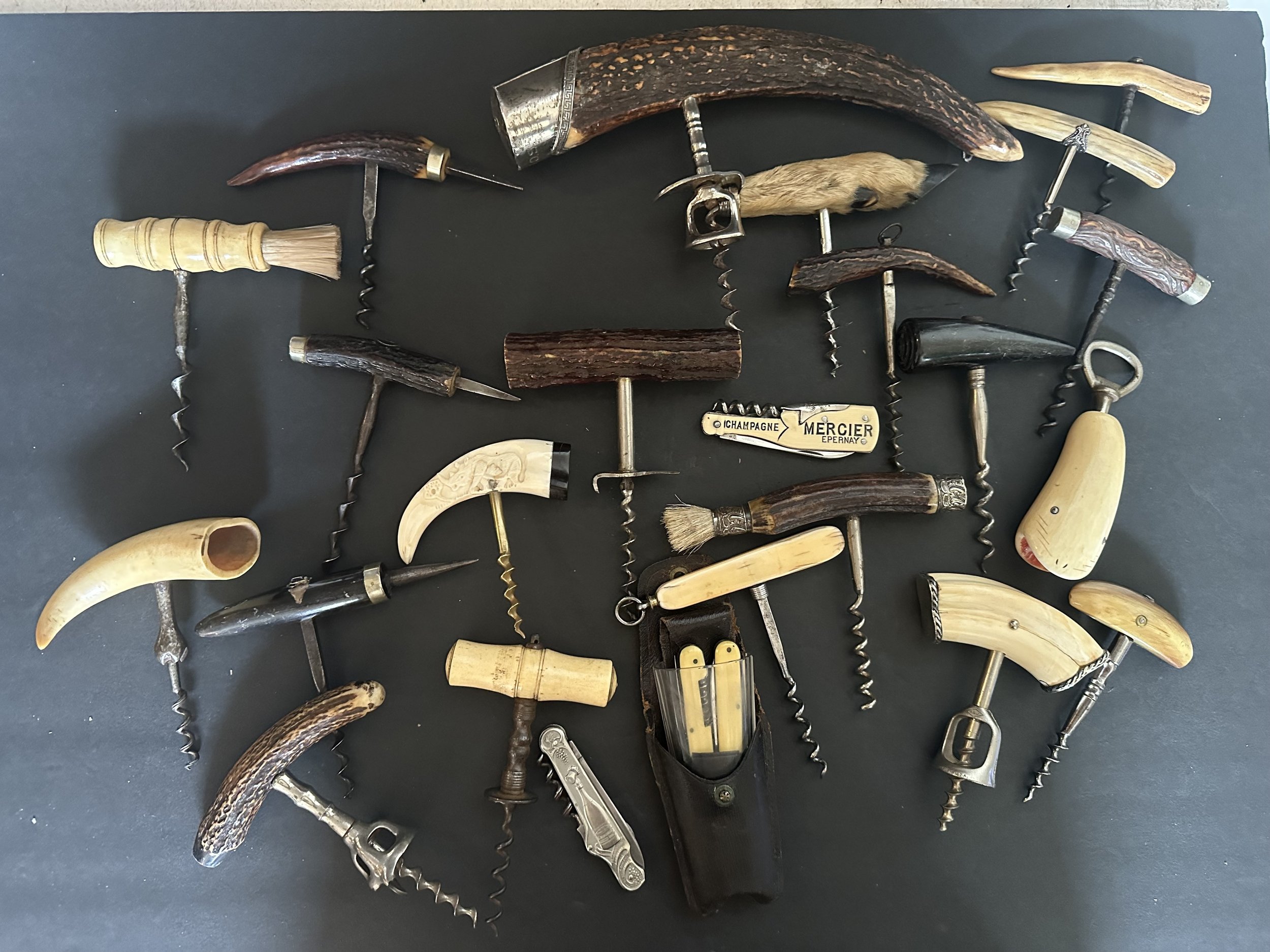
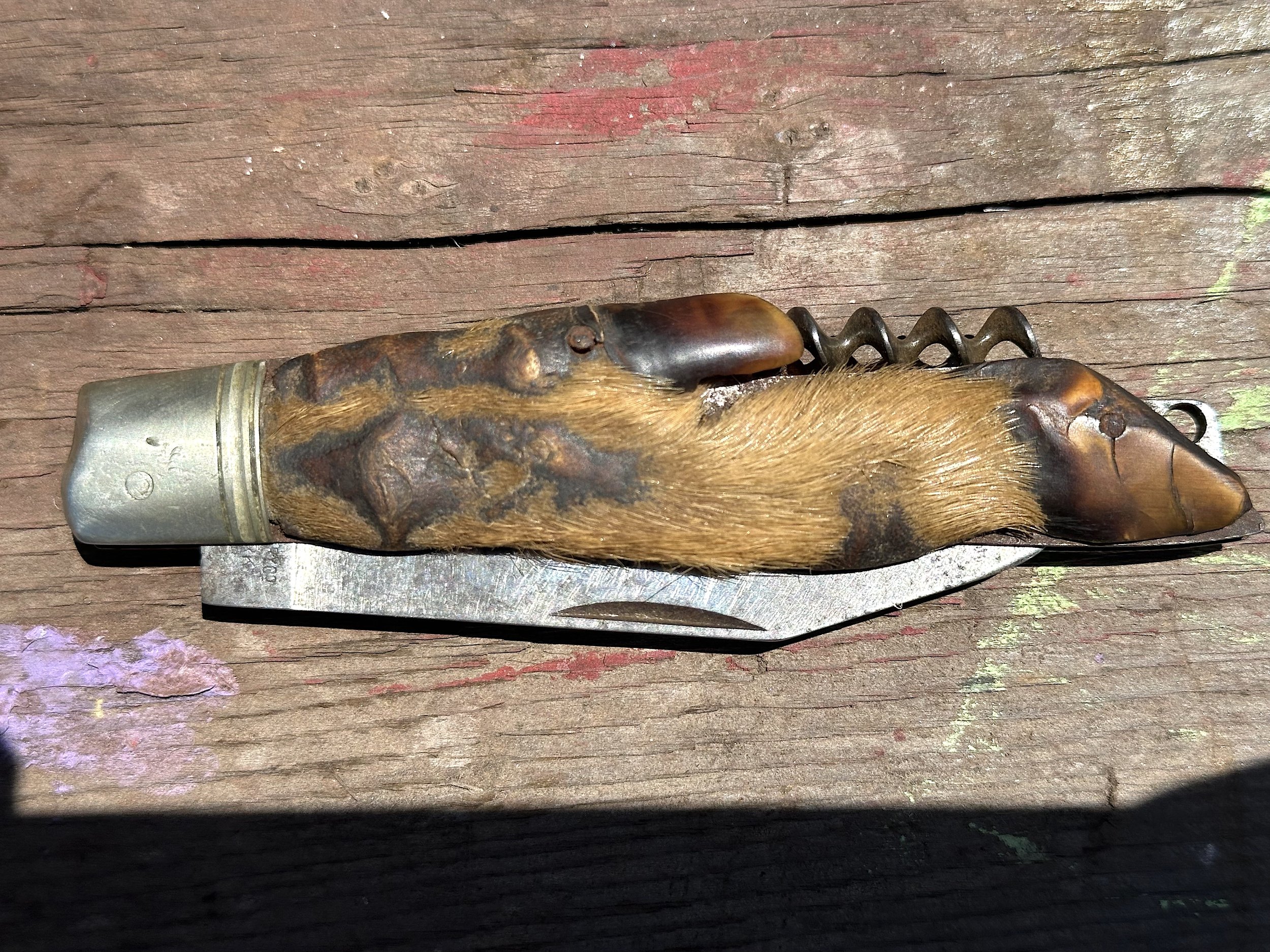
German 1920s deer foot & horn “hunter’s knife” with corkscrew.
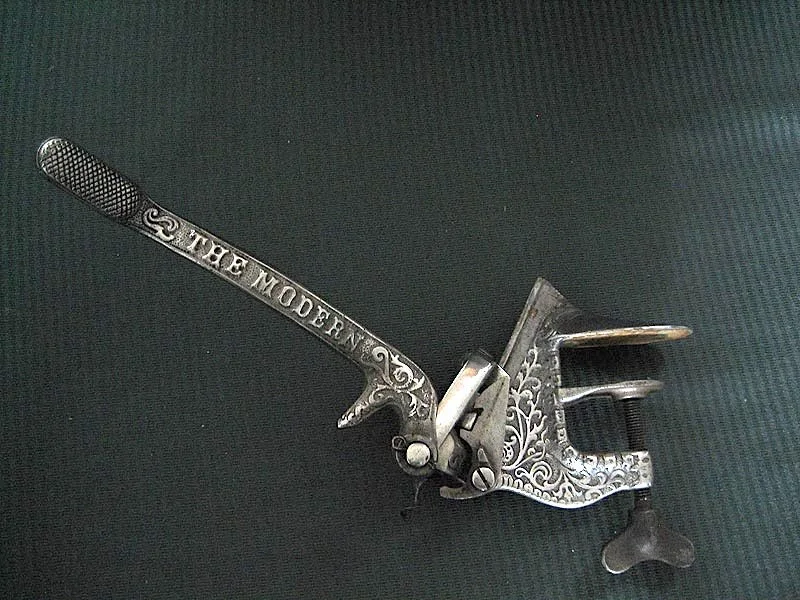
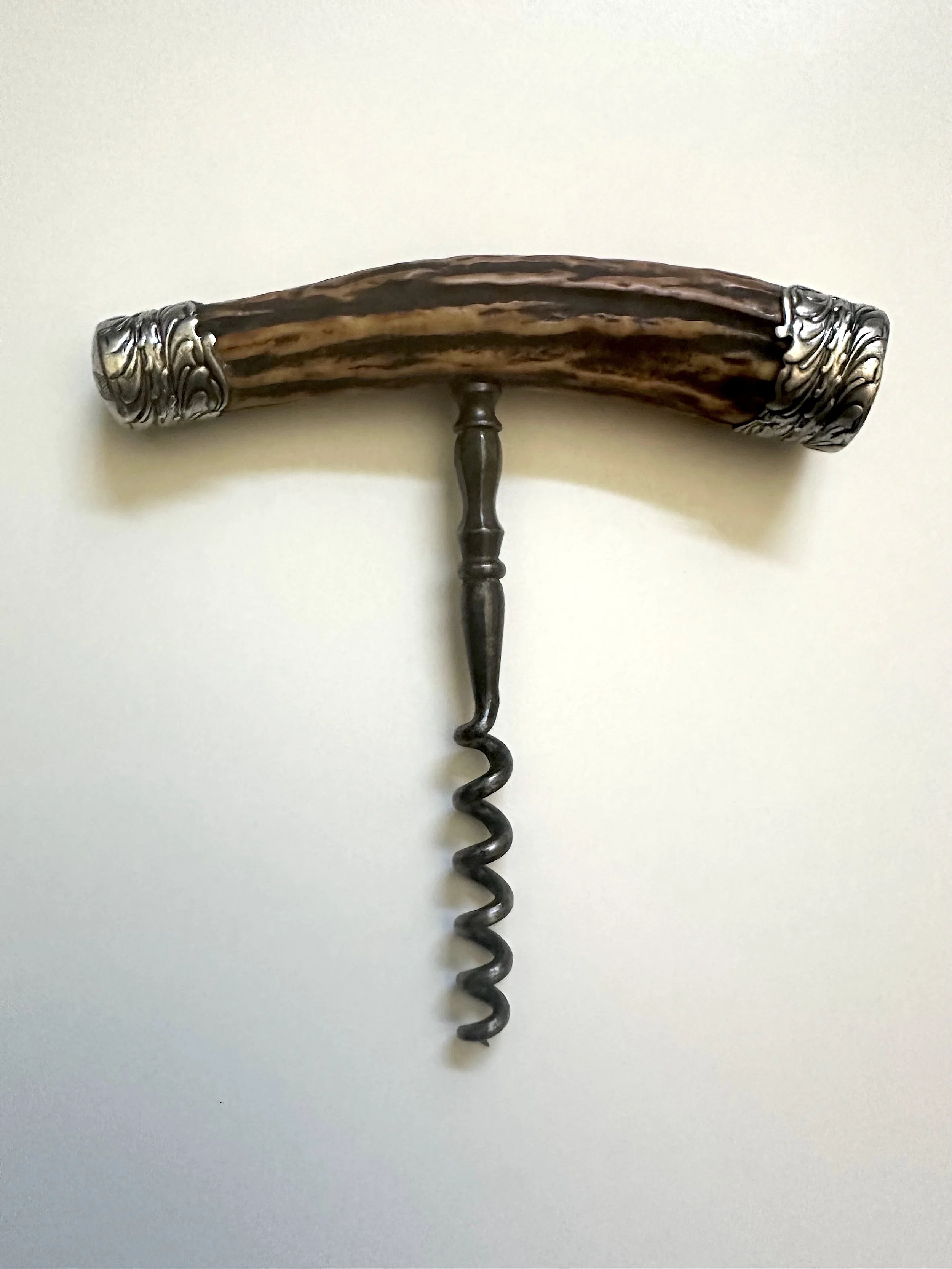
Elaborate antler and sterling-capped corkscrew. Not marked. Circa 1890 - 1910.
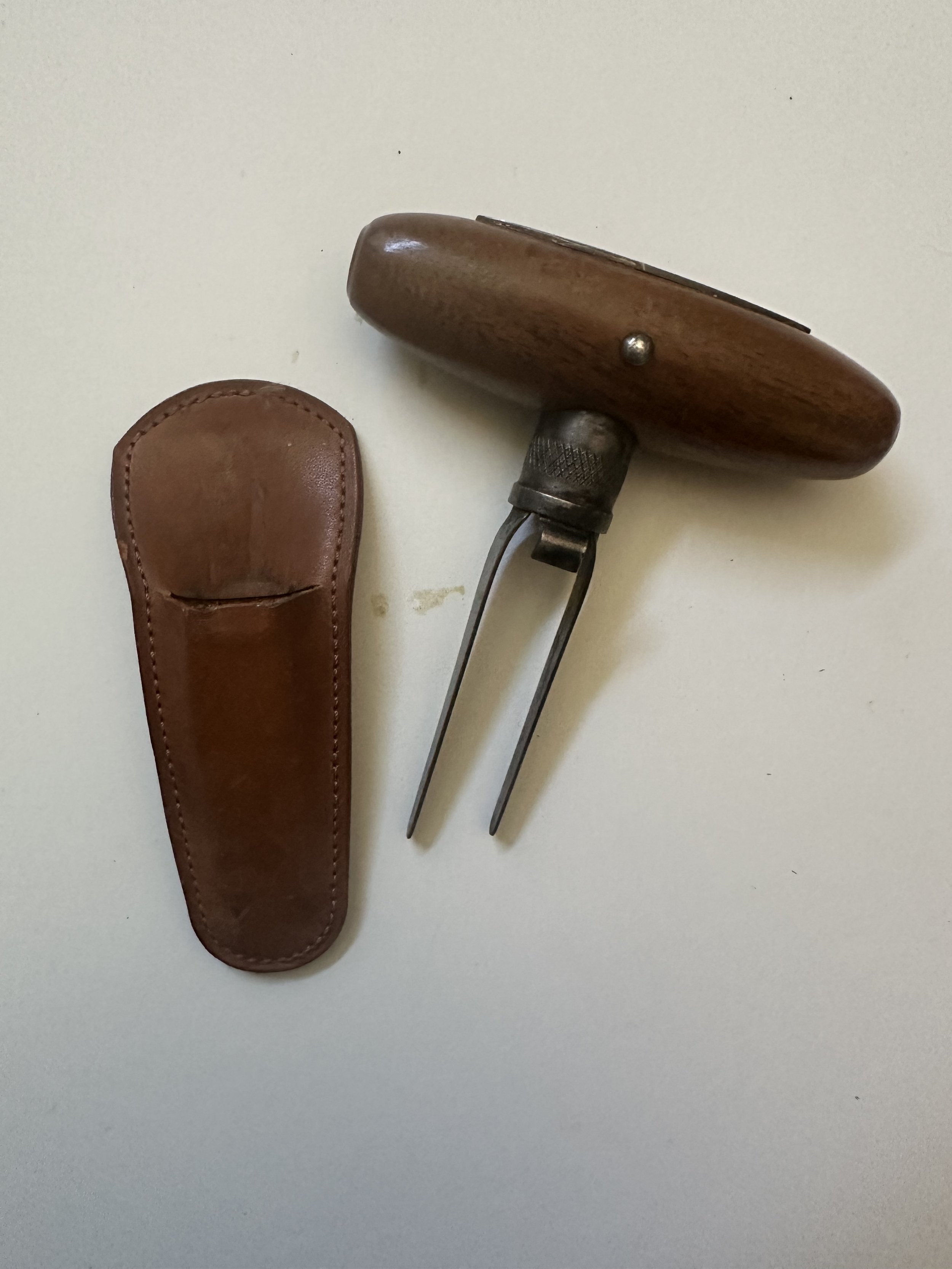
“The Gourmet”. A fancy leather-cased sheath holding a prong wine bottle puller. Circa 1949 - 1952.
Corkscrews
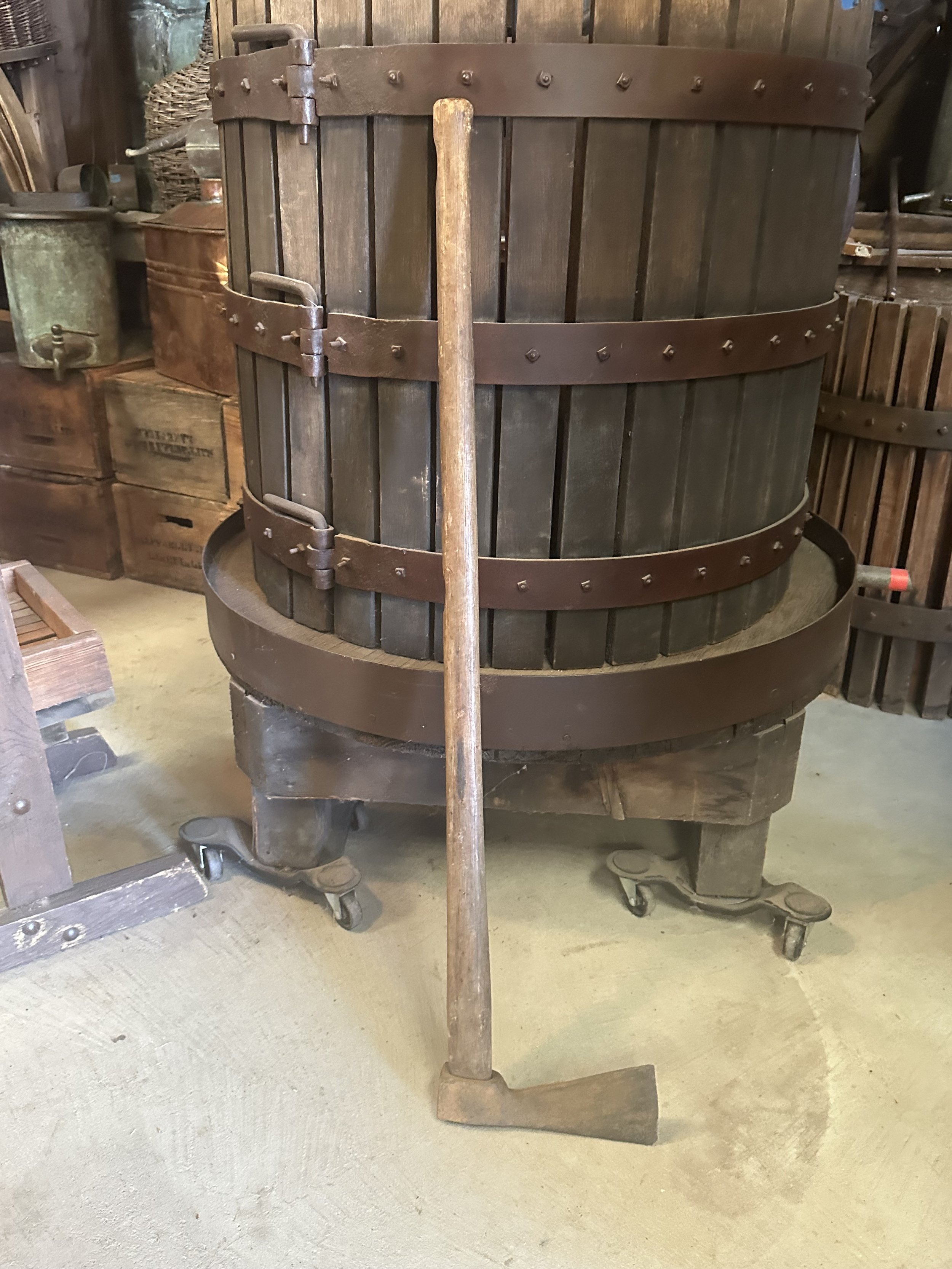
Cooper’s hewing or felling axe. Blacksmith-made; circa mid-19th C. Illegibly signed. Oak handle. 42” L X 9 1/2” X 3 1/2” (blade). Petaluma barn find.
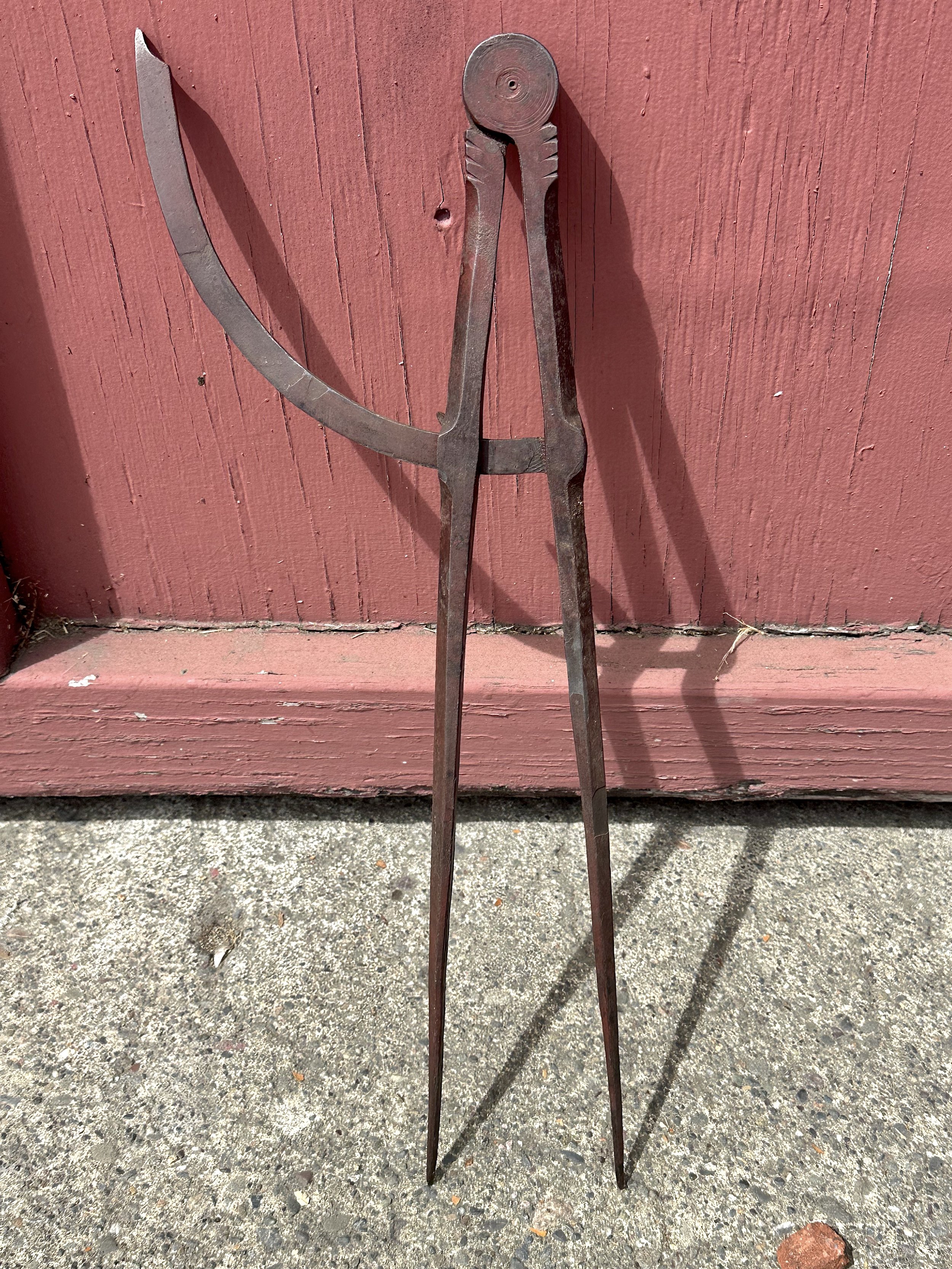
Large divider with nice early markings. 18” L. Excellent condition. C. 1840s - 1860s.
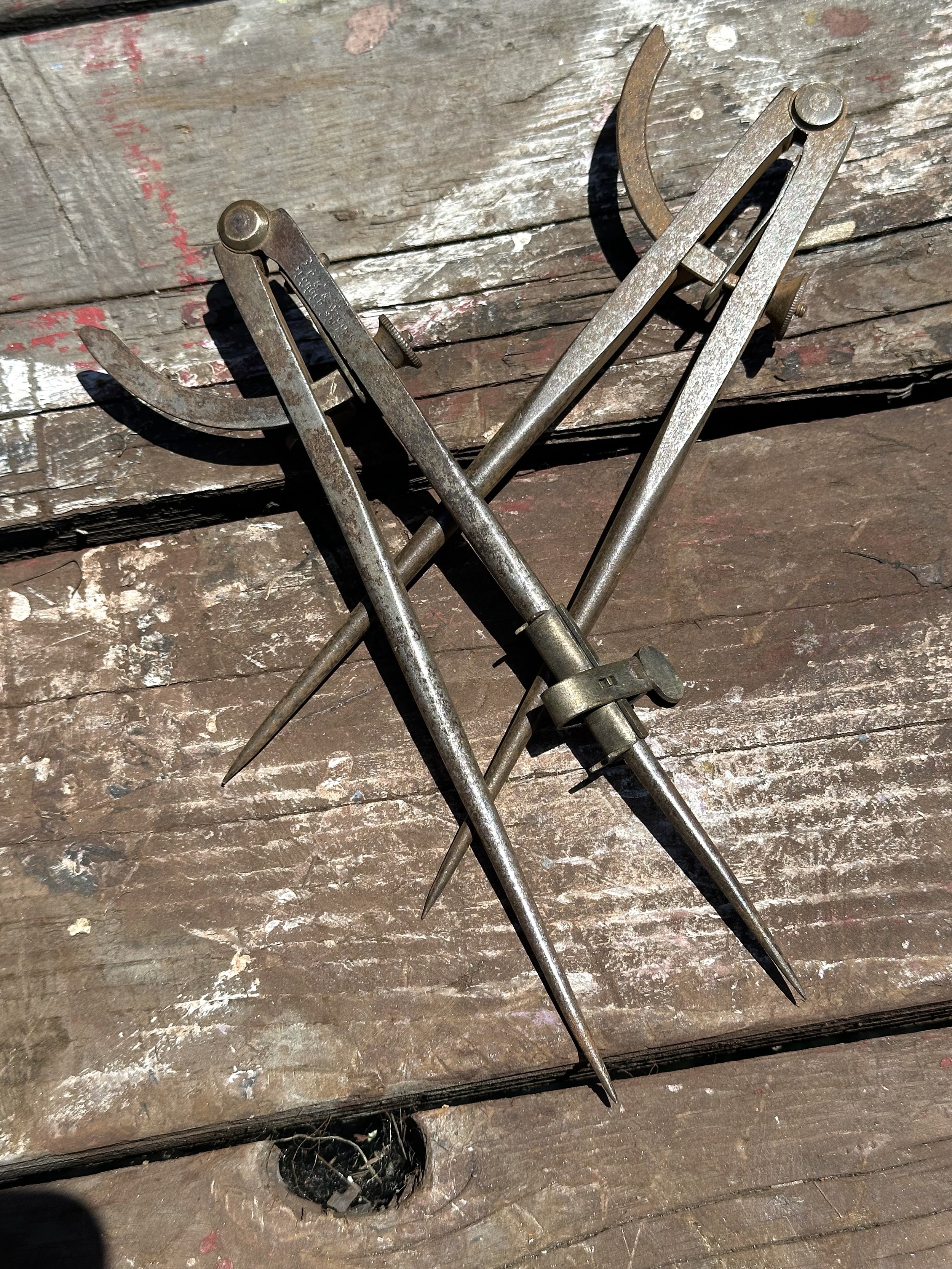
Two small steel dividers, c. late 19th century.
Cooper Tools
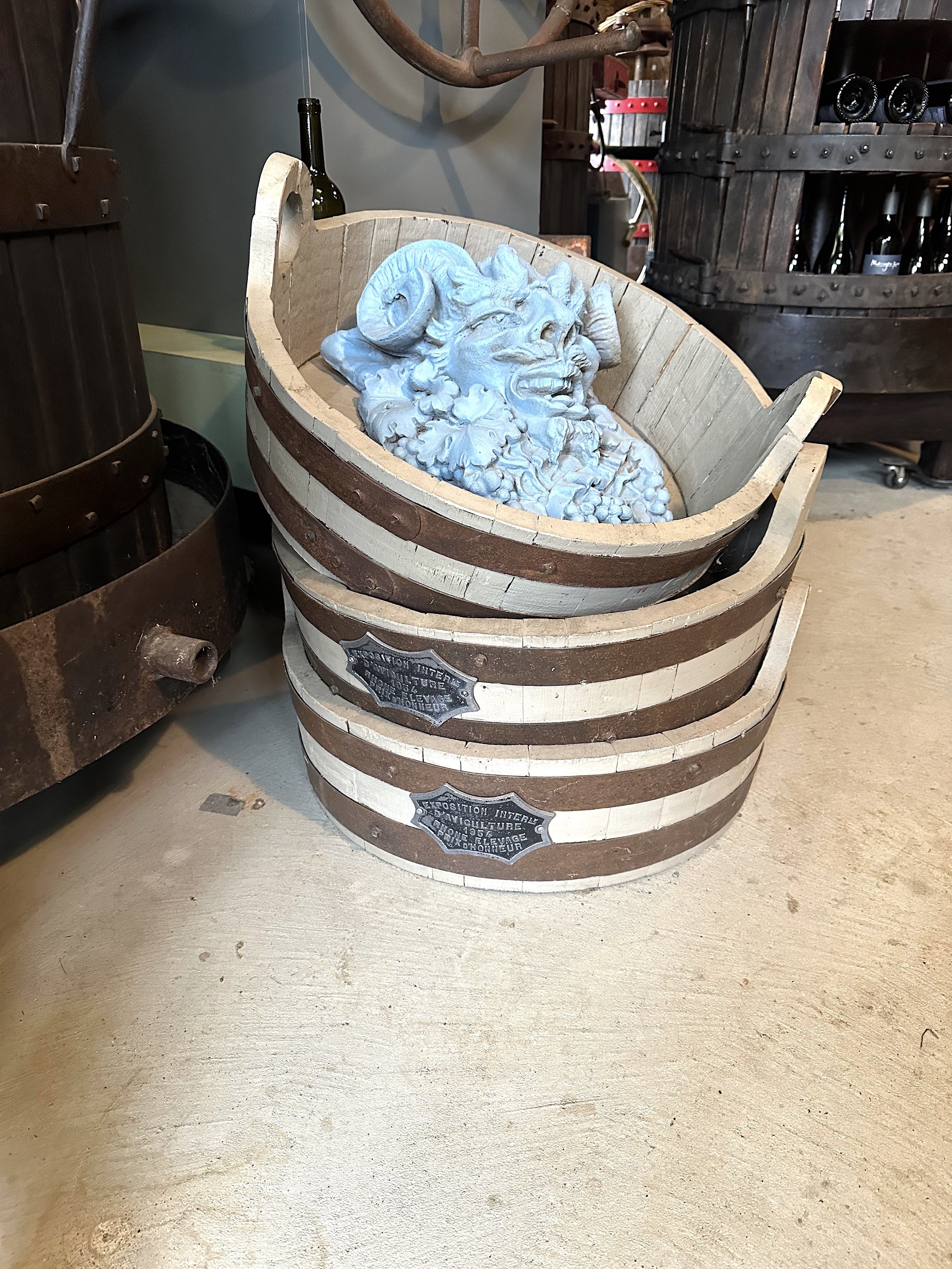
Three oak display bins made from old wine barrels. French; they were used at the International Exposition d’Agriculture, Rhône L’Elevage, and have metal plaques. The grapes displayed were awarded the Prix d’ Honneur; honorable mention. Nice original paint; each measures 23” in diameter X 7” H. They each have carrying handles.
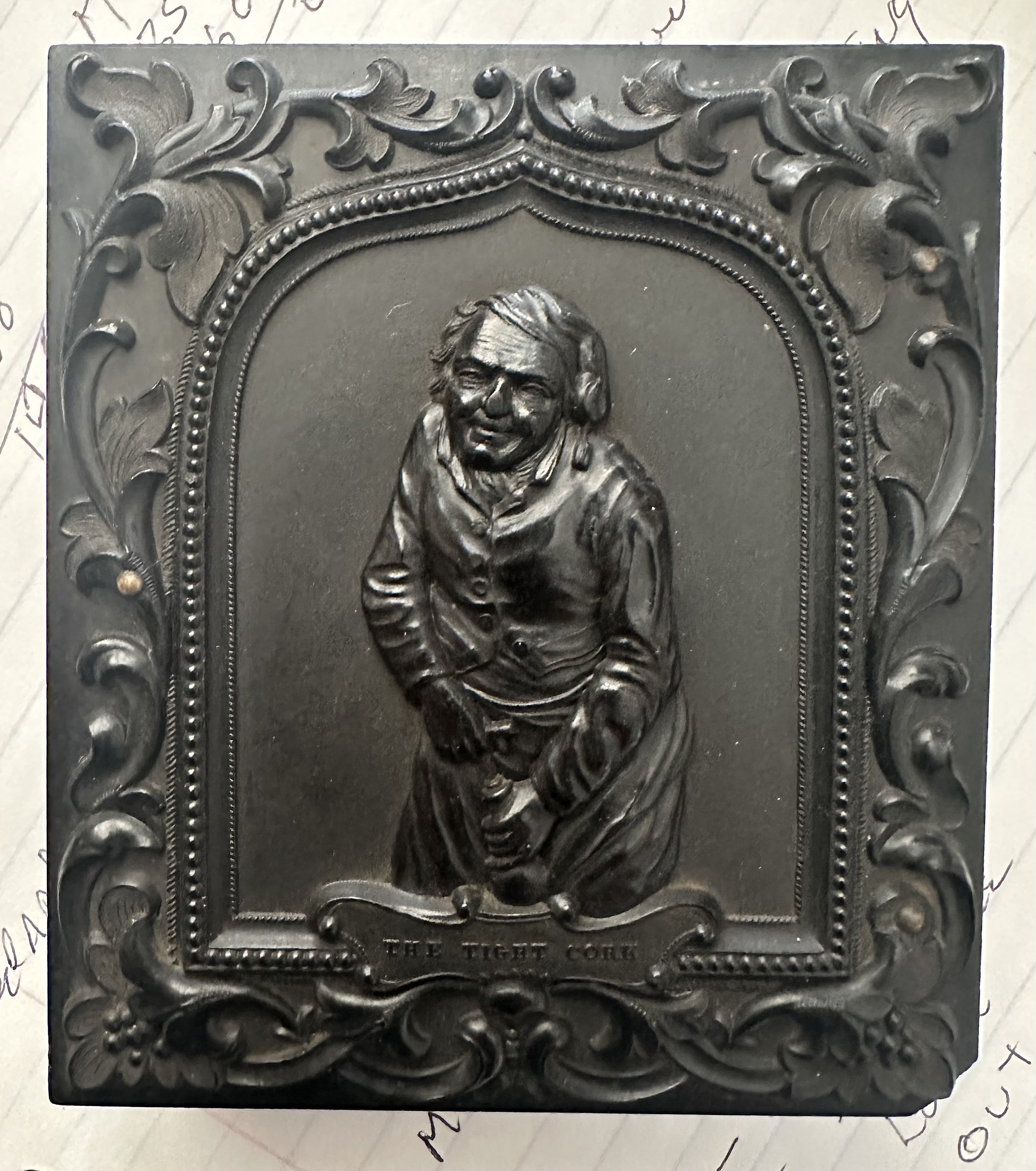
Rare Daguerreotype “Union” case with a wine theme of “The Tight Cork.” Circa 1850s, 3 3/4” X 3 3/4” X 3/4”. These photograph cases were used to carry an image of a loved one, thing, or place. Very popular in the Civil War period.
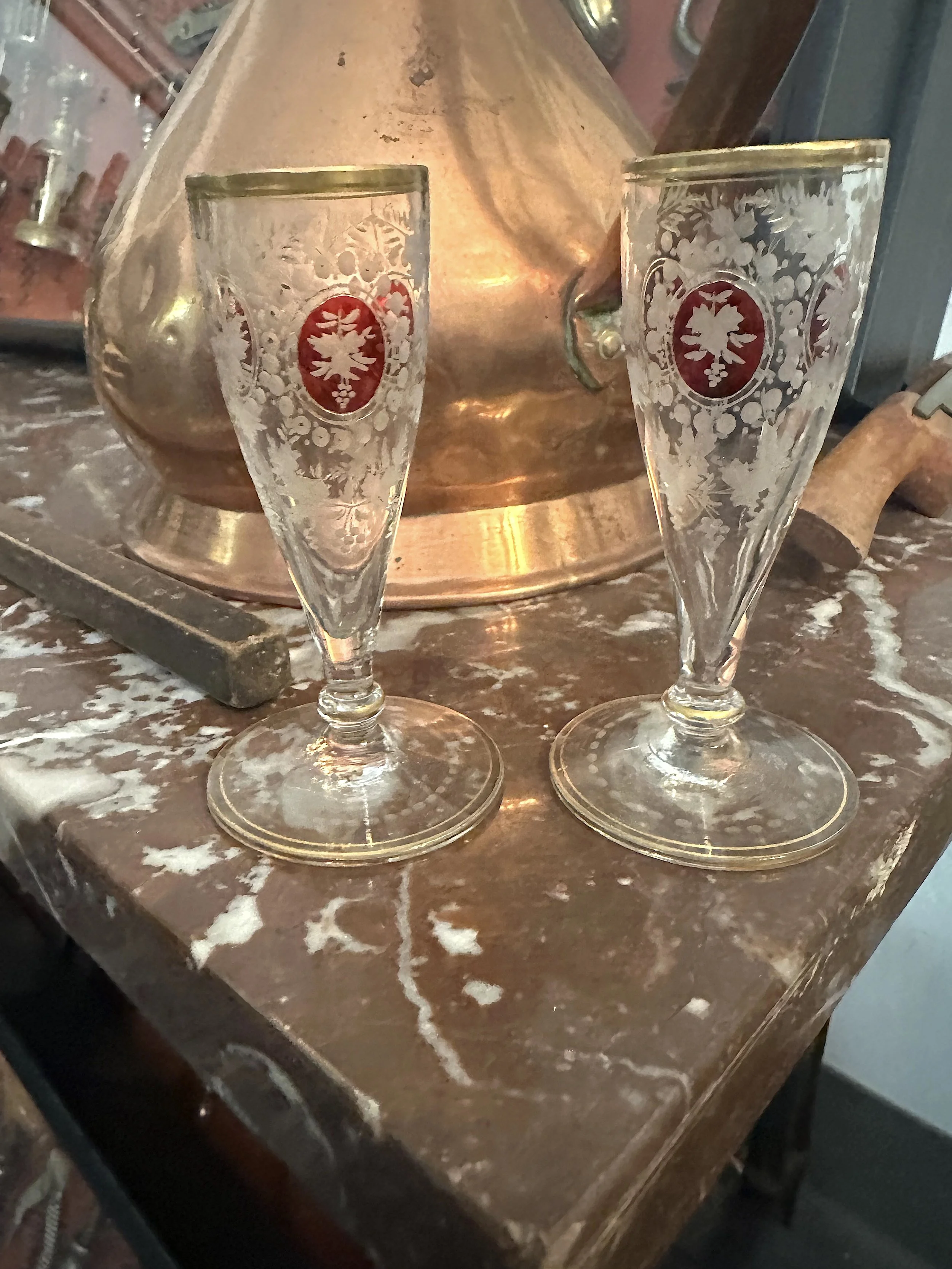
Pair of exquisite etched and cut to clear glasses. C. 1890s. 3 1/2” H X 2” base.
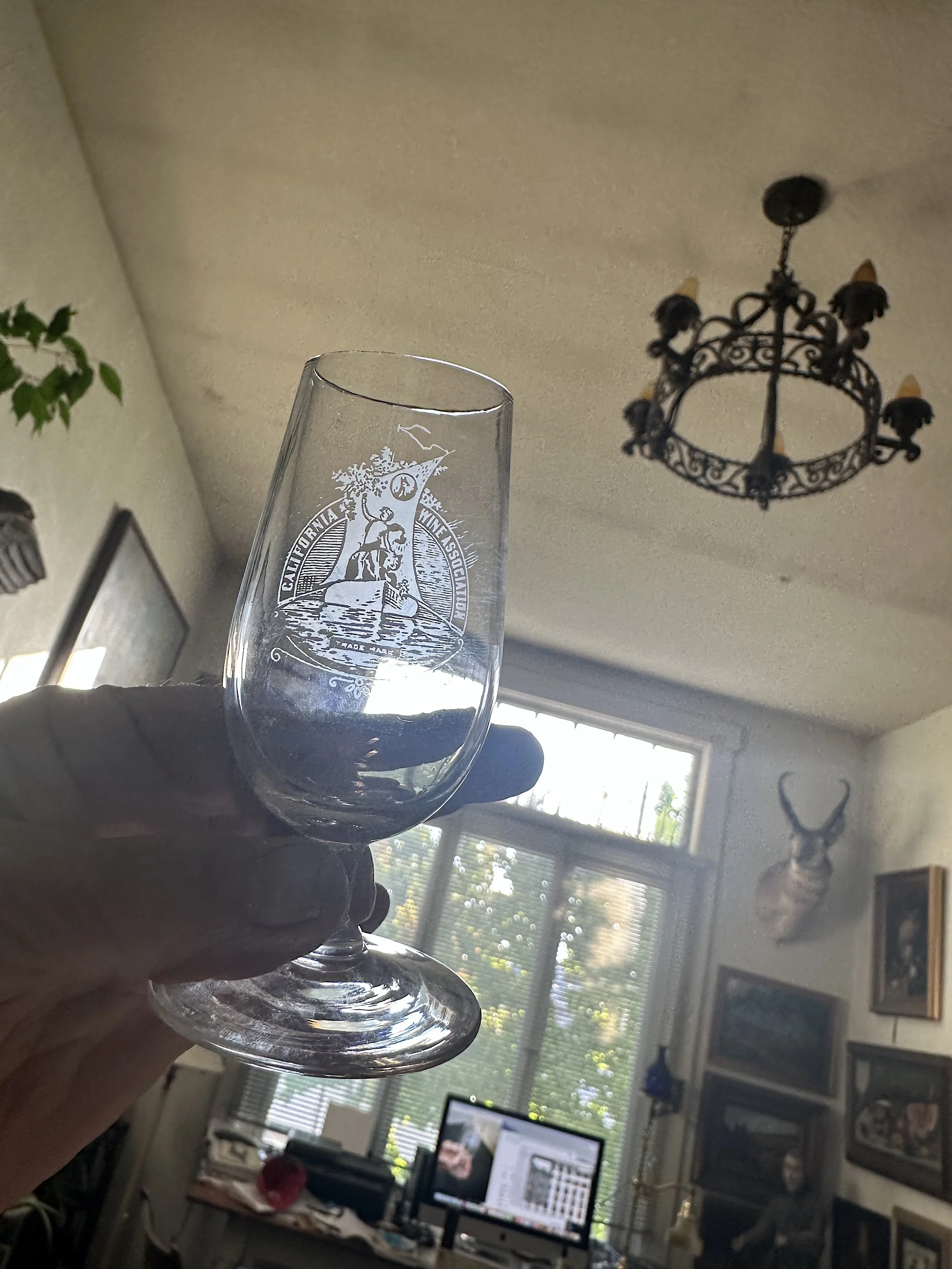
Rare Etched California Wine Association brandy tasting glass. C 1910, or earlier. 4” H.
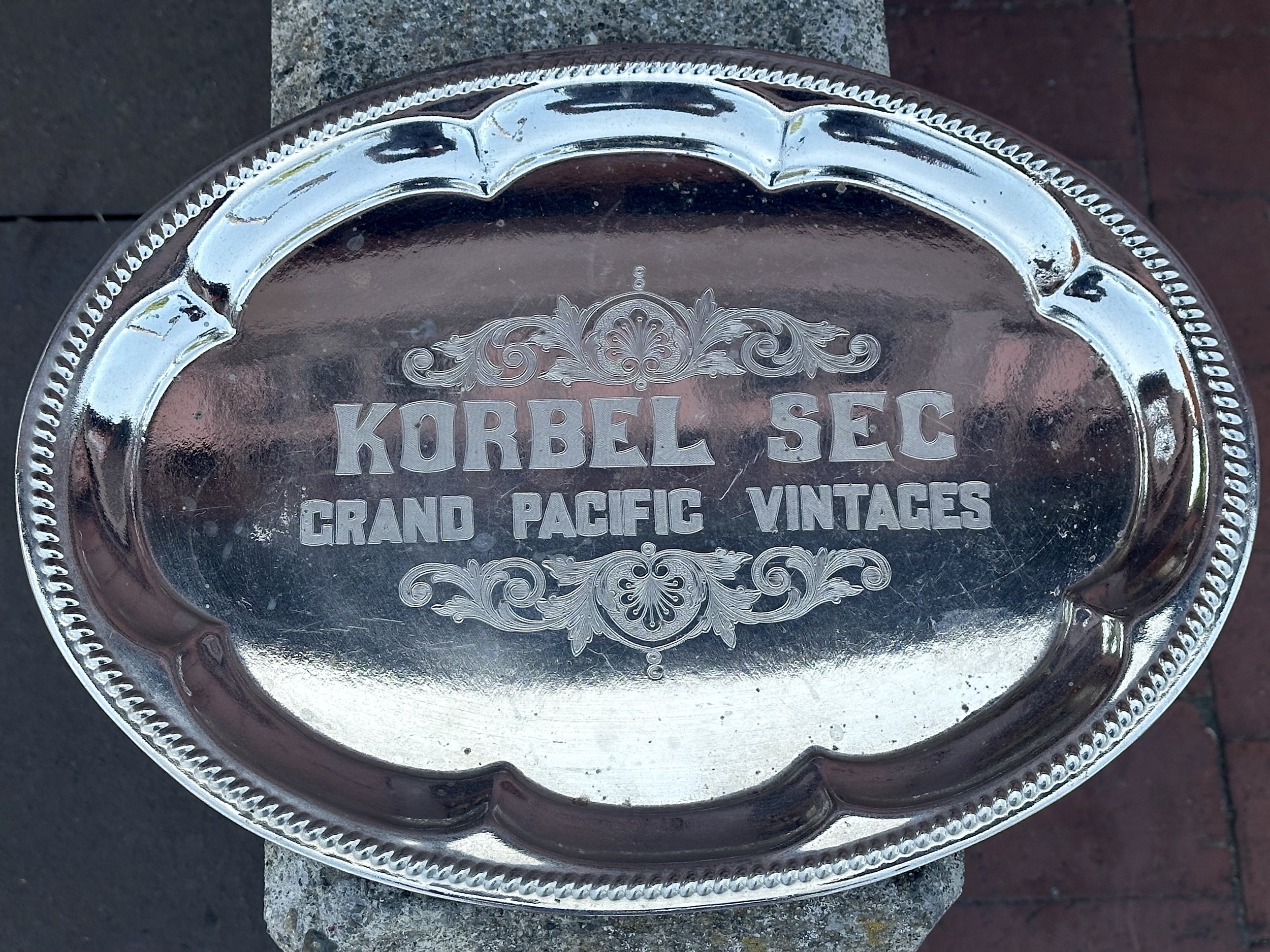
Oval nickel-plated tray circa 1915. Korbel Grand Pacific Vintages serving tray. PPIE. 14” X 10 1/2”.
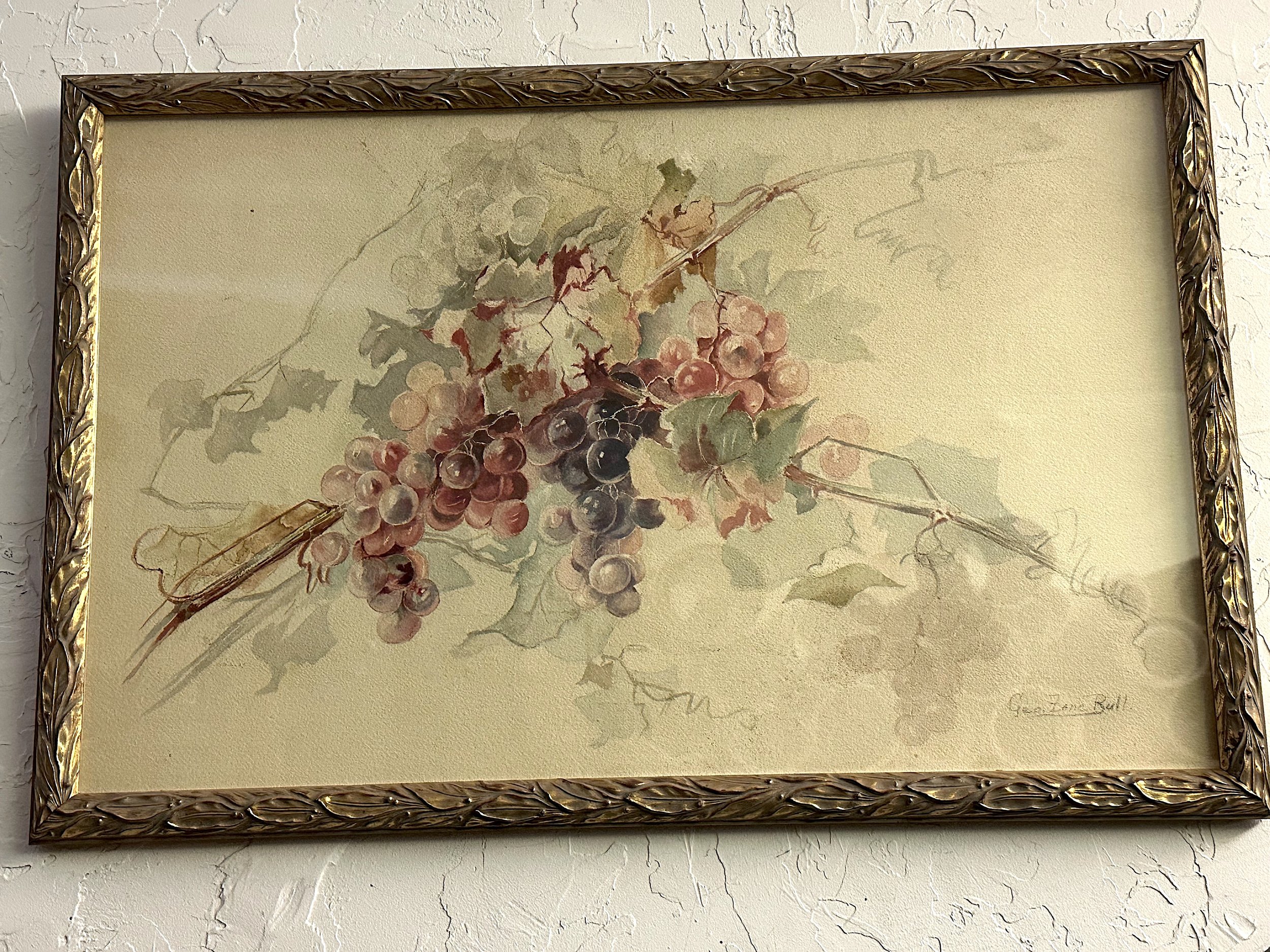
Watercolor painting of grapes by G. Zane Bull, Santa Rosa, CA. artist. C.1930s. 23” X 16” framed.
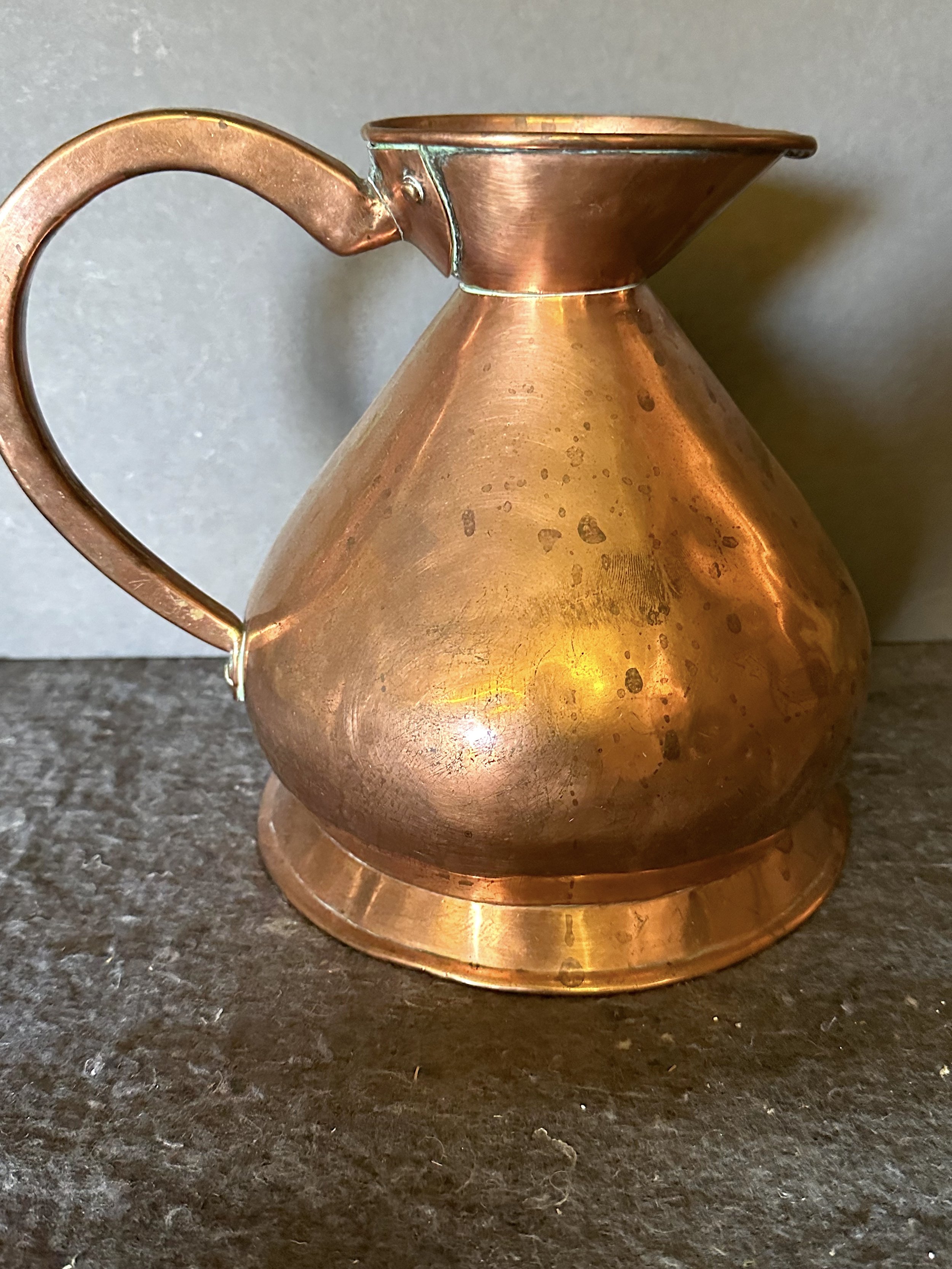
1/2 gallon measure. Used in wine service. Has its weights intact. Nice patina, 8” H X 7” diameter.
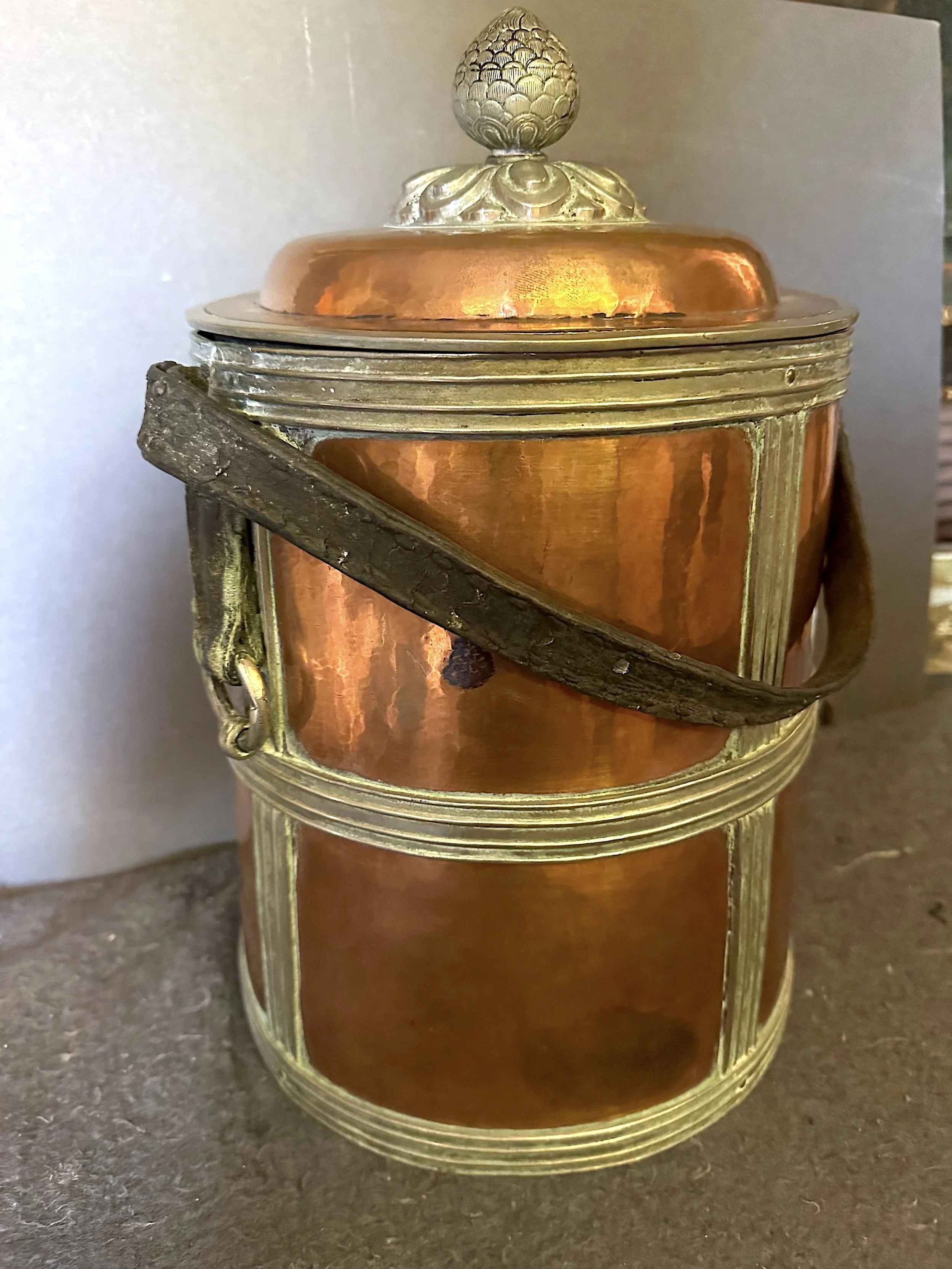
Copper and brass “cooler” for barley beer, wine, ice, and whatever. Beautifully made. Possibly a Tibetan “soula.” Wonderful condition with original leather strap.
Display
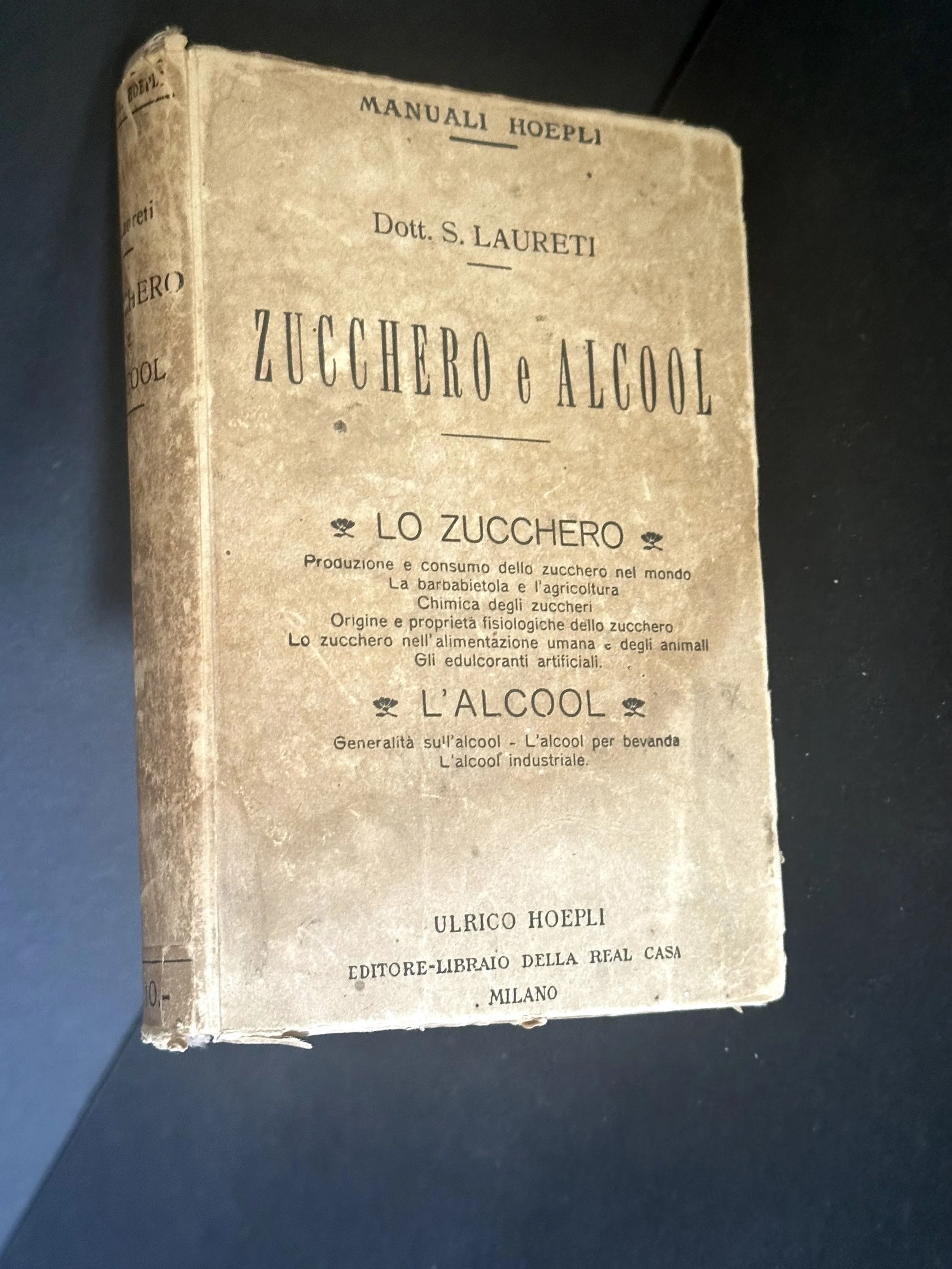
“Zucchero e Alcool.” Silvio Laureti, author. Publisher: Ulrico Hoepli, Milano, Italy, 1905. A technical-scientific manual dedicated to the study of “Sugar and Alcohol in Agricultural, Physiological and Social Relationships”. 426 pp. Stamped: “Italy Industries Corp.”, 814 Montgomery St., San Francisco, Calif. This company was originally owned by the Giusseppi and Dante Bagnani Families. In 1933, they sourced, processed, and sold grape juice and wine under the name of Redwood Empire Wines in San Francisco. In 1936, the Bagnanis bought Geyser Peak Winery in Geyserville, CA. Giusseppi had previously founded Four Monks Vinegar Co. in 1906. These two entities established the Bagnani family as major players in Sonoma County's wine and food industry. Also stamped on the book jacket is “A. Cavalli, SF Italian Book Store,163 Columbus Ave San Francisco, Cal.” a San Francisco Landmark bookstore founded in 1880.
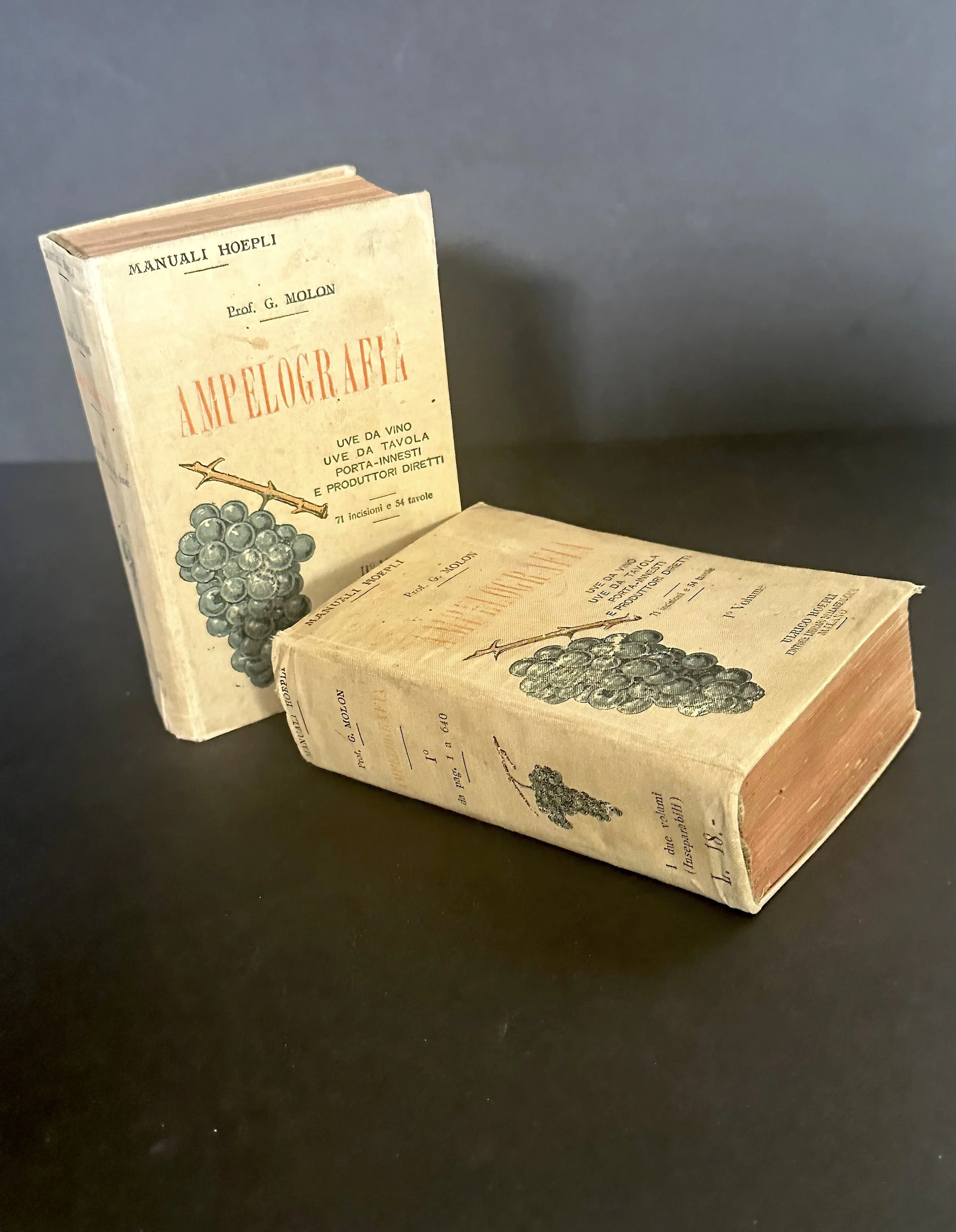
“Ampelographia; Italian Work on Ampelography.” Girolama Molon, author, 1906. Ulrico Hoepli, Milano, Italy, publisher. A classical, foundational text on the mapping of Italian grape varietals, as well as other European and American vines. Two volumes, 1,243 pp., featuring 125 engravings. Stamped on the inside: “Italy Industries Corp. 814 Montgomery St., San Francisco, Calif.” This firm produced grape juice and wine starting in 1933, right after the repeal of Prohibition. The father, Giuseppe, and his son, Dante Bagnani, were the owners. Their wines were called “Redwood Empire Wines.” In 1936, the Bagnanis bought Geyser Peak Winery in Geyserville, CA. Giuseppe had previously founded Four Monks Vinegar Co. in 1906. These two entities established them as major players in the wine and food industry in Sonoma County. Their grapes were all sourced and processed in Sonoma County. These two volumes are also stamped “A.Cavalli, Italian Book Store, 163 Columbus Ave. San Francisco, Cal.” Famous SF landmark bookstore founded in 1880. The book was written after the Phylloxera crisis, a major viticultural event. 5 3/4” X 4”. Condition: good. Healdsburg, CA. found.
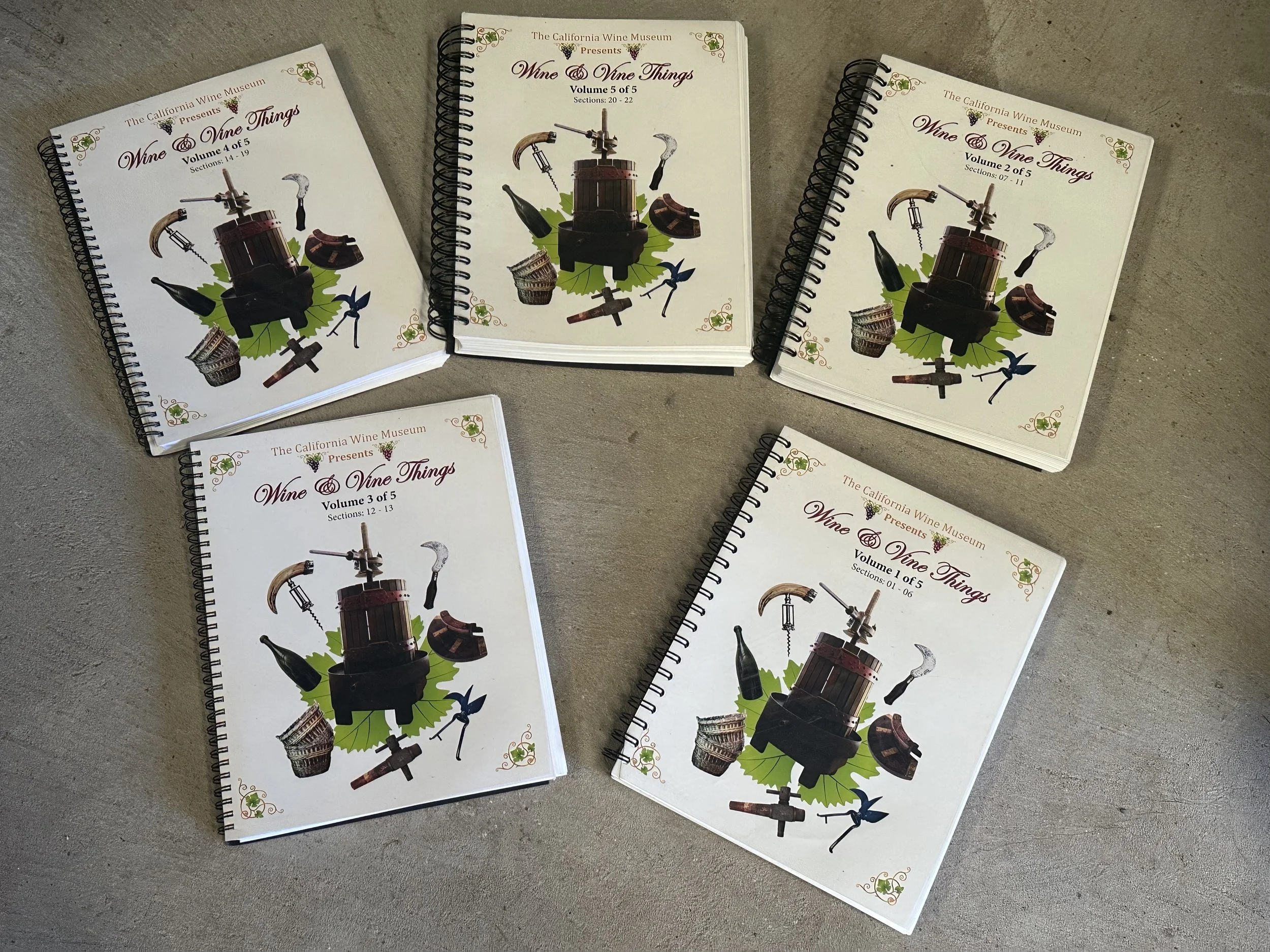
Set of five (5) catalogs comprising the California Wine Museum Collection. These books contain twenty-two categories of specific items relating to the wine industry. There are 765 pages with images of each item in the collection, with descriptions.
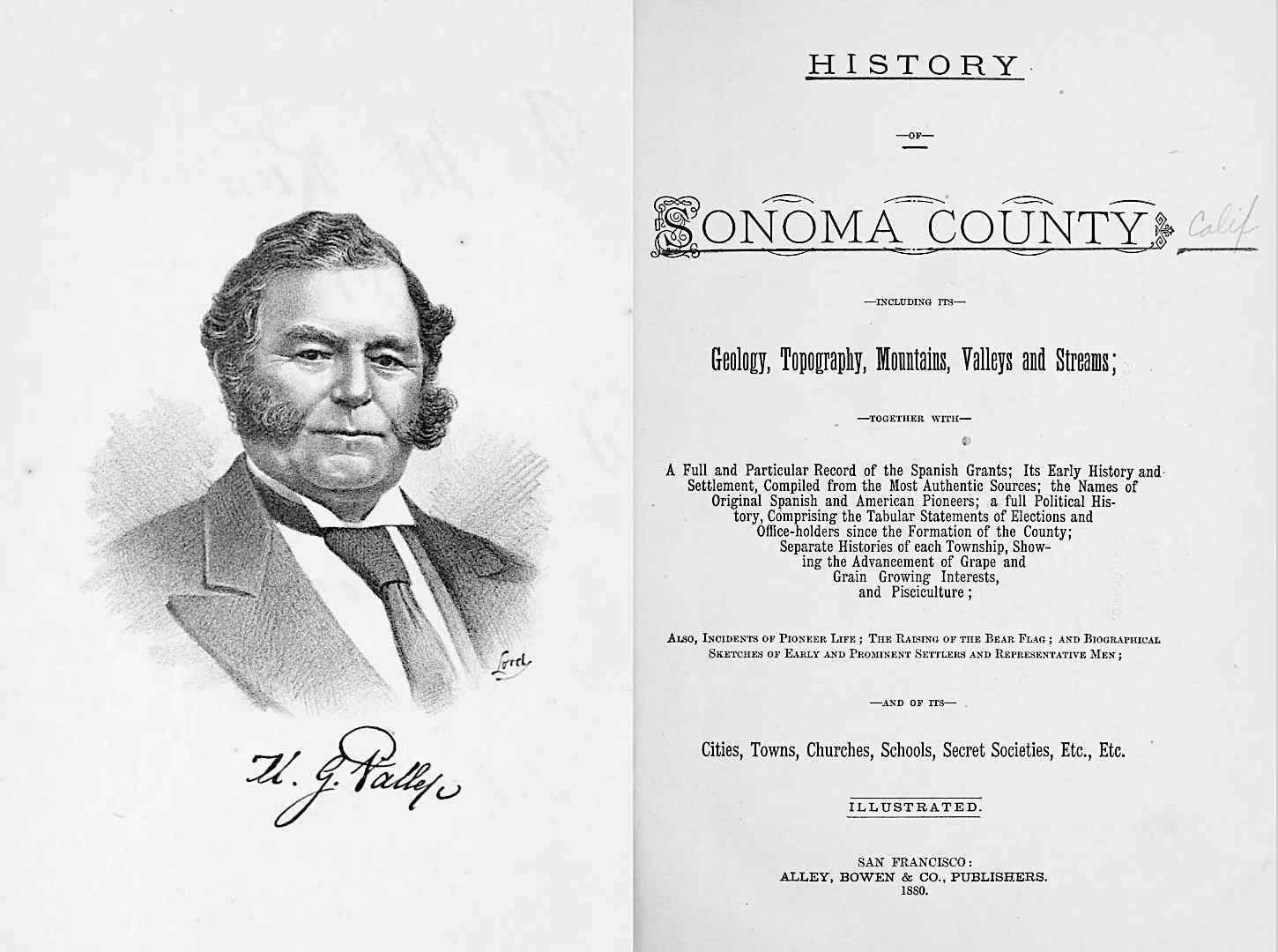
Includes local history and county biographies. Pacific Press, Oakland, California. Printers, Stereotypers, and Binders. Published by Allen Bowen & Co., San Francisco. 717pp. Rare.
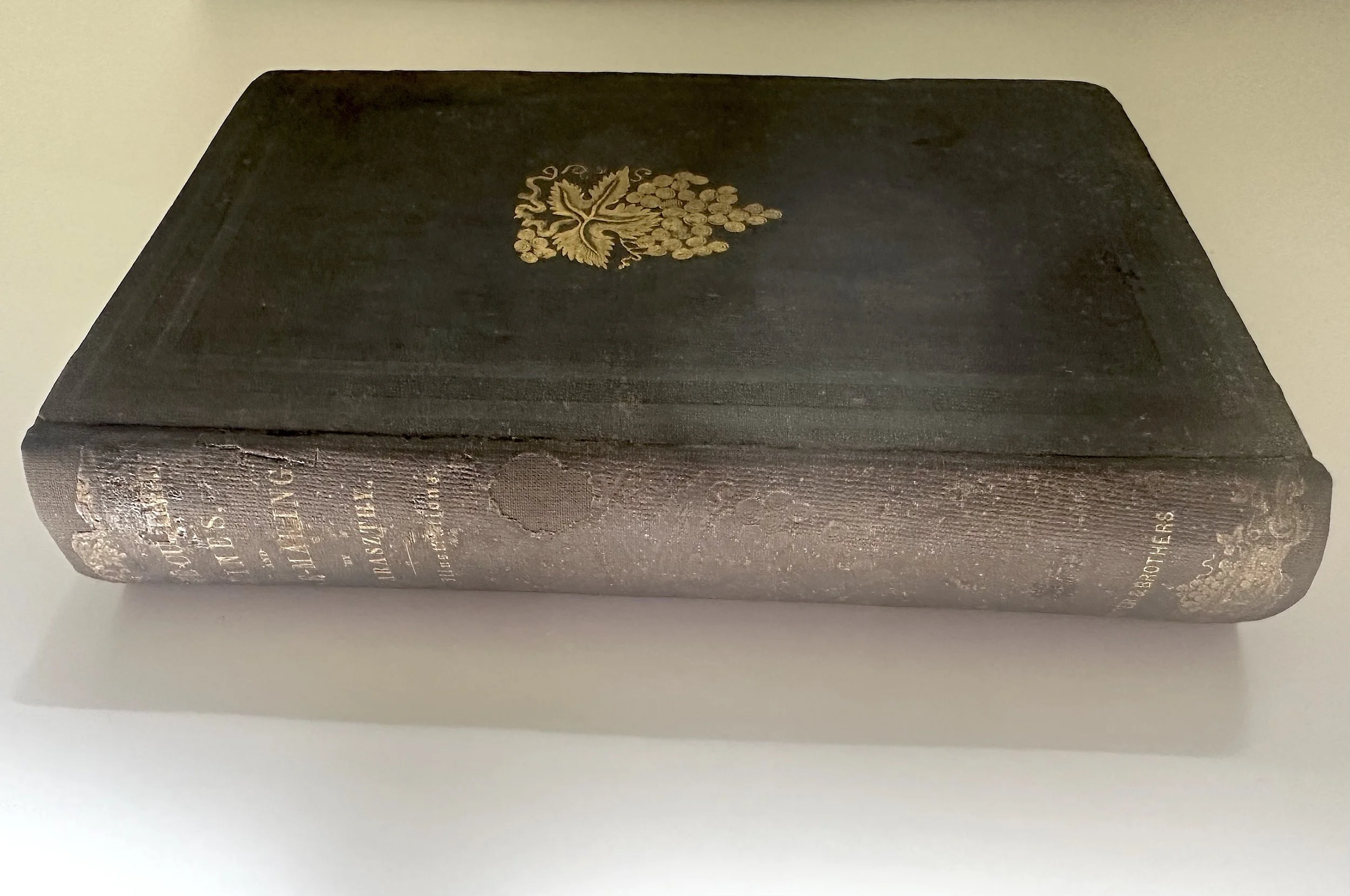
“Grape Culture, Wines And Winemaking” By Agoston Haraszthy, 1862. First Edition; published by Harper Bros., New York. 420 PP. with frontispiece of Buena Vista Ranch. Full-page and in-text illustrations. Rare.
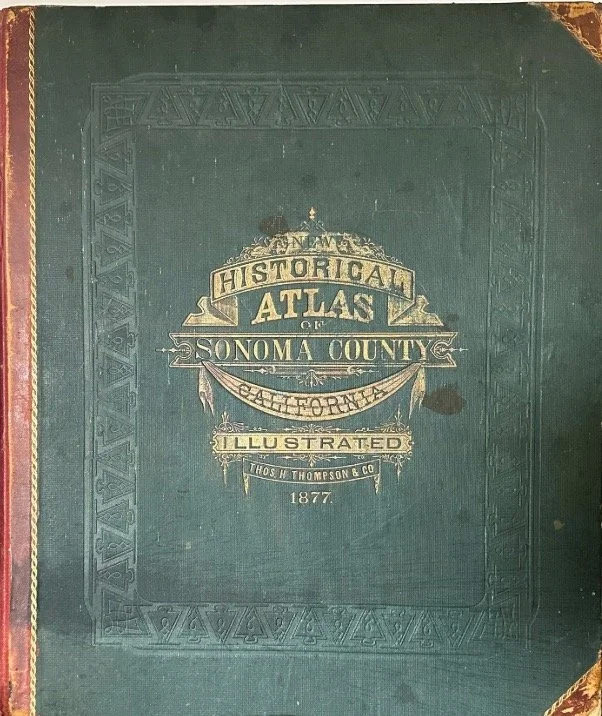
This is a 15” X 18” format with more than 100 hand colored maps and illustrations. This is an original copy in good condition. This Atlas is scarce in the Marketplace.
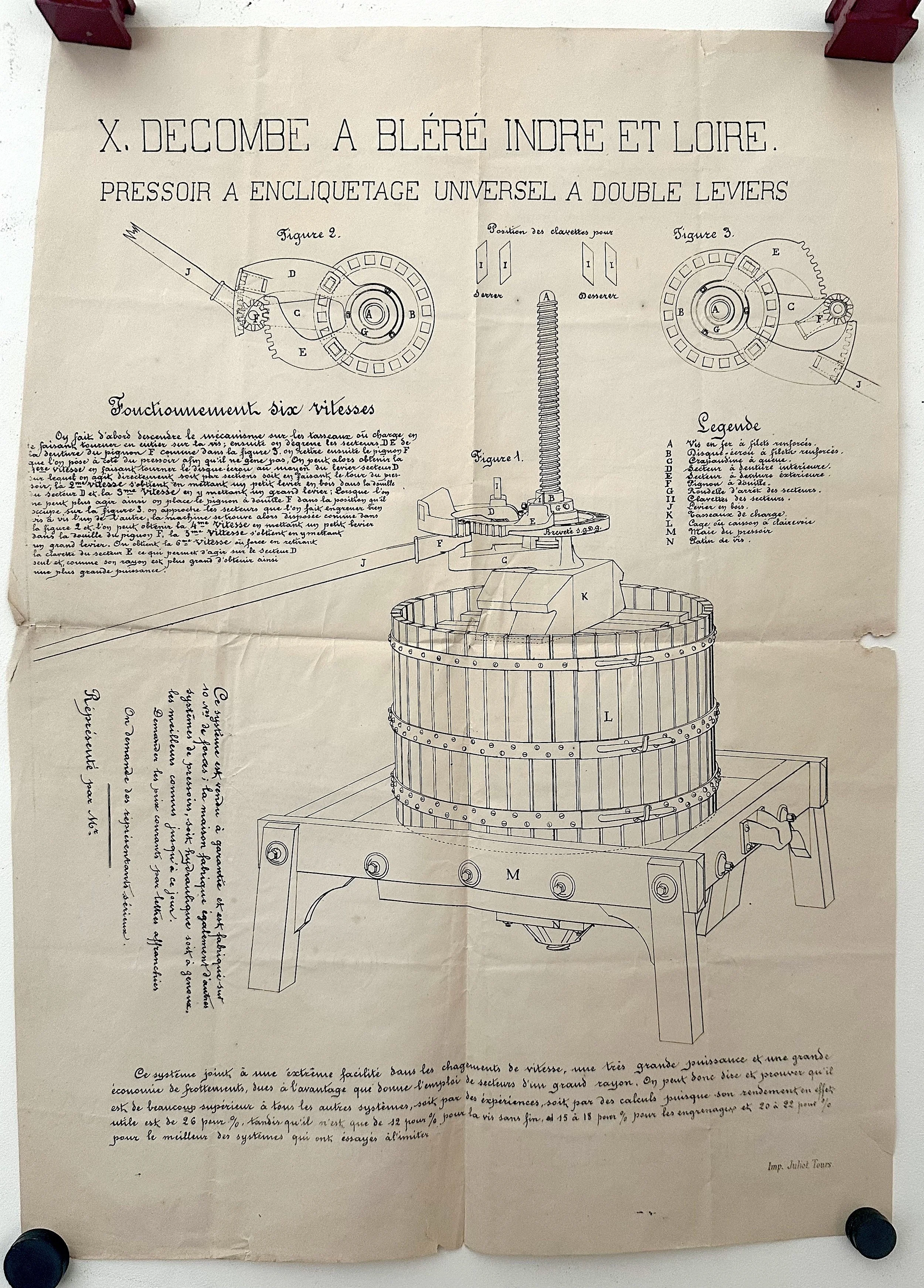
1868 Advertising broadside from Tremblag Constructeurs à Tours, Mr. Duroux à Rouzan.
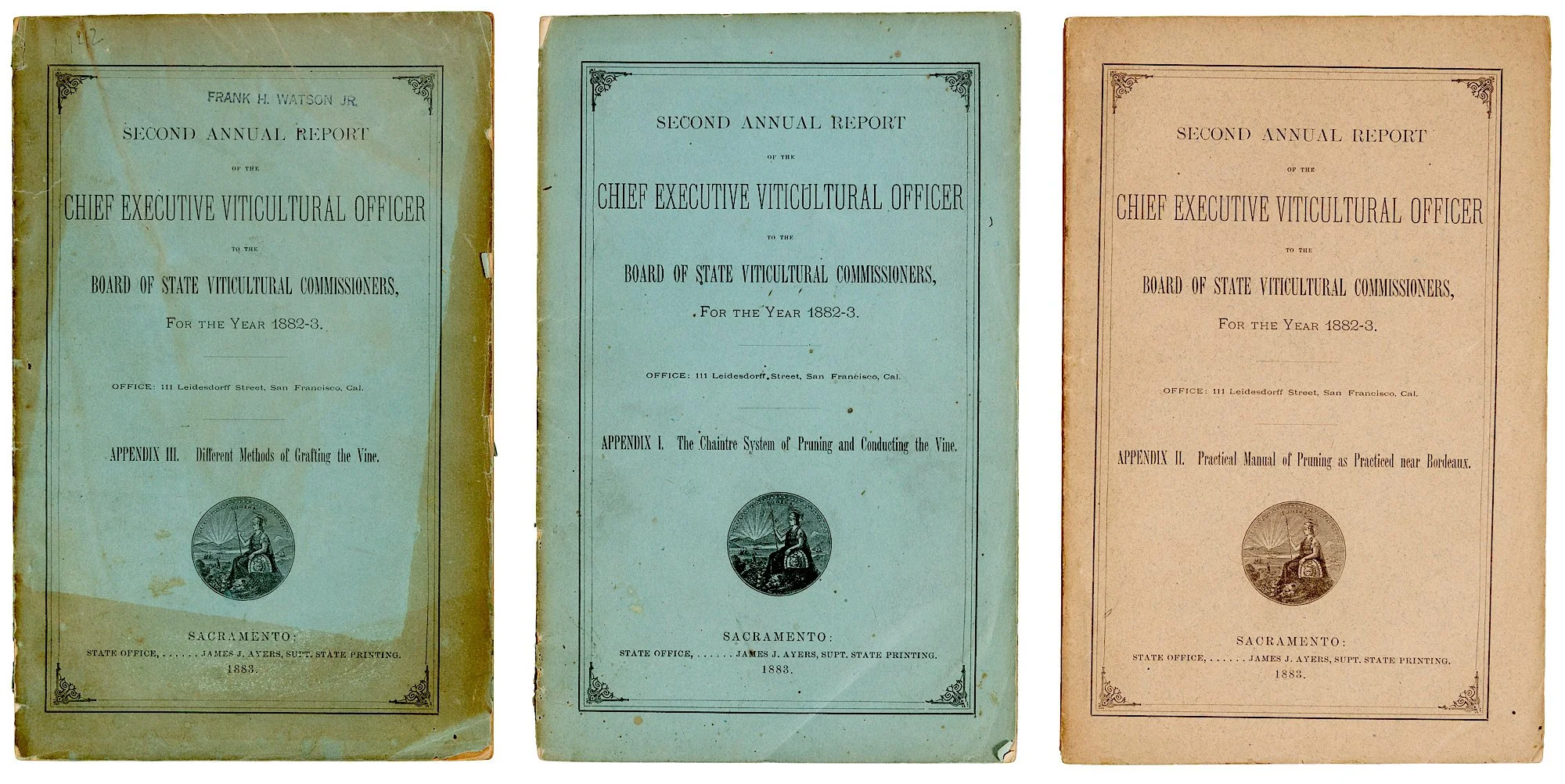
Three brochures from 1882-1883 issued by the Chief Executive Viticultural officer to the California Board of State Viticultural Commissioners.
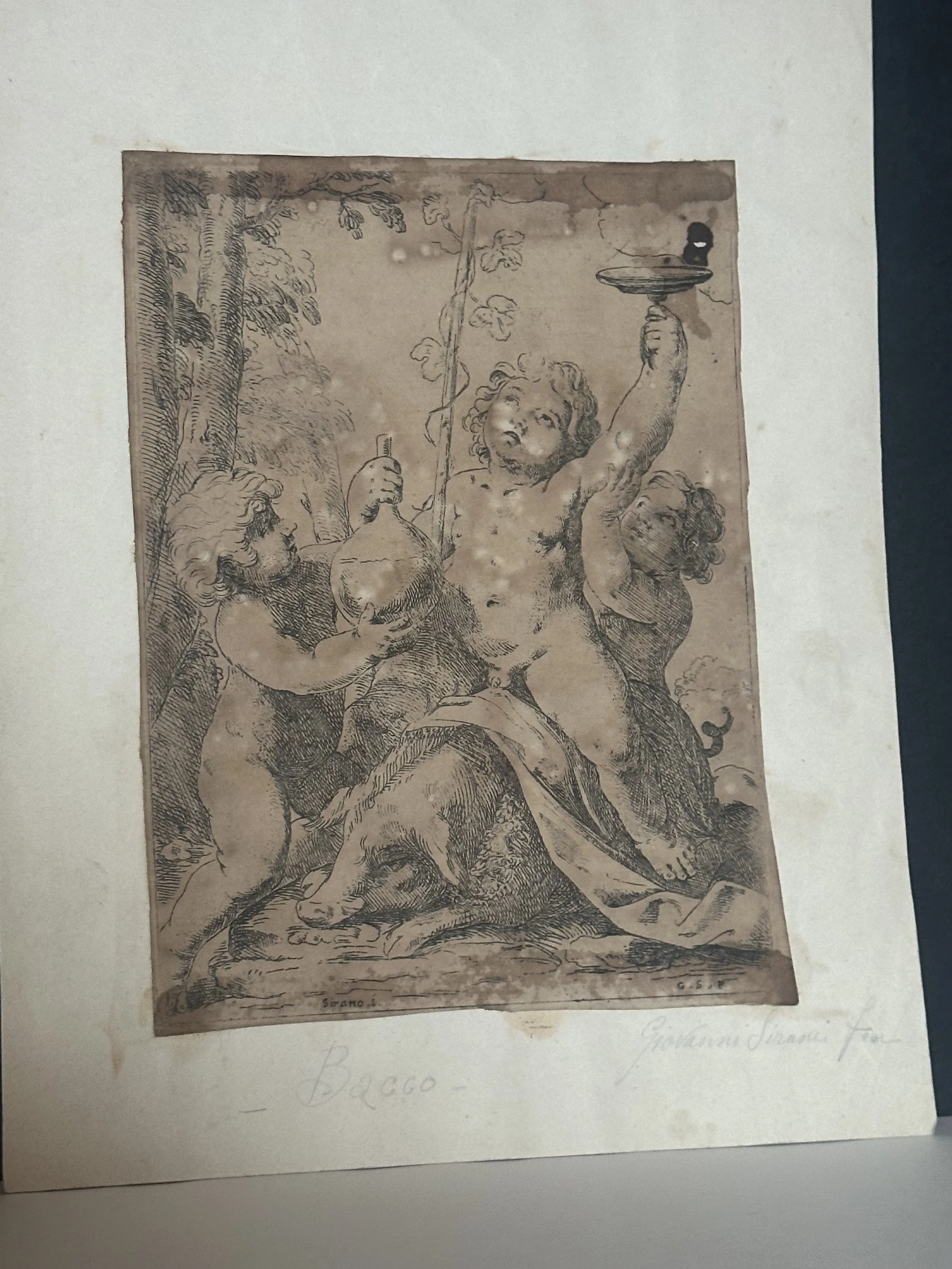
“Bacchanal with 3 Putti.” Girolamo Scarsello, after Giovanni Andrea Sirani. 1670. 7.5” X 5.9.” 1670. An etching on laid paper.
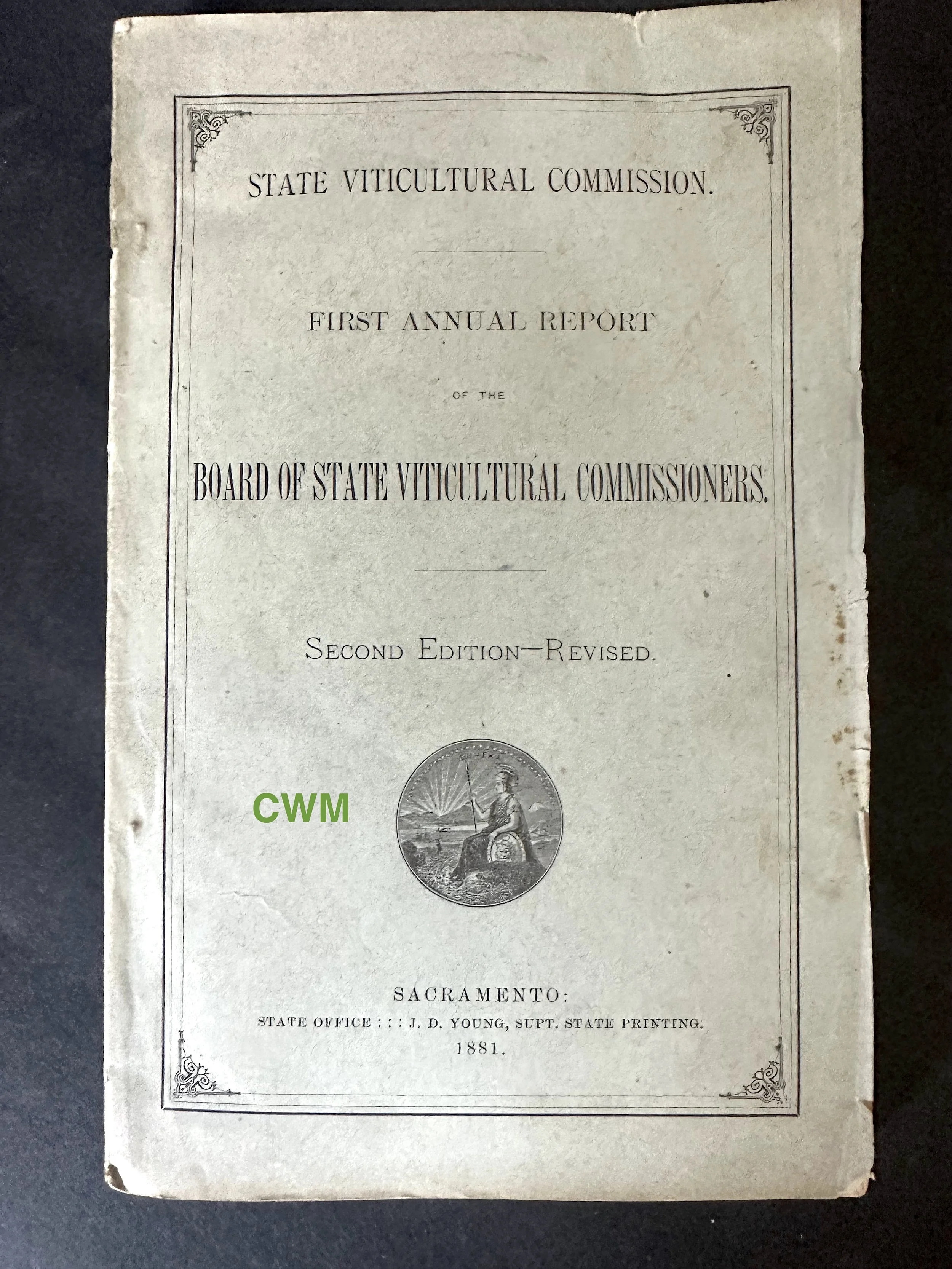
State Viticultural Commission, First Annual Report of the Board of State Viticultural Commissioners. Second Edition, Revised, 1881.
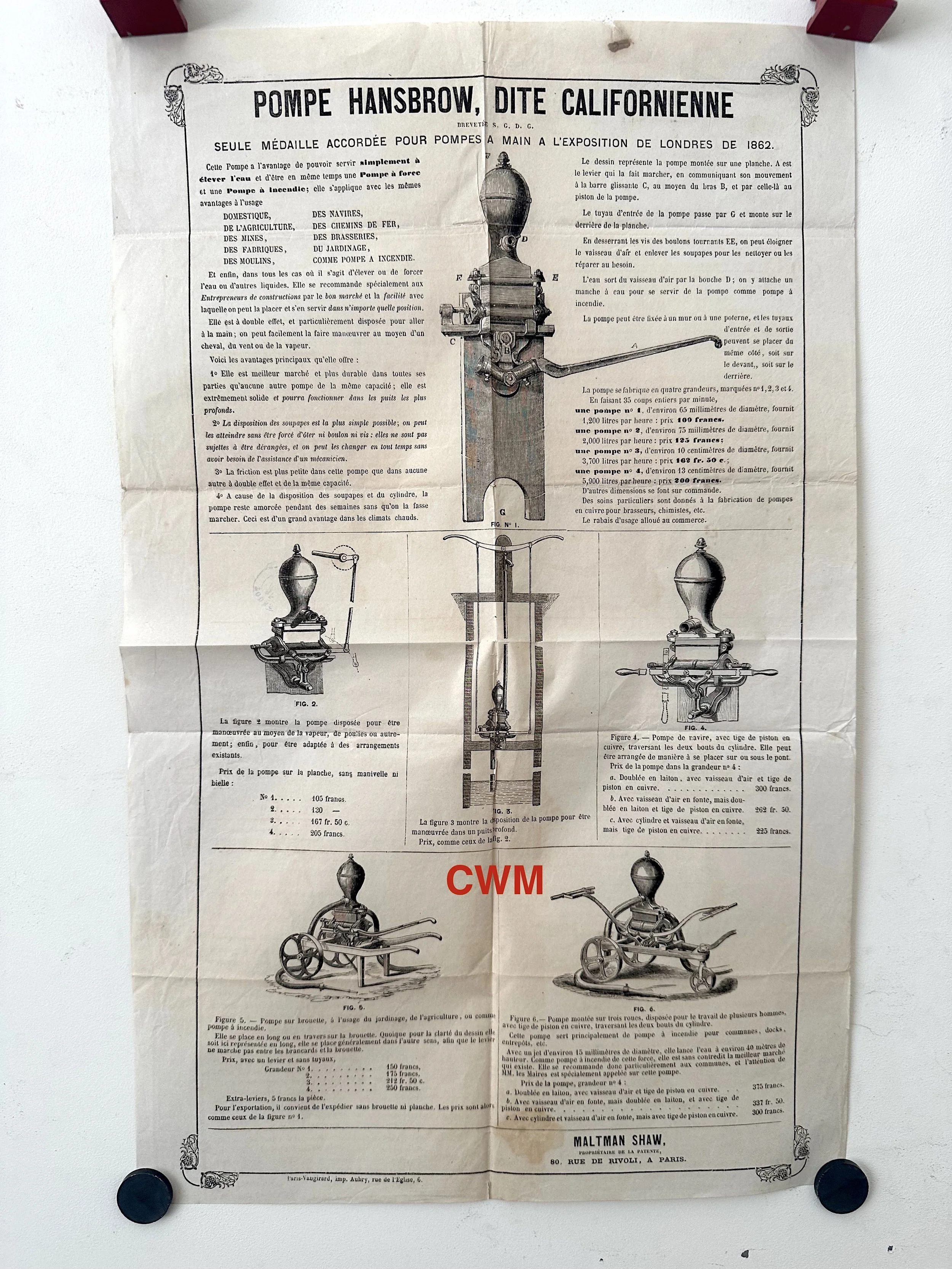
1862 French broadside illustrating wine pumps for sale of the “California” style produced by Maltman Shaw, Paris. Showing six cuts of equipment. 21 1/4” X 13.”
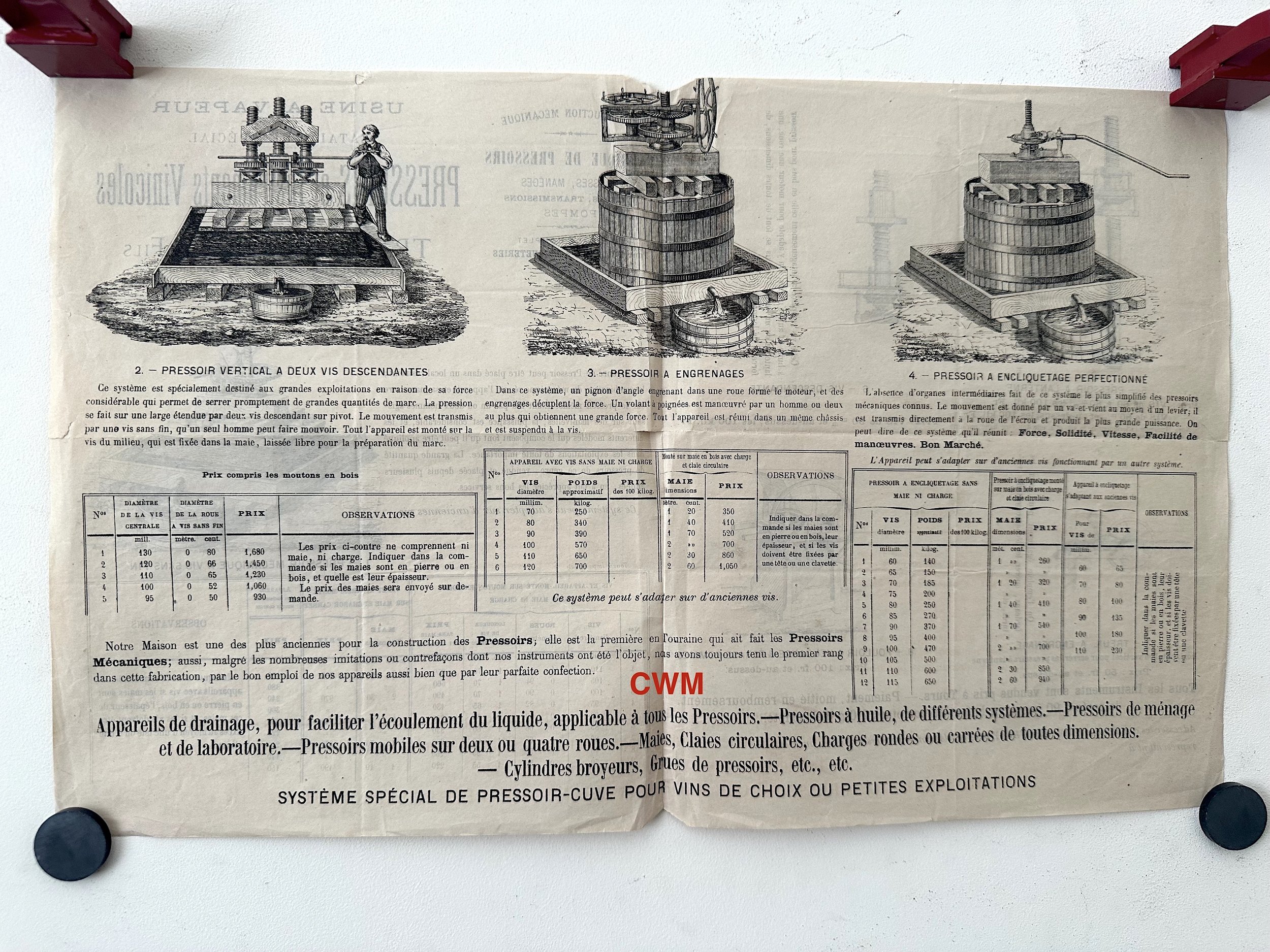
1870s French advertising broadside illustrating various elaborate grape-press styles and other viticultural equipment with detailed descriptions.
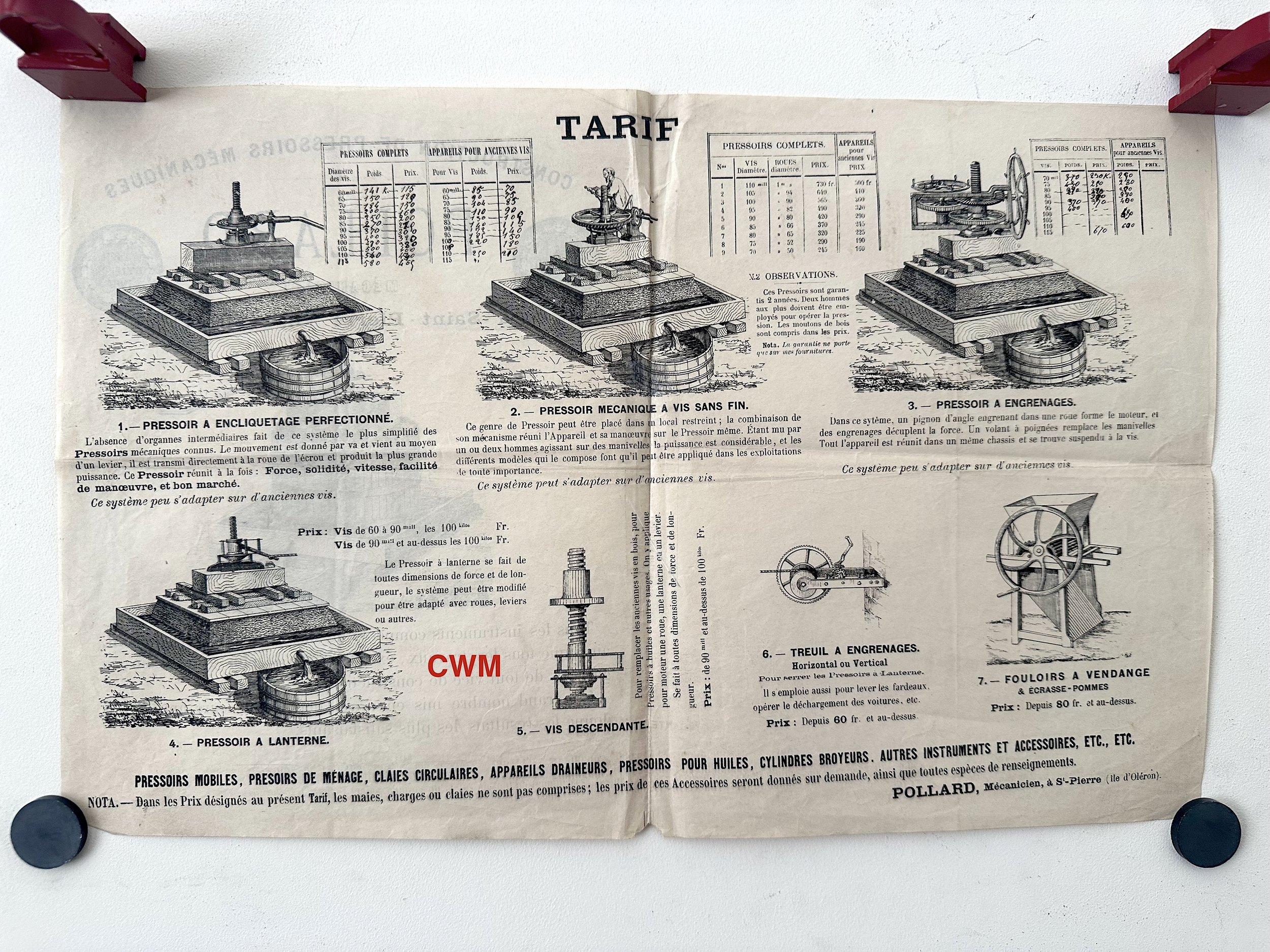
1870s French advertising broadside for the sale of grape presses and general winemaking equipment. Advertising Pollard, manufacturers of wine equipment. a’St-Pierre. Single-sided poster.
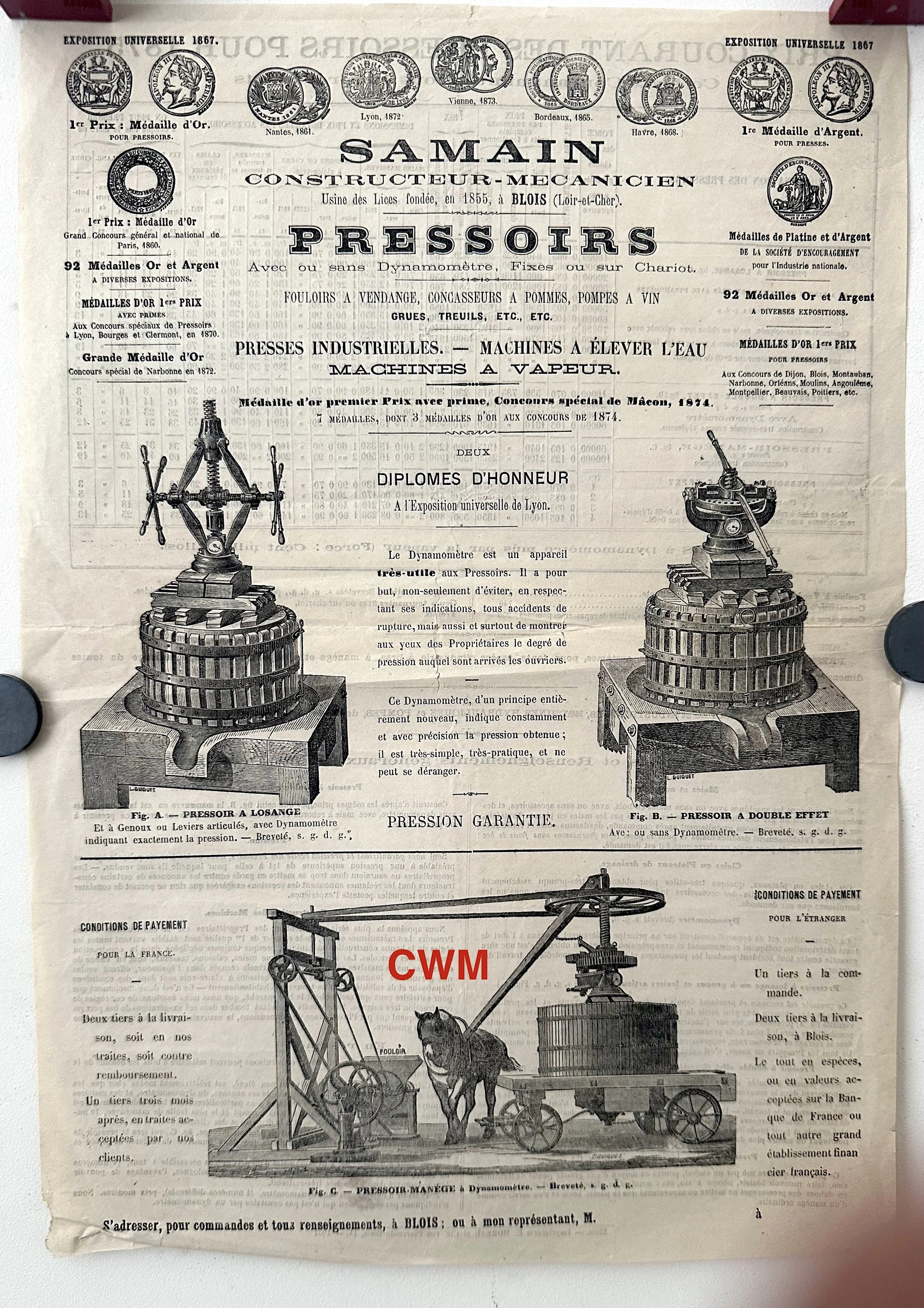
1867 French broadside from Samain Mfg. À Blois (Loire & Cher) regarding their wine presses for sale. Very exotic, including one press that was horse-driven! 15” X 10 1/2.”
Ephemera
Enology
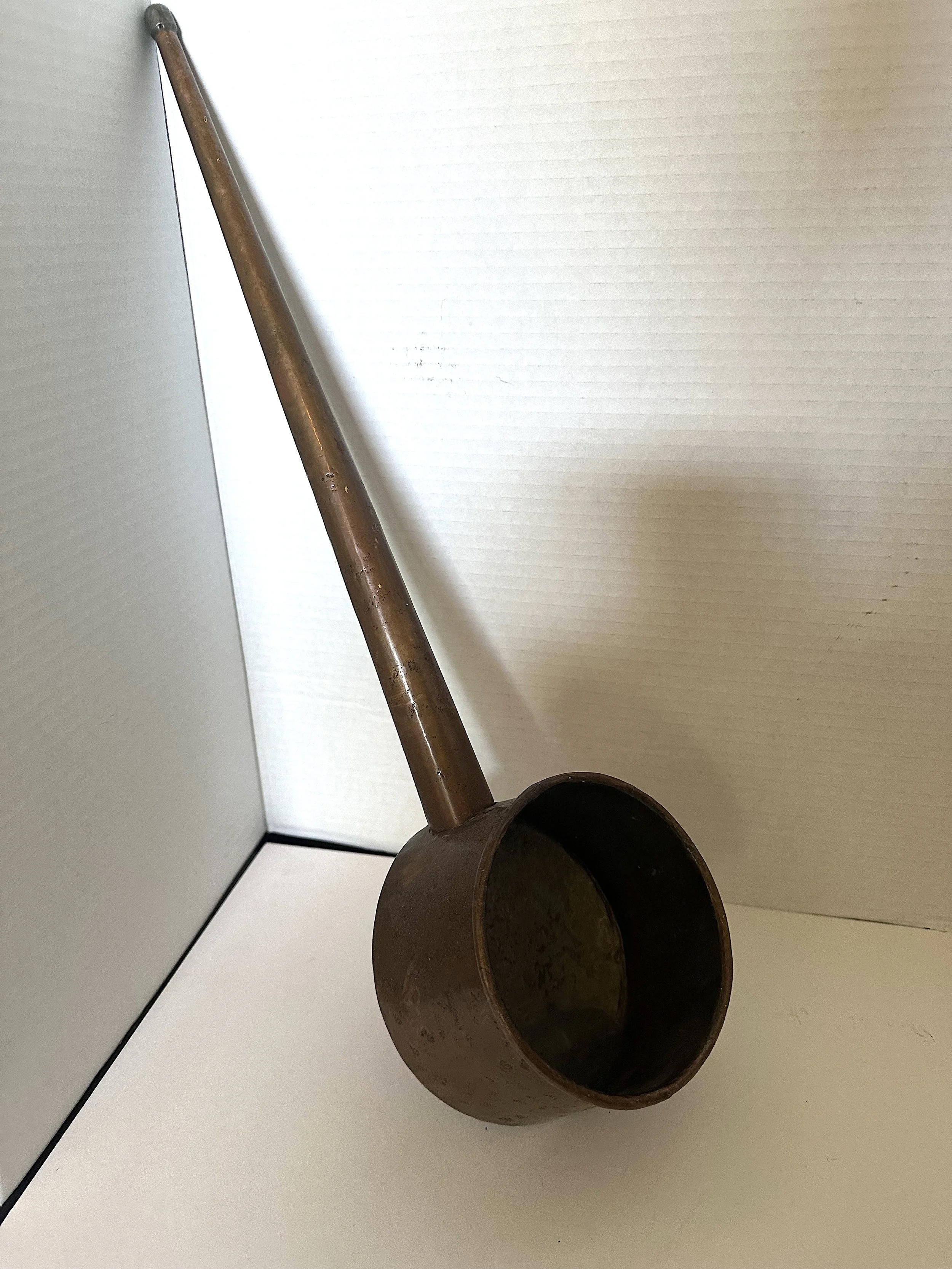
This is a copper tool used as a pipette and as a sampler. Circa 1880s to 1920s. 17 1/2” X 4 1/2” bowl.
Grape Baskets & Grape Presses
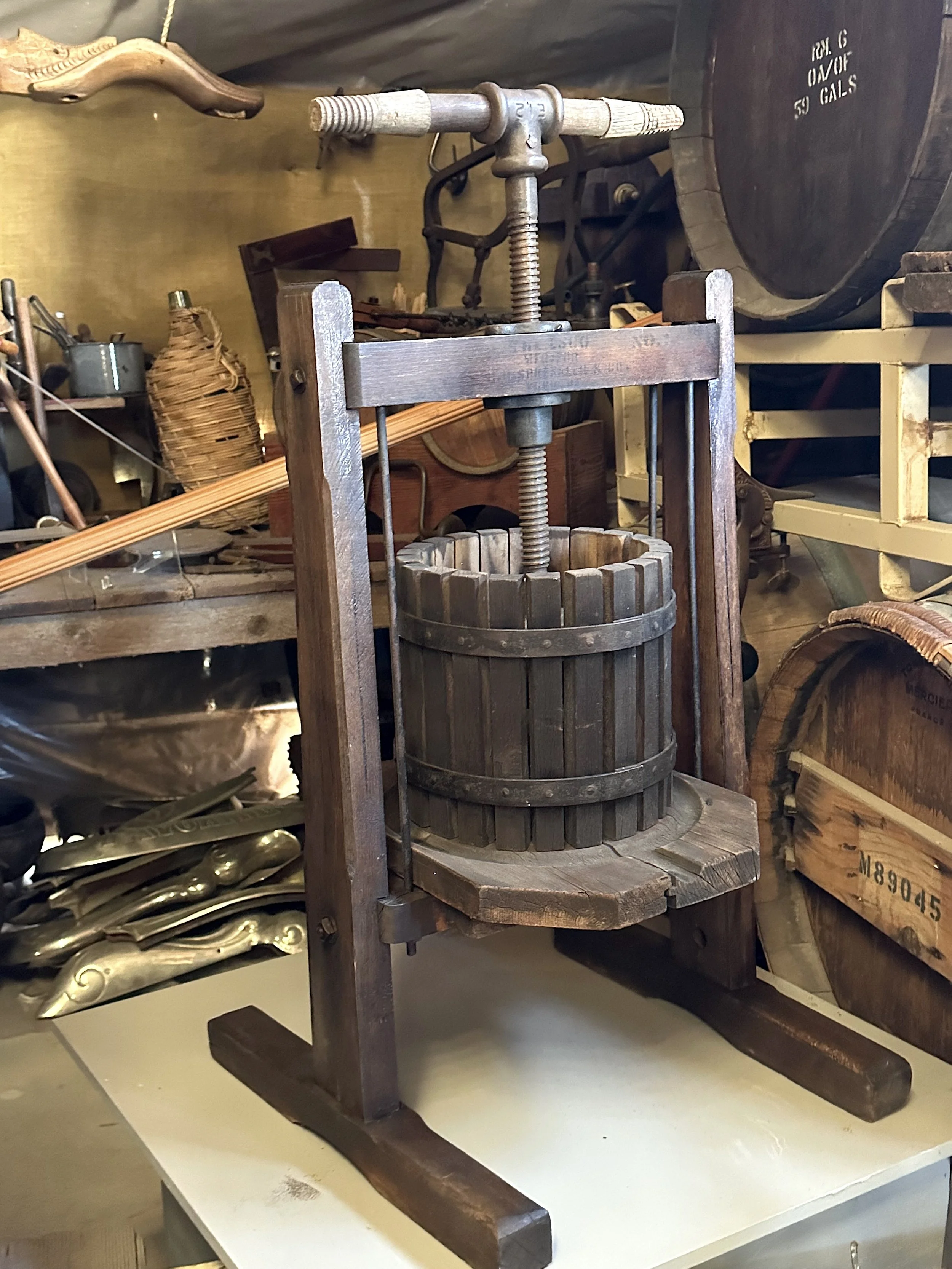
Late 19th-century wood-and-cast-iron grape & apple mill. The E.W. Ross Co., Springfield, Ohio, manufactured this press. It was made for the distributor A.H. Spangler, York, Pa., seller of agricultural implements and farm machinery. It is clearly marked on the wood. In fact, all the original stenciling is evident throughout the piece. Original. Most likely made between 1890 and 1900. It came off a ranch in Sebastopol, CA. Perfect for small-scale winemaking. 38” H X 20” W at base and 20” deep.
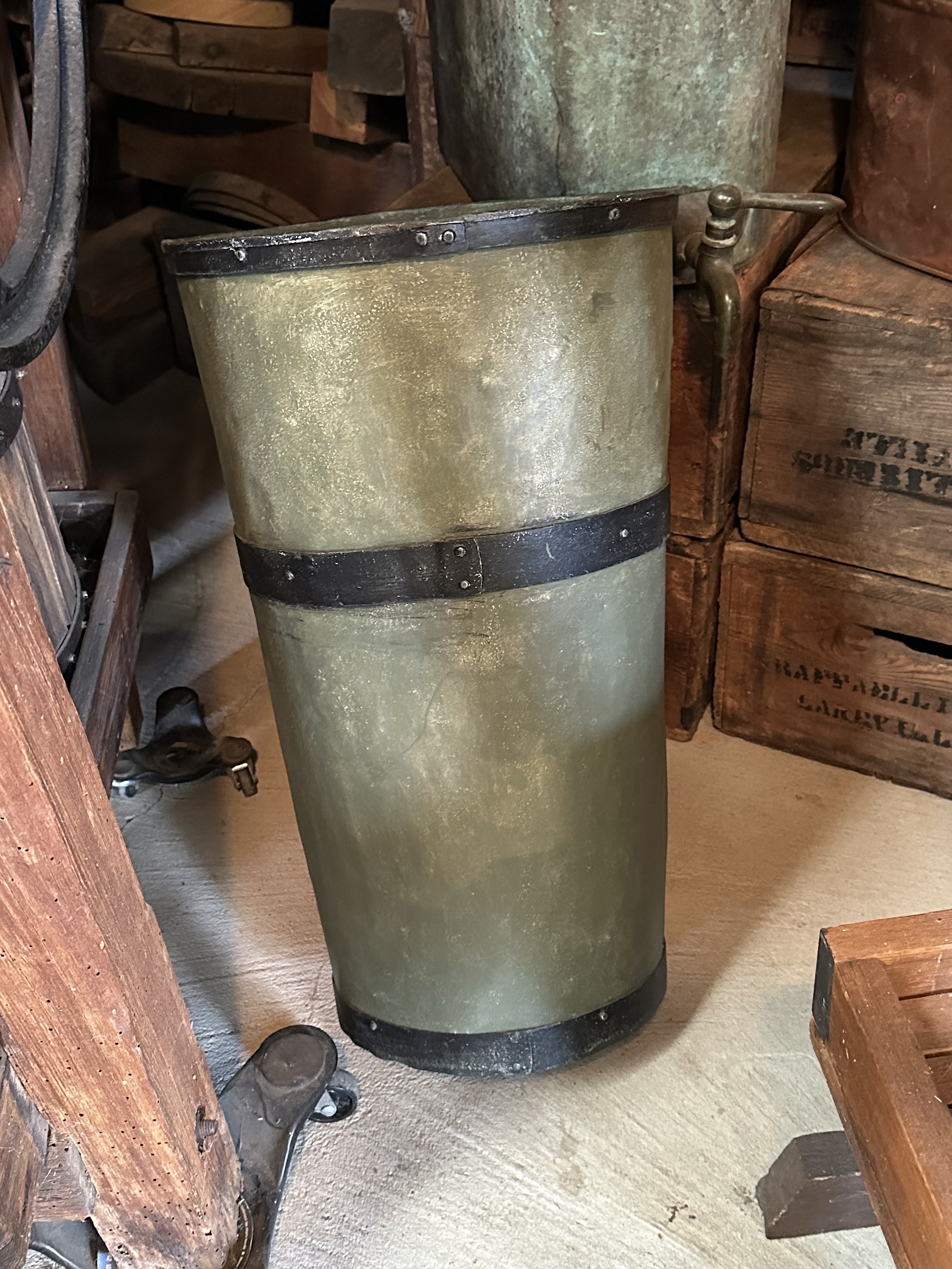
Metal grape harvest ”hotte”, a bin used during harvest time in the vineyards. Circa 1920s or 1930s. Found in Sonoma County, California. With shoulder straps. 25” H X 16” W.
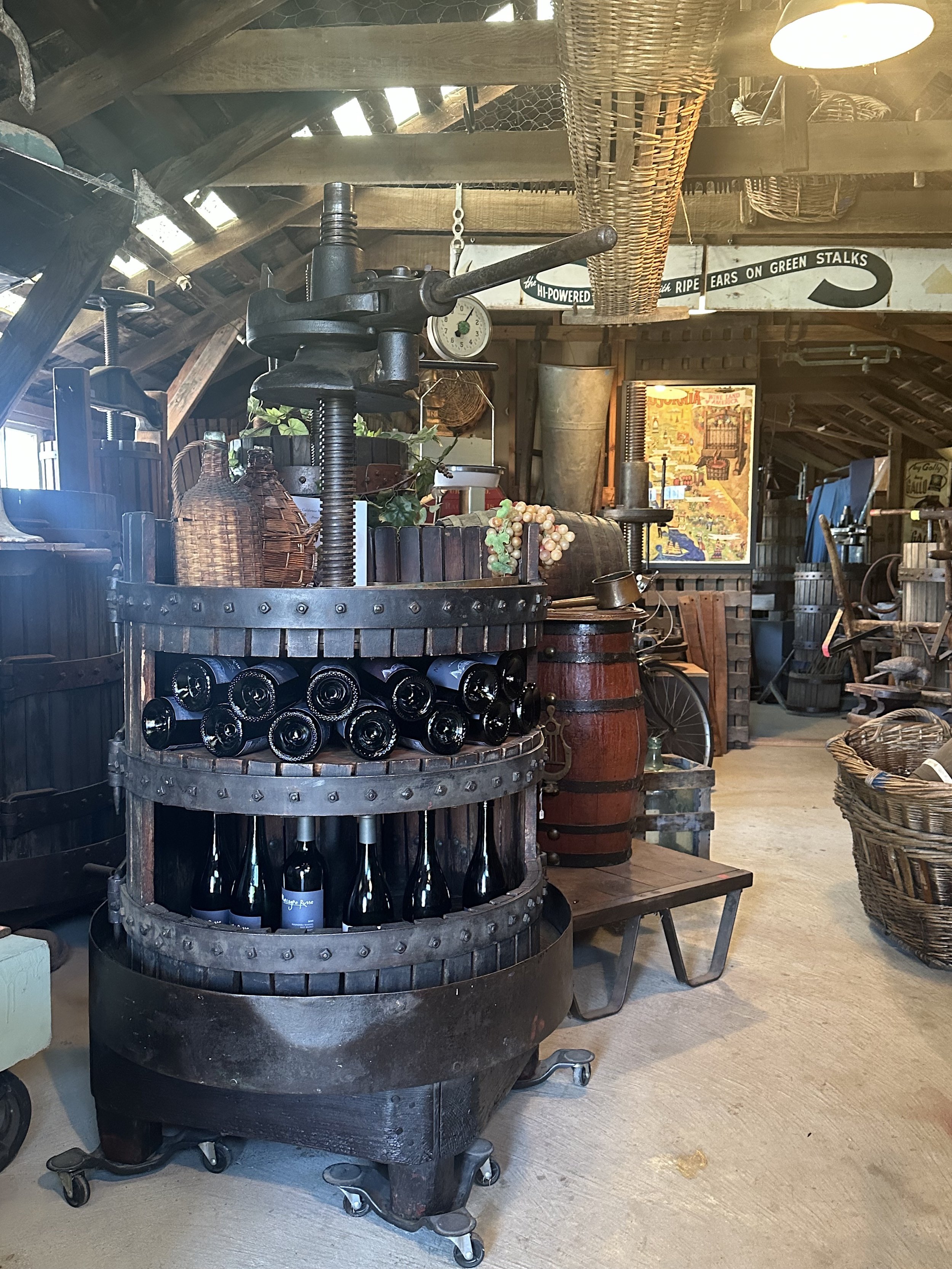
Amazing vintage working display grape press. Reconfigured to be used for display in a winery tasting room. From Sonoma Co, Calif. Vintage 1900 - 1930s. Oak wood, it now has three merchandising levels, including a copper tray with drainage. Probably could display three cases of wine. 70” H × 36″ diameter at the bottom. Nice.
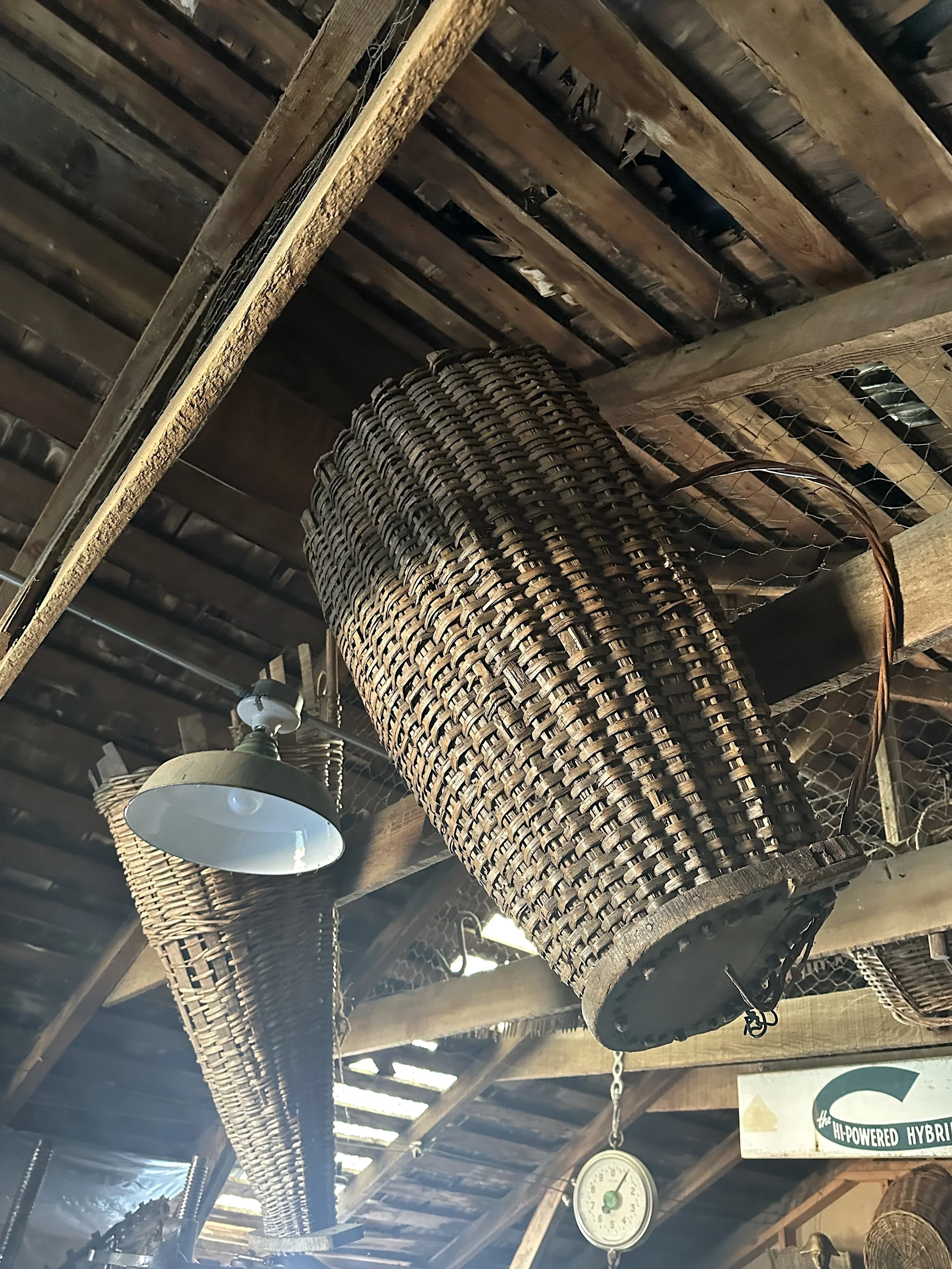
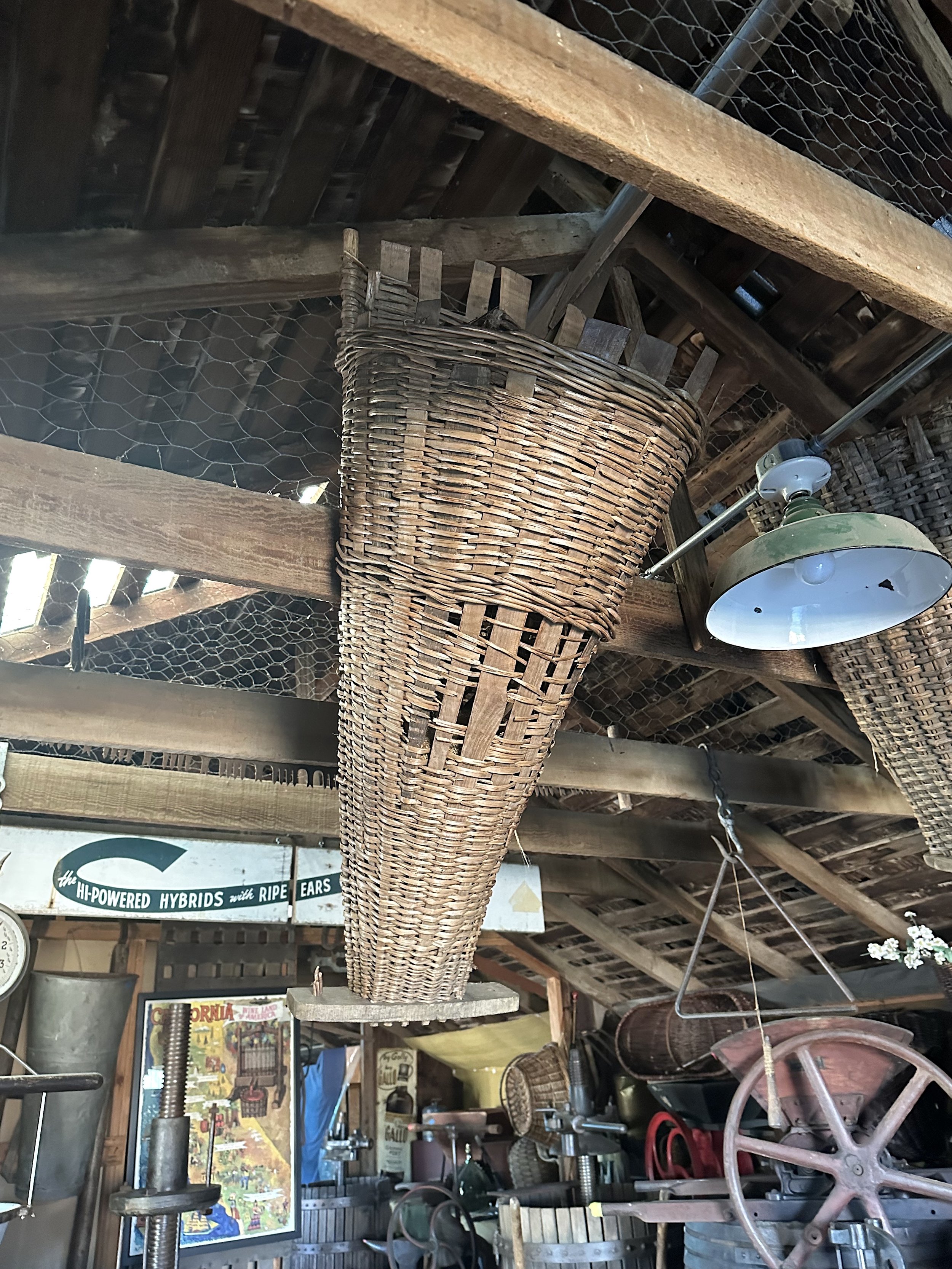
Beautifully woven large splint grape harvest basket. Sonoma County found. 34”H X 15”W.
Large splint weave, with wood pillars, grape harvest basket. C 1910 -1930. 37” H X 15” W.
Vineyard Tools & Wine Transfer Pumps
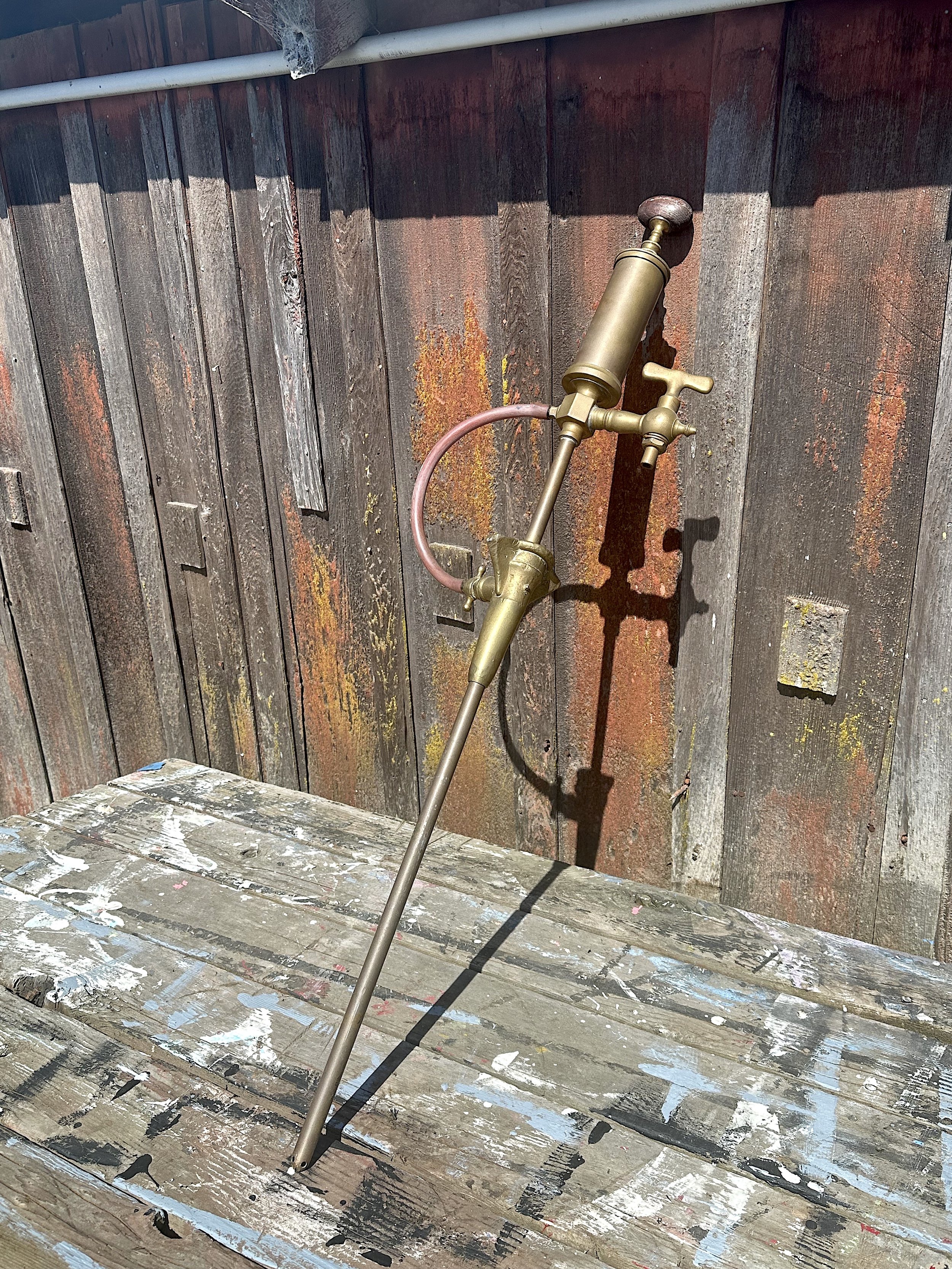
Brass wine barrel pump Circa 1890s -1910. Very well made. Not marked. 38” L × 12″” W to hose. Healdsburg found. Working.
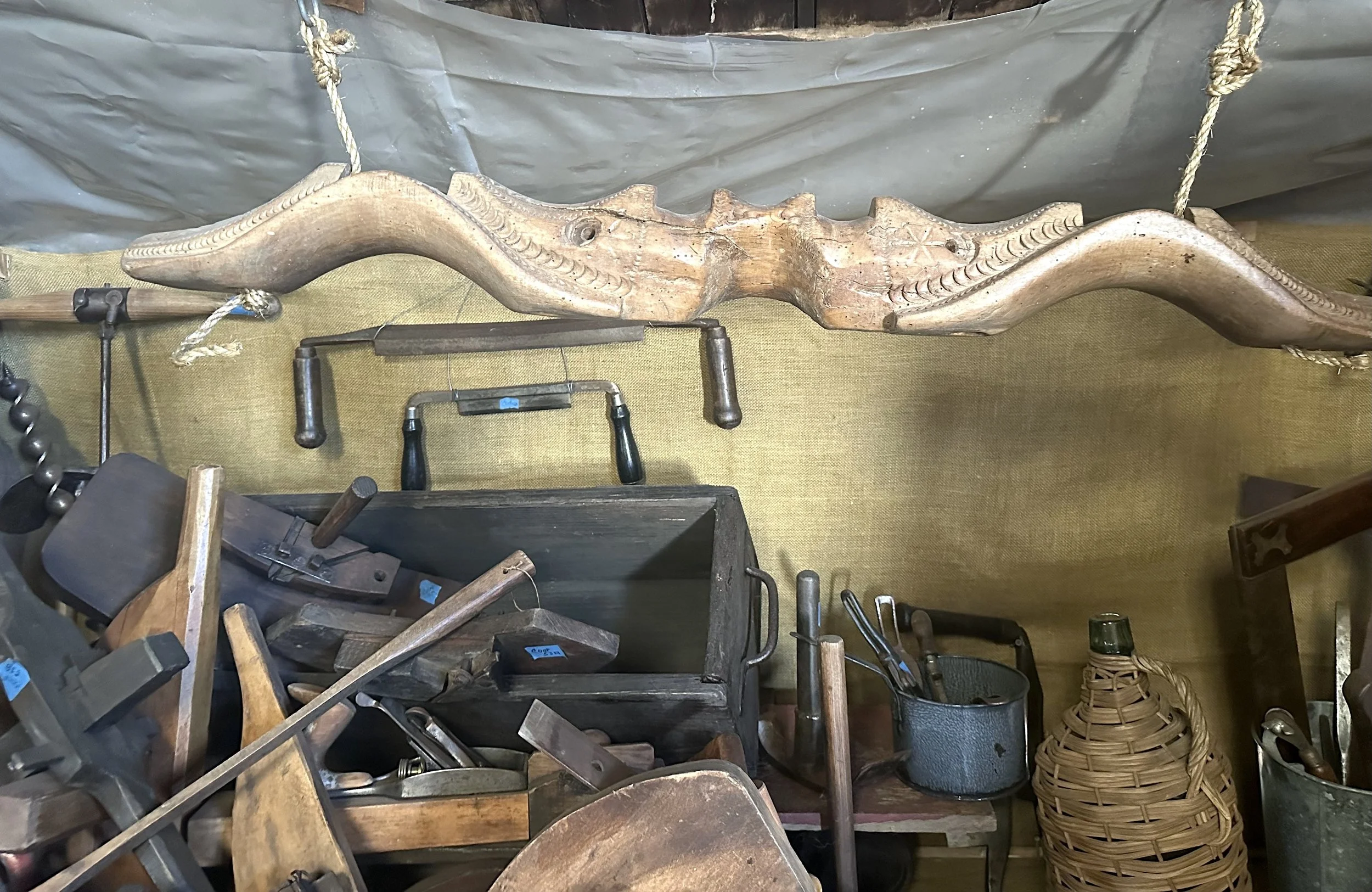
Mid-19th-century double goat yoke. Used to train cows, goats & sheep to pull wagons and carts in the field. 42” L. Vintage chip carving with serpent motifs. Folkart.
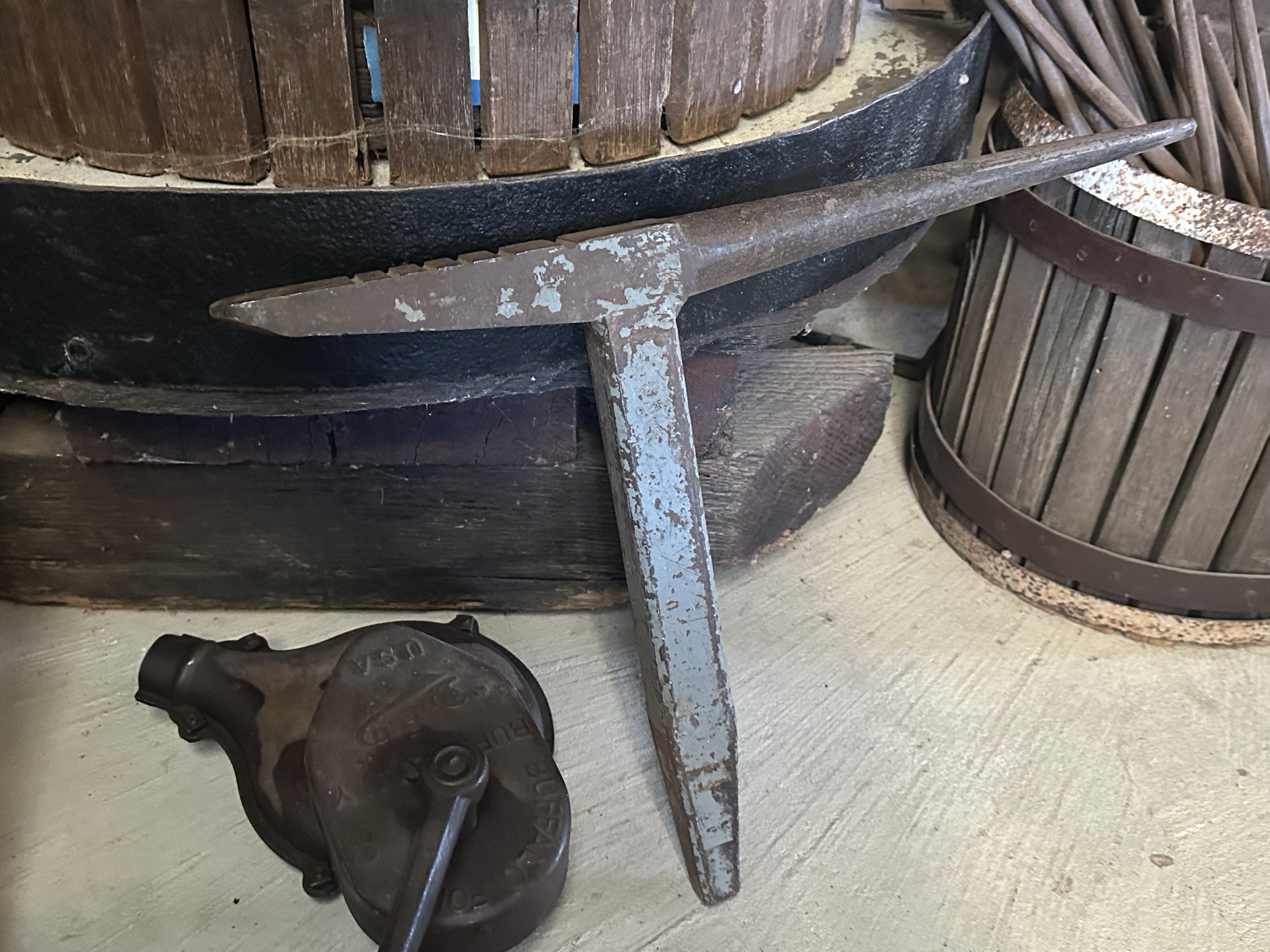
Blacksmiths “hardie” a tool used for specialized shaping in metalworking on an anvil. 1940s. 21”L X 14”H.
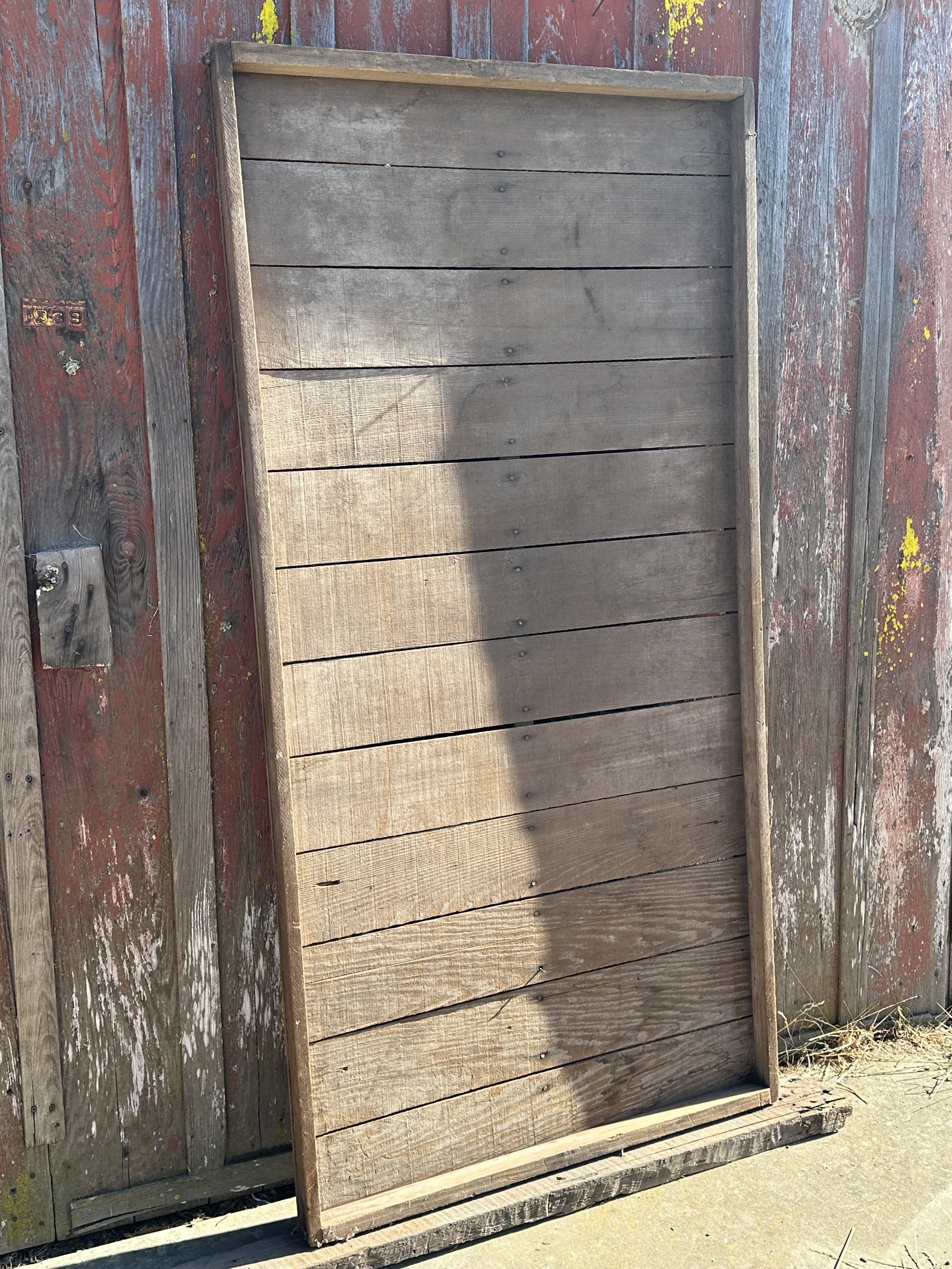
This is a clear heart, California redwood, fruit drying rack used mainly for raisin grapes, prunes, and apricots. These were also used as fruit "sorting" trays for fruit, including table and wine grapes. This one is from Sebastopol, California, and is in amazing condition; the straight saw cuts indicate made before 1900. 36” X 72”